

Why Lawyer Colors Shape Your Firm’s Success
Lawyer colors are more than aesthetic choices; they are powerful psychological tools that shape your firm’s first impression. With up to 90% of initial judgments based on color alone, your palette is a critical branding decision that can build immediate trust and credibility. The right colors communicate seriousness, expertise, and reliability—turning a visitor into a potential client.
Most Effective Lawyer Color Palettes:
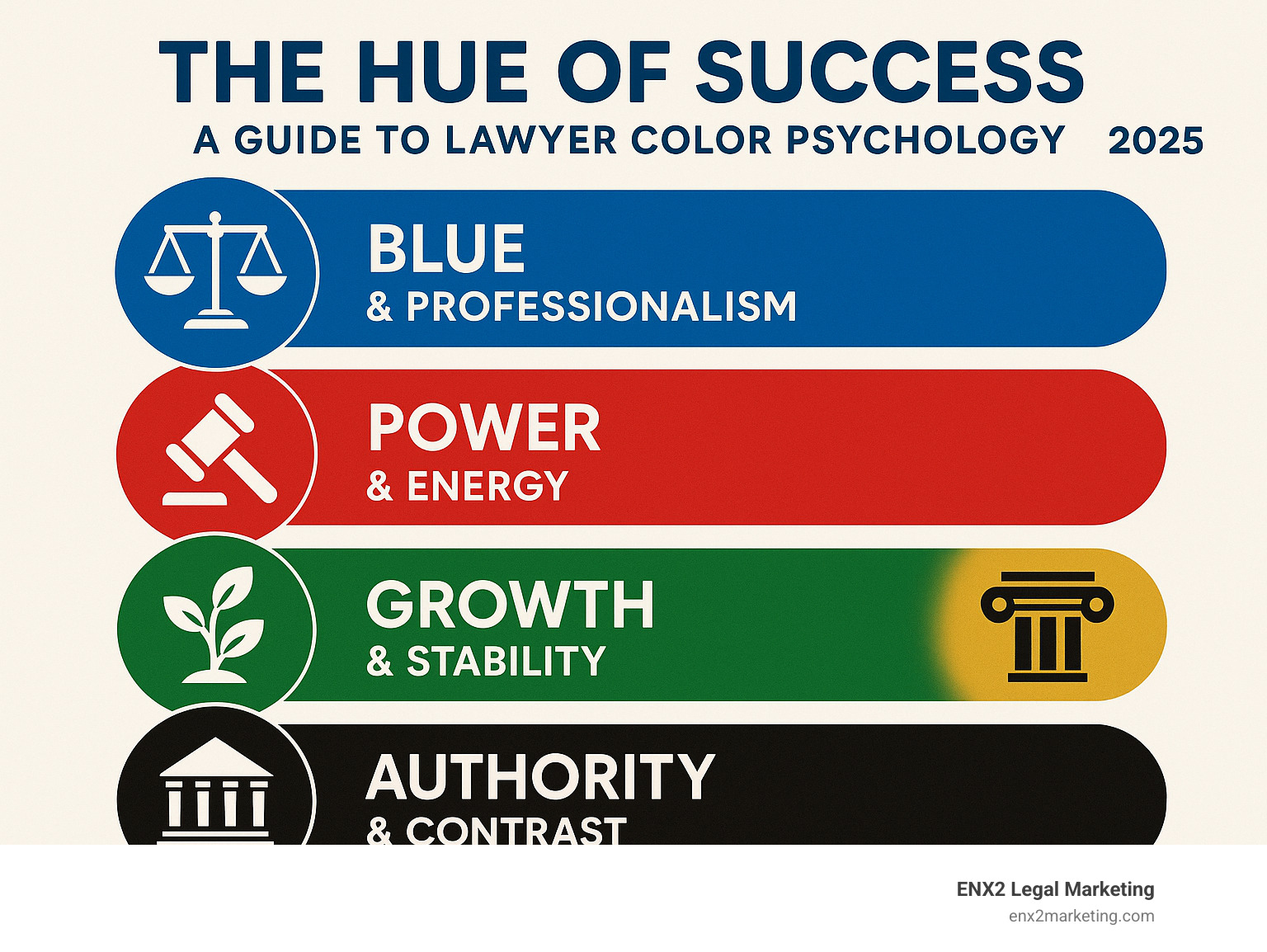
- Blue: Conveys trust, professionalism, and stability
- Red: Projects power, authority, and boldness
- Green: Suggests growth, renewal, and prosperity
- Black: Creates contrast and traditional appeal
- Gold/Yellow: Communicates prestige and premium quality
- Gray: Provides sophisticated neutrality
While blue dominates the legal landscape, strategic use of other colors can differentiate your brand. I’m Nicole Farber, and in my 12 years leading ENX2 Legal Marketing, I’ve seen how a well-chosen color palette transforms brand perception and drives client acquisition. The right colors create lasting impressions that convert.
The Psychology of Lawyer Colors: Building Trust and Authority
When a potential client first encounters your law firm, your lawyer colors are doing the heavy lifting before you even say hello. The strategic use of color in legal branding isn’t just about aesthetics – it’s about applied psychology, building trust, and standing out in a field where tradition often reigns supreme. Colors trigger deep, often subconscious, psychological responses that can influence perception and decision-making. In the legal world, where trust and authority are the currency of the field, getting your color palette right can mean the difference between a thriving practice and an empty waiting room. The most successful law firms understand that their color choices need to communicate professionalism, expertise, and the kind of steady reliability that makes clients feel confident in their hands.
The “Big Three”: Why Blue, Red, and Green Dominate Legal Branding

Walk down any major business district, and you’ll see that blue, red, and green dominate law firm branding. This isn’t a coincidence; these colors tap into fundamental human psychology that aligns with what clients seek from their attorneys. According to extensive brand analysis, these three colors, along with black and gray, form the foundation of the vast majority of legal brand identities.
Blue is the undisputed gold standard, used by over 45% of major firms. It automatically signals trust, stability, and intelligence—qualities every client seeks in legal counsel. For someone facing a complex legal matter, blue communicates a sense of calm, steady, and reliable expertise. However, the shade of blue matters immensely. A lighter, sky blue can feel open, friendly, and calming, suitable for collaborative practice areas. In contrast, navy blue, the most popular choice, adds a layer of gravitas and authority, telling potential clients, “We are serious, experienced, and we’ve got this handled.” Its association with corporate and governmental institutions further cements its professional reputation.
Red, used by about 26% of firms, makes a bolder, more assertive statement. It declares power, authority, and a willingness to fight hard for a client. This color can physiologically increase heart rate and create a sense of urgency, making it a powerful choice for litigation firms or those wanting to project an image of aggressive advocacy. But power must be wielded with sophistication. Darker shades like burgundy or maroon temper red’s raw energy with an air of refinement, suggesting a firm that is both a powerful advocate and a strategic, polished operator. Brekke, Clyborne & Ribich effectively uses red to project strength while maintaining professional credibility.
Green offers a sense of renewal, balance, and prosperity, used by roughly 15% of firms. It suggests positive outcomes and fresh starts, which is especially comforting for clients in difficult situations like bankruptcy or family law. Its deep connection to nature also evokes feelings of harmony and growth. For corporate clients, green can signify financial growth and success, making it effective for business, tax, or estate law. A dark, forest green implies established, old-money success and stability, while a brighter green can feel more modern and focused on new opportunities.
Finally, black and gray are the essential supporting neutrals that provide balance and sophistication. Black, appearing in nearly 50% of brands, is timeless, serious, and powerful. It creates high contrast and conveys an undeniable sense of formality. Gray, used in over 31% of brands, is diplomatic, mature, and balanced. It serves as a perfect neutral backdrop that allows primary colors to shine while maintaining an overall sense of gravitas. The most prestigious firms, including those in London’s Magic Circle, often rely on these traditional palettes to communicate their established authority, a principle we explore in our guide on Using Color to Define Your Brand.
Beyond the Basics: Strategic Lawyer Colors for a Modern Firm
While the ‘big three’ are safe and effective choices, a modern firm can carve out a unique identity by exploring less conventional lawyer colors. The best strategy is often finding a unique color that makes your firm memorable while still aligning with the core values of the legal profession.
Gold and yellow represent a significant opportunity for differentiation. While bright, loud yellow is rare for good reason, sophisticated gold tones are used by 16% of firms. Gold communicates prestige, luxury, and a track record of high-value success. It adds warmth and suggests a firm that values excellence and delivers premium client service. It’s an excellent choice for firms catering to high-net-worth individuals or major corporations.
Orange, used by only 5% of firms, is practically uncharted territory in the legal field. It brings an best energy, creativity, and modern feel. While a full orange brand might be too bold for most, using it as a strategic accent color can be incredibly effective. It can make call-to-action buttons pop on a website, draw attention to key information, and give a contemporary edge to a traditional brand, especially for firms in innovative fields like tech law or intellectual property.
Purple, used by just 1% of firms, is a powerful differentiator. Historically associated with royalty and wisdom, it combines the trustworthiness of blue with the power of red. This blend suggests a firm that is both wise and forward-thinking. A deep, rich purple can project an image of luxury, sophistication, and creative problem-solving, making it ideal for boutique firms or those in niche, high-stakes practice areas.
Teal, a blue-green hybrid, offers the best of both worlds: the trust of blue and the renewal of green. It feels both familiar and fresh, striking a perfect balance between professional and approachable. It’s a sophisticated choice that stands out from the sea of navy blue without feeling jarring or unprofessional. Ashton E. Thomas uses teal perfectly to create a distinctive brand that feels both calming and competent, ideal for sensitive practice areas like family law.
Brown, though used by only 5% of firms, can work exceptionally well when used thoughtfully. As an earthy, grounded color, it suggests reliability, tradition, and stability. It can reinforce these themes for firms with deep community roots, a long history, or those in practice areas like real estate, agricultural, or environmental law. Paired with cream or gold, brown can create a warm, distinguished, and trustworthy palette. The art of choosing distinctive colors is about finding a palette that authentically represents your firm’s unique value, a topic we cover in The Art of Graphic Design.

Creating Your Palette: The Art of Color Combination
Choosing a primary color is only half the battle. A successful brand identity relies on a well-balanced color palette. A common mistake is using too many competing colors, which creates visual chaos and undermines professionalism. A proven method for creating harmony is the 60-30-10 rule, a classic design principle that ensures a balanced and visually appealing result.
- 60% Primary/Dominant Color: This is the main color of your brand. It will be the most visible color on your website and materials, setting the overall tone.
- 30% Secondary Color: This color should complement the primary color and be used to create contrast and highlight secondary information.
- 10% Accent Color: This is a contrasting, vibrant color used sparingly to draw attention to key elements like call-to-action buttons, links, or important icons.
Here are a few examples of effective palettes for law firms:
- The Classic Authority: Navy Blue (60%), Medium Gray (30%), Gold (10% Accent). This combination is timeless, trustworthy, and exudes prestige.
- The Modern Advocate: Charcoal Gray (60%), Burgundy (30%), White/Light Gray (10% Accent). This palette is bold, sophisticated, and powerful.
- The Approachable Advisor: Teal (60%), Light Gray (30%), Bright Orange (10% Accent). This feels modern, trustworthy, and the orange accent adds energy to guide user actions.
Avoiding common pitfalls is crucial. Ensure your color choices have sufficient contrast for readability—a light gray text on a white background, for instance, will be illegible for many users. Always test your palette for how it appears to individuals with different forms of color blindness to ensure your brand is accessible to all.
From Palette to Practice: Applying Your Color Choices

Choosing your lawyer colors is just the first step; applying them consistently is where the strategy comes to life. A cohesive brand experience builds recognition and trust across all client touchpoints, from the digital to the physical.
Your Logo and Website
Your logo and website are the cornerstones of your brand identity. Your logo’s colors must instantly communicate your firm’s core values. On your website, color is a powerful tool for creating a visual hierarchy, guiding visitors’ eyes to the most important information like practice areas, attorney bios, and contact forms. As research on the impact of color on marketing shows, a bright accent color on a “Schedule Consultation” button isn’t just a design choice—it’s a strategic move that can significantly increase conversions. Consistency between your logo and website, as detailed in our Law Firm Logo Design guide, reinforces your professional image.
Marketing Materials and Brand Consistency
This visual language must extend into the physical and digital world. Business cards, letterhead, brochures, and social media graphics should all use the same palette to create a unified, memorable brand experience. When a potential client receives your business card after visiting your website, the consistent branding reinforces their impression of your firm as detail-oriented and professional.
Physical Office Space
Don’t forget your physical environment. The client experience begins the moment they walk through your door. The colors of your walls, furniture, and artwork in the reception area and conference rooms should align with your brand palette. This creates an immersive experience that subconsciously reinforces the values your colors were chosen to represent—be it the calm reassurance of blue or the established success of dark green.
Accessibility
Finally, accessibility is a non-negotiable aspect of modern web design. Your color choices must work for everyone, including clients with visual impairments. This means ensuring sufficient contrast between text and backgrounds, following standards like the Web Content Accessibility Guidelines (WCAG). You can use online tools to test your palette for various forms of color blindness, ensuring your Law Firm Website Design is inclusive and welcoming to all potential clients. Partnering with experts like Accessibility by WAH can help ensure full compliance.
Conclusion: Solidify Your Brand with the Right Colors
Your lawyer colors are the silent ambassadors of your firm’s values. In the crucial first moments a potential client encounters your brand, your color palette tells a story—whether it’s the trustworthiness of blue, the boldness of red, or the prestige of gold. Strategic color selection creates an instant emotional connection, making anxious clients feel secure and suggesting positive outcomes.
While many firms stick to traditional palettes, thoughtfully chosen colors can set you apart in a crowded market. Consistency across your logo, website, and marketing materials amplifies this impact, building a cohesive brand that signals professionalism and care. At ENX2 Legal Marketing, we understand that choosing colors is a strategic foundation for your business goals.
Your firm’s success deserves a palette that works as hard as you do. Learn more about our expert law firm logo design services and find how the right colors can lift your practice.