

Why Your Law Firm Can’t Afford to Ignore Social Media
Social media for legal professionals is no longer optional—it’s where your next client is actively searching. With billions of people on social platforms, potential clients are scrolling, reading reviews, and researching attorneys before ever picking up the phone.
Quick Answer: Essential Social Media Strategies for Lawyers
- Client Acquisition: 84% of law firms find new clients through organic social media.
- Client Research: 48.8% of potential clients use Facebook or Instagram to research law firms.
- Platform Priority: LinkedIn, Facebook, and Instagram are top platforms.
- Content Focus: Educational content, client testimonials, and firm culture.
- Ethical Compliance: Always follow bar association advertising and confidentiality rules.
- Measurement: Track engagement, website clicks, and leads to measure ROI.
Many law firms treat social media as an afterthought, worried about the time commitment or potential ethical missteps. The reality is that your competitors are already there. While 80% of firms use social media, many struggle to convert their presence into actual cases. The difference lies in having a clear strategy that builds brand awareness, establishes authority, and creates a reliable client acquisition channel.
Success requires understanding both the opportunities and the ethical landmines specific to the legal profession. You can’t just copy what works for other industries; attorneys face unique challenges around confidentiality and advertising rules.
I’m Nicole Farber, and through ENX2 Legal Marketing, I’ve spent over a decade helping law firms turn a digital presence into real cases. This guide will show you how to build a strategic social media presence that generates leads while keeping you compliant.
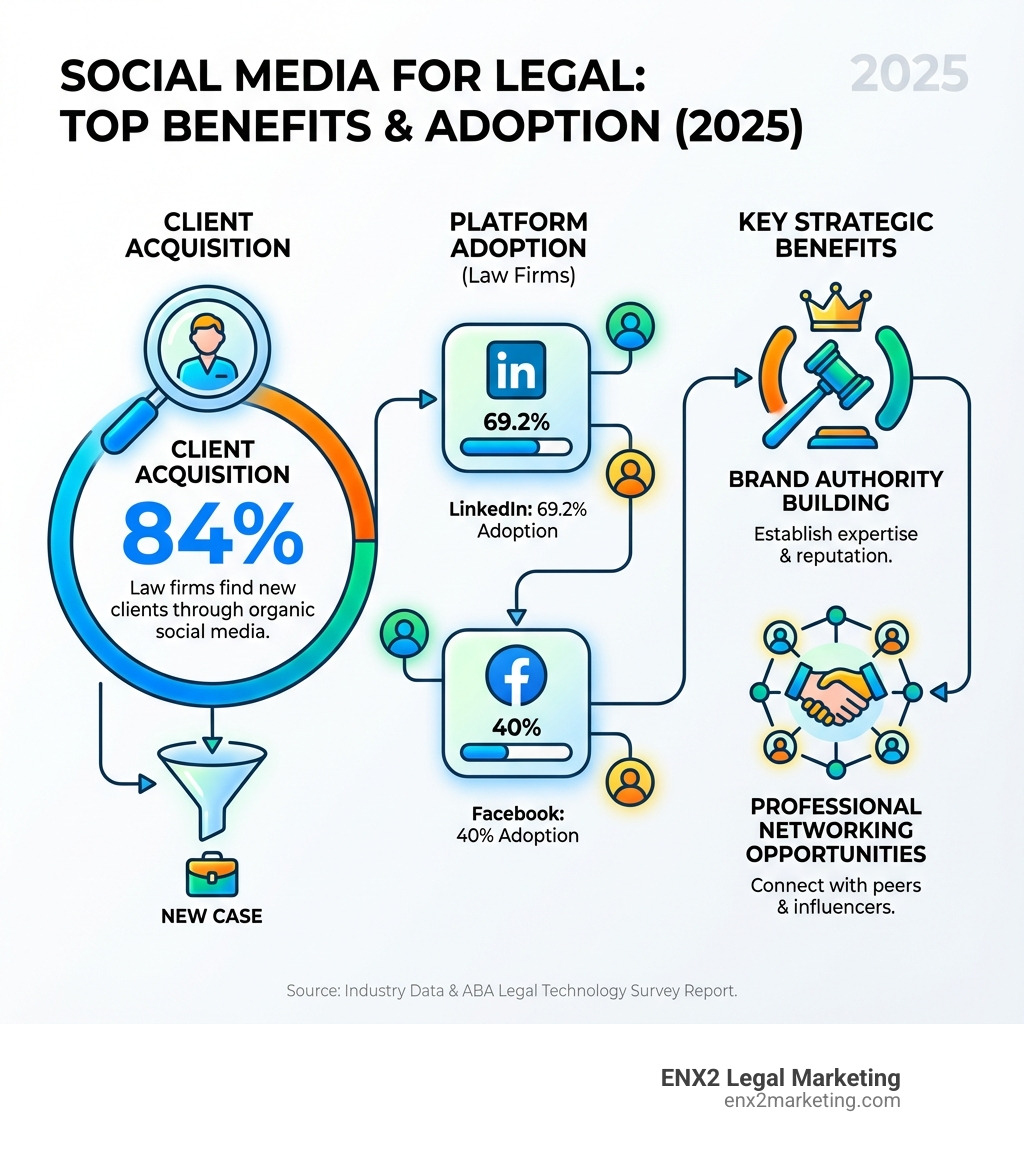
The statistics confirm the opportunity:
- Proven Client Acquisition: A staggering 84% of law firms find new clients through organic social media.
- Online Vetting is Standard: Nearly half (48.8%) of potential clients use platforms like Facebook or Instagram to research a law firm before hiring. If you’re not present, you’re invisible.
- Competitive Necessity: With 80% of law firms on social media, an absence cedes valuable ground to competitors.
- Building Trust: Social media humanizes your practice. It allows you to showcase your firm’s personality, making legal services less intimidating. Video is especially powerful, as viewers retain 95% of a message from video compared to only 10% from text.
Ignoring social media for legal marketing means missing a critical opportunity for client acquisition and brand building. It’s about leveraging these platforms to connect, educate, and convert.
A Strategic Approach to Social Media for Legal Professionals

A successful social media strategy for law firms isn’t about being everywhere. It’s about being strategic, focused, and consistent. Your goal is to develop a roadmap that guides your online presence, ensuring every post serves a purpose. This means setting clear goals for client acquisition and brand awareness, engaging with your audience and professional network, and designing every aspect of your presence to generate leads.
Building Your Case: Client Research and Platform Selection
Before posting, you need to know who you’re trying to reach and where they spend their time online. Develop an ideal client persona, considering demographics (age, location) and psychographics (interests, challenges). Is your ideal client a business owner needing corporate law advice or an individual facing workplace discrimination? This understanding dictates your platform choice.
Don’t try to be on all platforms at once. Start with one or two where your audience is most active.
- LinkedIn: As of the ABA’s 2023 TechReport, LinkedIn remains the most popular platform for lawyers in the U.S., with 69.2% of firms maintaining a presence. It’s invaluable for B2B practices, connecting with corporate clients, and networking with other attorneys for referrals.
- Facebook: With its massive user base, Facebook is a powerhouse for B2C practices and the second most popular platform for firms (40% adoption). It’s particularly strong for generating local leads, and Facebook marketing for lawyers: The ultimate guide can help you leverage targeted ads.
- Instagram: This visual platform is ideal for reaching younger demographics, with over 60% of its global users aged 18-34. Your law firm needs Instagram to humanize your practice with behind-the-scenes photos, infographics, and short videos.
Other platforms like X (formerly Twitter), YouTube, and TikTok also offer opportunities for sharing timely news and creating accessible video content. Tailor your approach based on whether you’re targeting businesses or consumers with our guide on Social Media Marketing: B2B vs B2C.
Content is King: Developing a Compelling Social Media Strategy
Your content should primarily educate and inform, not just sell. This builds trust and positions you as an expert. Focus on these key content types:
- Educational Content: Repurpose common client questions into blog posts, infographics, or short videos (e.g., “What to Do After a Car Accident”). This establishes your authority and provides genuine value.
- Behind-the-Scenes & Firm Culture: Humanize your practice by sharing photos of your team, office life, or community involvement. This helps potential clients feel a connection and see the people behind the legal expertise.
- Success Stories & Testimonials: With client permission and careful anonymization, share positive outcomes and testimonials. This social proof is incredibly powerful for building credibility and trust.
- Video Content: Video is essential for engagement and message retention. As mentioned, viewers retain 95% of a message from video, yet only 30% of firms use it. This is a massive opportunity to stand out. Consider creating short-form videos like Reels or Shorts explaining complex legal concepts in simple terms, ‘day in the life’ videos to humanize your team, or client testimonial videos (with explicit consent). The importance of incorporating videos into your social media cannot be overstated.
- Interactive & Timely Content: Use polls and Q&As to boost engagement, and share insights on recent legal news relevant to your practice areas. Asking your audience questions encourages them to participate and feel heard.
- Community Engagement & Networking: Social media is a two-way street. Actively engage with your audience by responding to comments and messages promptly. Participate in relevant local groups or discussions to build visibility. Use platforms like LinkedIn not just to post, but to connect with referral sources and comment thoughtfully on posts from colleagues and industry leaders.
To stay consistent, use a content calendar to plan posts in advance. Why should your law firm be using a social media content calendar? explains how this streamlines your efforts. Use scheduling tools to automate publishing and a smart hashtag strategy to expand your reach.
Navigating the Minefield: Ethical Considerations for Social Media for Legal Professionals

While social media offers immense opportunities, it also presents unique ethical challenges. Your online activities are subject to strict regulation.
Key ethical considerations include:
- Attorney Advertising Rules: Ensure all content complies with your state bar’s advertising rules (Model Rule 7.1), avoiding false or misleading statements. This includes claims about past results or specializations. The NYSBA Social Media Ethics Guidelines offer a solid example of state-level guidance.
- Client Confidentiality: Never share information that could identify a client or case, even if anonymized (Model Rule 1.6). This duty of confidentiality is paramount and extends to all forms of communication.
- Avoiding Legal Advice: Posts should be informational, not advisory. Include a clear disclaimer that your content is for informational purposes only and does not constitute legal advice or create an attorney-client relationship (Model Rule 5.5(b)(2)).
- Solicitation and Communication: Avoid direct, unsolicited messages to potential clients who are known to need legal services for a specific matter (Model Rule 7.3). Furthermore, never communicate directly with a party you know is represented by another lawyer regarding the subject of the representation (Model Rule 4.2).
To prevent Social Media Marketing Mistakes, develop a firm-wide social media policy that outlines responsibilities, approval processes, and procedures for handling online interactions.
From Likes to Leads: Measuring Success and Driving Growth
The ultimate goal is to generate leads. To know if your strategy is working, you must track your performance.
Key Performance Indicators (KPIs) to monitor include:
- Engagement Rate: Likes, comments, and shares show your content is resonating with your target audience.
- Website Clicks: This metric tracks how many users you’re driving from social media to your firm’s website, a crucial step for lead generation.
- Lead Generation & Conversions: The most important metric is the number of inquiries and new clients attributable to social media. This is how you calculate your return on investment (ROI).
Most platforms have built-in analytics, but third-party tools can offer deeper insights. While social media doesn’t directly impact search rankings, it drives traffic and brand visibility, which indirectly helps your SEO. Our article on how does social media impact SEO? explains this further.
An active, engaging social presence builds Social Proof, reinforcing your credibility and moving potential clients through your acquisition funnel.
The Final Verdict: Integrating Social Media into Your Firm’s Future
Social media for legal professionals is not just a marketing channel; it’s an integral part of your firm’s identity and growth. The strategies we’ve discussed—from client research and content creation to ethical compliance and performance measurement—form a cohesive ecosystem designed to attract, engage, and convert potential clients.
As the digital landscape evolves, adaptability is crucial. Staying competitive means staying informed and being willing to refresh your strategies.
For over a decade, ENX2 Legal Marketing has helped law firms harness the power of digital marketing. Headquartered in Pennsylvania with a satellite office in Los Angeles, we work with elite firms across the nation, from Wilkes-Barre to Washington D.C. We specialize in turning data and analytics into custom strategies for web design, content, and social media that generate tangible results.
If you’re ready to move beyond simply having a social media presence to truly leveraging it as a powerful tool for growth, we invite you to take the next step. Let us help you showcase your firm in a new and innovative way.
Learn more about our legal social media marketing services and find out how we can craft a strategy that expands your firm’s reach and client base. The future of legal marketing is social, and we’re here to guide you.