

Why Your Firm’s First Impression Shouldn’t Be Forgettable
In a crowded legal marketplace, a generic law firm logo is a missed opportunity. It fails to build trust or differentiate your practice from the dozens of others a potential client might see. These forgettable designs often rely on overused symbols like gavels and scales, clichéd color schemes, and standard fonts. In contrast, a powerful logo uses unique visual elements to tell your firm’s story and connect with your specific practice area.
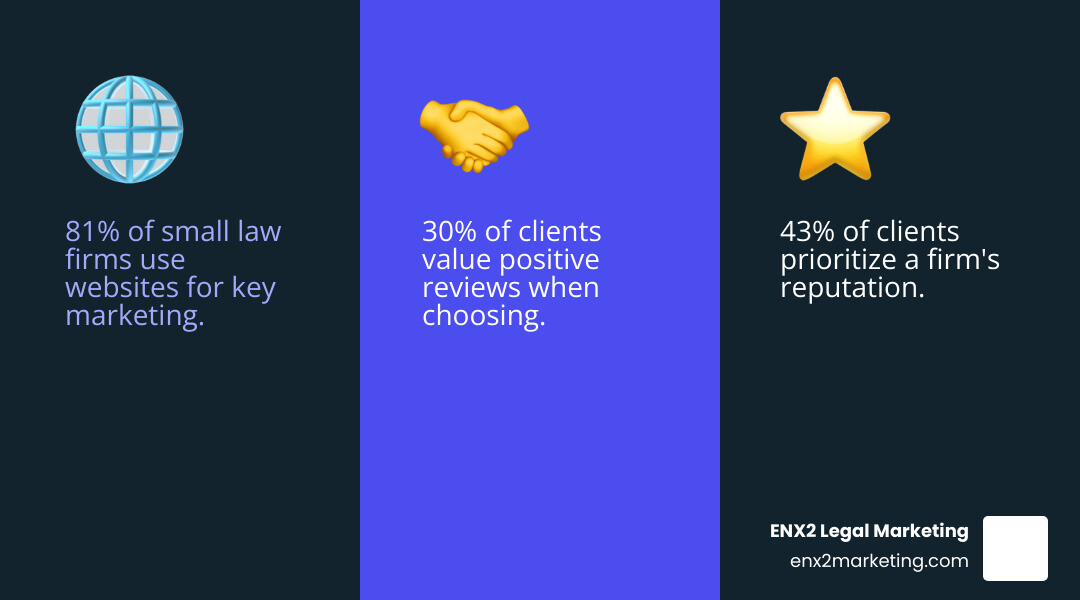
The legal industry is fiercely competitive, and with 81% of small firms using their websites for marketing, a logo that blends in is a handicap. Since 43% of clients prioritize reputation, your visual identity is the first step in building that trust. A potential client makes a snap judgment about your professionalism in seconds; a generic logo suggests generic service, while a thoughtful design communicates expertise.
Your logo isn’t just decoration—it’s your first argument to potential clients.
I’m Nicole Farber, CEO of ENX2 Legal Marketing. With over a decade of experience helping law firms build powerful digital presences, I’ve seen how a distinctive logo attracts clients, while a generic one gets lost. This guide will show you how to create a logo that makes the right first impression.
The Anatomy of a Strong Logo vs. a Generic Law Firm Logo
At ENX2 Legal Marketing, we see your logo as a strategic asset. It’s a visual shorthand for your values, expertise, and what makes you unique. A strong logo is thoughtfully crafted to resonate with your target audience, communicating professionalism and trust at a glance. Unlike a generic law firm logo that relies on clichés, a successful one makes a meaningful connection. For more insights, explore our Graphic Design Services for Law Firms.
Strategic Design: Color, Fonts, and Symbolism
A great logo is simple, memorable, and versatile. Its success hinges on the strategic use of color, typography, and symbols to tell a compelling story.
Color Psychology: Colors evoke powerful emotions and are critical for building trust. While blue is popular in the legal field for its association with stability and integrity, relying on it alone can make your logo look generic. Consider a broader palette to reflect your firm’s unique personality. For a deeper dive into how colors influence perception, see this research on the psychology of color in marketing.
- Blue: Conveys trust, stability, and professionalism. Dark blue, in particular, symbolizes knowledge and integrity.
- Green: Represents nature, renewal, and service. It’s an excellent choice for environmental, healthcare, or family law.
- Red: Evokes passion, strength, and determination. Use it as an accent color to convey boldness, especially for litigation firms.
- Black & White: A classic combination that communicates sophistication, precision, and simplicity for a high-end feel.
- Gold/Yellow: Adds a touch of prestige, optimism, or warmth when paired with other colors.
- Gray/Silver: Suggests security, intelligence, and a practical, no-nonsense approach.
Font Psychology: Typography gives your brand a distinct voice. Classic serif fonts, with their small finishing strokes, convey tradition, experience, and authority. They are the stately, established voice of the legal world. In contrast, modern sans-serif fonts offer a clean, accessible, and forward-thinking feel. The key is choosing a font that is legible across all platforms and reflects your firm’s desired image.
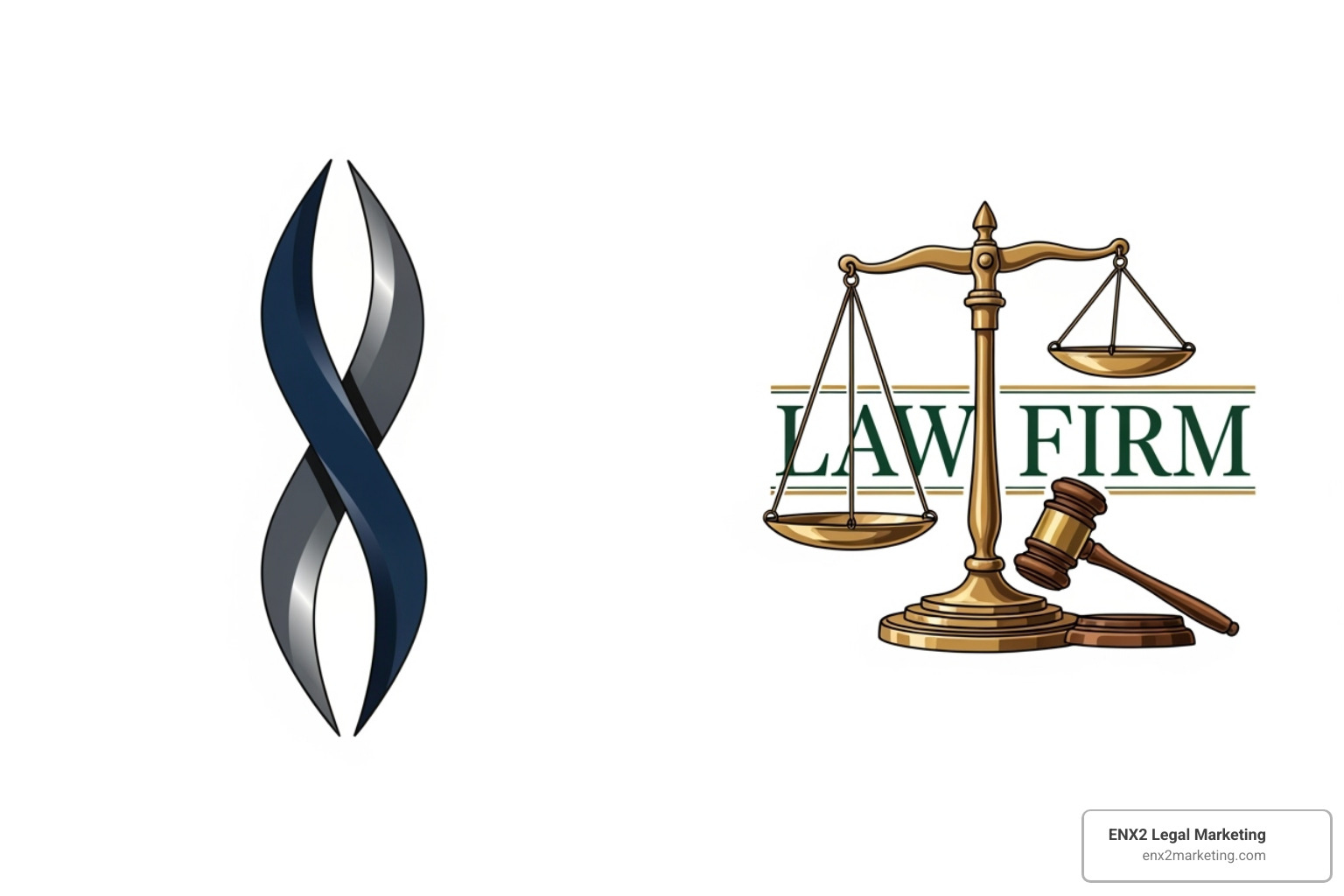
Beyond Cliché Symbols: We’ve all seen the endless scales of justice, gavels, and courthouse pillars. These symbols are so overused they create a sea of generic law firm logo designs. To stand out, your logo must differentiate you, not make you blend in. Instead of literal interpretations, consider abstract representations of your core values—like balance, resolution, or clarity. You can also find a unique, stylized interpretation of a traditional symbol. The goal is to capture your brand’s unique essence, not just its industry.
Modern vs. Classic: Finding Your Firm’s Visual Voice
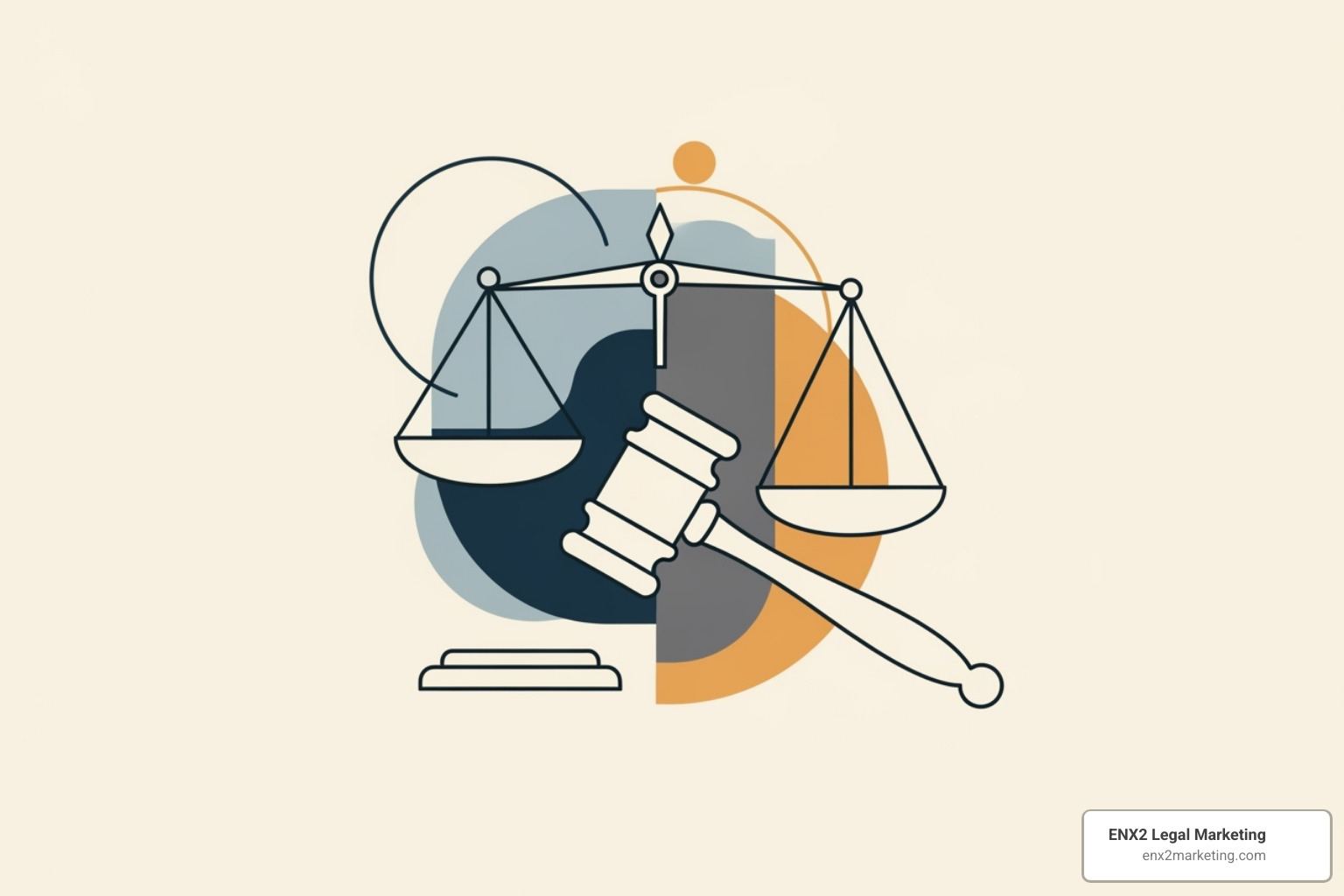
Choosing between a modern or classic aesthetic is a key decision that shapes client perception. Modern designs—characterized by clean lines, minimalist elements, and sans-serif fonts—project an approachable, efficient, and forward-thinking image. They are well-suited for firms specializing in tech, intellectual property, or those aiming to disrupt traditional legal models.
Classic designs, conversely, lean into tradition, authority, and heritage. They typically feature serif fonts, stylized traditional symbols, and a more muted, sophisticated color palette. They are ideal for firms emphasizing a long-standing reputation and deep expertise in areas like corporate law, litigation, or real estate.
| Characteristic | Modern Law Firm Logo | Classic Law Firm Logo |
|---|---|---|
| Fonts | Sans-serif, clean | Serif, traditional |
| Lines | Clean, minimalist | Strong, detailed |
| Impression | Innovative, approachable, efficient | Authoritative, reliable, prestigious |
| Best Use | Tech, IP, forward-thinking firms | Corporate, litigation, established firms |
Reflecting Your Niche: How to Avoid a Generic Law Firm Logo
One of the most effective ways to avoid a generic law firm logo is to make it reflect your firm’s specific practice area. Your logo should be a visual cue that immediately tells potential clients what you do and who you serve. As Forbes highlights, a clear unique selling proposition is essential, and your logo must support it visually.
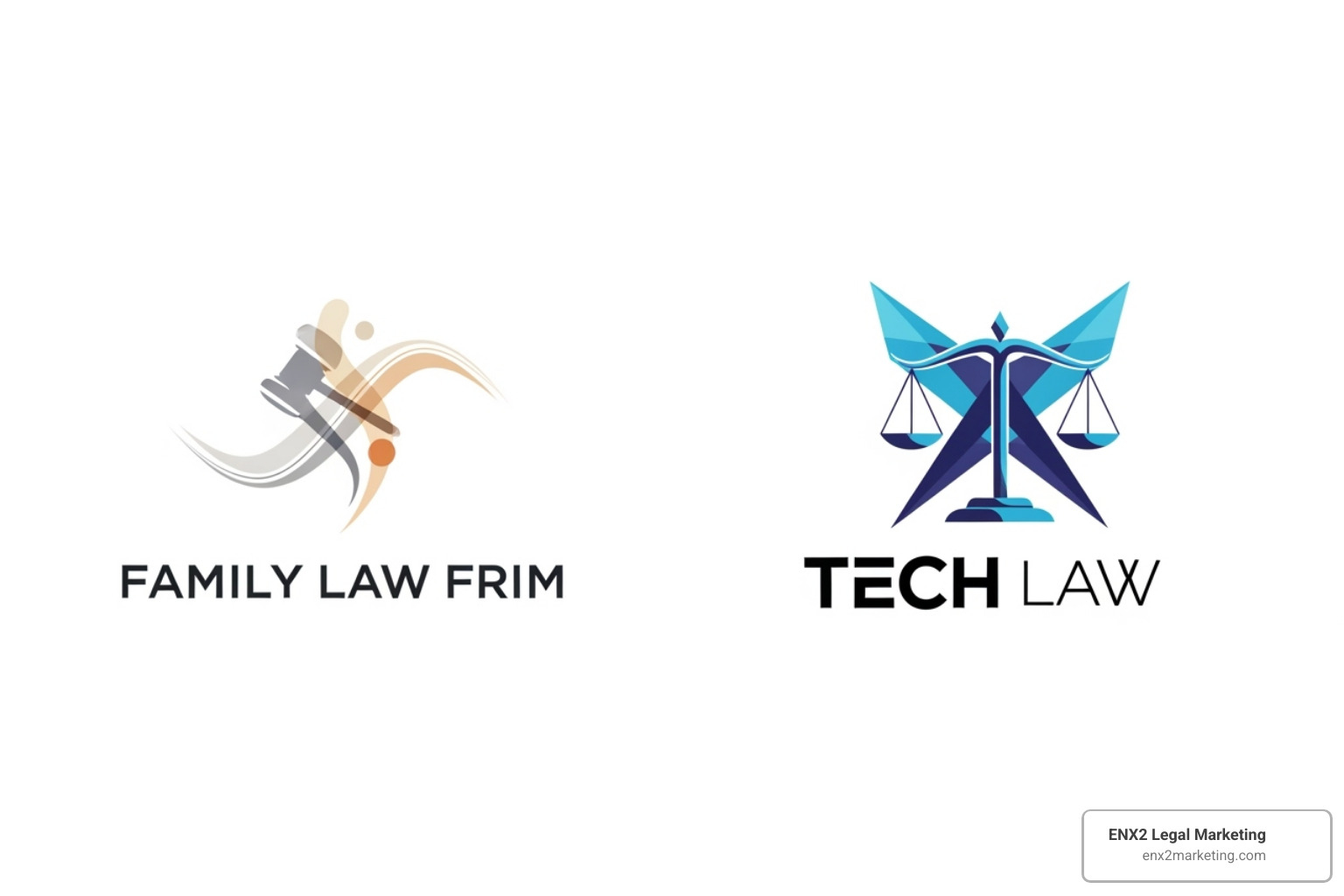
- Family Law: Instead of a stern gavel, a firm might use softer lines, calming colors, or symbols that evoke support, resolution, or new beginnings, like a stylized tree.
- Corporate Law: These firms benefit from sleek, structured designs that convey stability, precision, and sophistication. Geometric shapes and strong, balanced typography work well.
- Criminal Defense: A logo for a criminal defense firm might lean into strength and protection, but in a unique way, such as an abstract shield or a dynamic mark that implies action.
- Intellectual Property Law: Firms in this space can use abstract symbols that suggest innovation, the protection of ideas, or intricate connections, moving far beyond traditional legal imagery.
By selecting visual metaphors that resonate with your practice and ideal client, you create a logo that is both meaningful and memorable.
From Concept to Reality: Implementing Your Unique Logo
You’ve crafted the perfect logo concept that breaks free from the generic law firm logo trap. Now comes the make-or-break moment: bringing that vision to life across every touchpoint of your practice. A brilliant design can become a missed opportunity through poor execution.
At ENX2 Legal Marketing, we’ve seen that a logo’s success depends on its real-world application. Key technical considerations include:
- Scalability: Your logo must look sharp everywhere, from a massive banner to a tiny 16×16 pixel favicon. A design with too many details will become an unreadable blur when shrunk, making it useless in the digital age.
- Versatility: Your logo will appear on your website, social media, business cards, and email signatures. It needs to work in different contexts, which often requires having color, single-color, and layout variations (horizontal and vertical) ready for any application.
A solid technical foundation is non-negotiable. Vector files (SVG, AI, EPS) are essential for crisp, professional presentation at any size, while high-resolution PNGs are needed for digital applications requiring transparency. Brand consistency across all platforms builds the trust and recognition you’ve worked to create. Failing to test the logo across different mediums before finalizing it is a common and costly mistake. For more on creating a cohesive visual identity, see our guide on The Art of Graphic Design.
Ensuring Your Logo Works Everywhere
Your logo’s adaptability determines its power as a brand asset. It must perform flawlessly across a diverse range of digital and print applications.
- Digital Presence: On website headers and social media profiles, your logo must be clear, load quickly, and remain recognizable even in small, often circular, cropped spaces. This may require a simplified or icon-only version of your main logo.
- Print Materials: For business cards, letterhead, and brochures, high-resolution vector files are the only way to ensure a crisp, professional result. A pixelated logo on a business card immediately undermines your credibility and suggests a lack of attention to detail.
Rebranding an existing firm requires extra care. The transition involves a coordinated effort to update every branded element, from your website and social media profiles to stationery and office signage. A smooth transition strengthens brand recognition rather than confusing your audience.
At ENX2 Legal Marketing, we understand that a logo’s true value lies in its flawless execution. If you’re ready to lift your firm’s visual identity with a professionally designed logo that works everywhere, let us help you Get a professional law firm logo design that stands the test of real-world implementation.