

Why Guesswork is Costing Your Firm Money
Law firm reporting tools transform scattered financial and operational data into actionable insights that directly impact your bottom line. Without them, you’re making critical decisions about staffing, client acquisition, and resource allocation based on assumptions rather than facts.
These tools are essential for tracking finances in real-time, analyzing attorney performance, identifying client profitability, and optimizing workflows. The key benefit is a fundamental shift from manual data collection and periodic reviews to automated, real-time dashboards. This enables data-backed decisions on firm growth by tracking crucial KPIs like realization rates, case duration, and average revenue per client.
Most law firms don’t realize they have a reporting problem until they calculate the hidden costs. Unbilled time slips through the cracks, and marketing dollars are wasted on channels that don’t convert. The average associate might log 3,000 hours annually but only bill 2,100 of them—that’s 900 hours of lost revenue per attorney.
Advanced reporting software changes this equation. For example, when one family law firm started tracking lead sources, they found that 60% of their highest-value cases came from referrals, not paid advertising—a finding that completely shifted their marketing strategy.
The difference between firms that thrive and those that struggle often comes down to data. Data-driven firms can forecast revenue, optimize workloads, and identify growth opportunities before competitors do. They aren’t driving blind.
I’m Nicole Farber, CEO of ENX2 Legal Marketing, and over the past 12 years, I’ve helped law firms implement law firm reporting tools that turn chaotic spreadsheets into strategic advantages. The firms that succeed are the ones that stop guessing and start measuring.
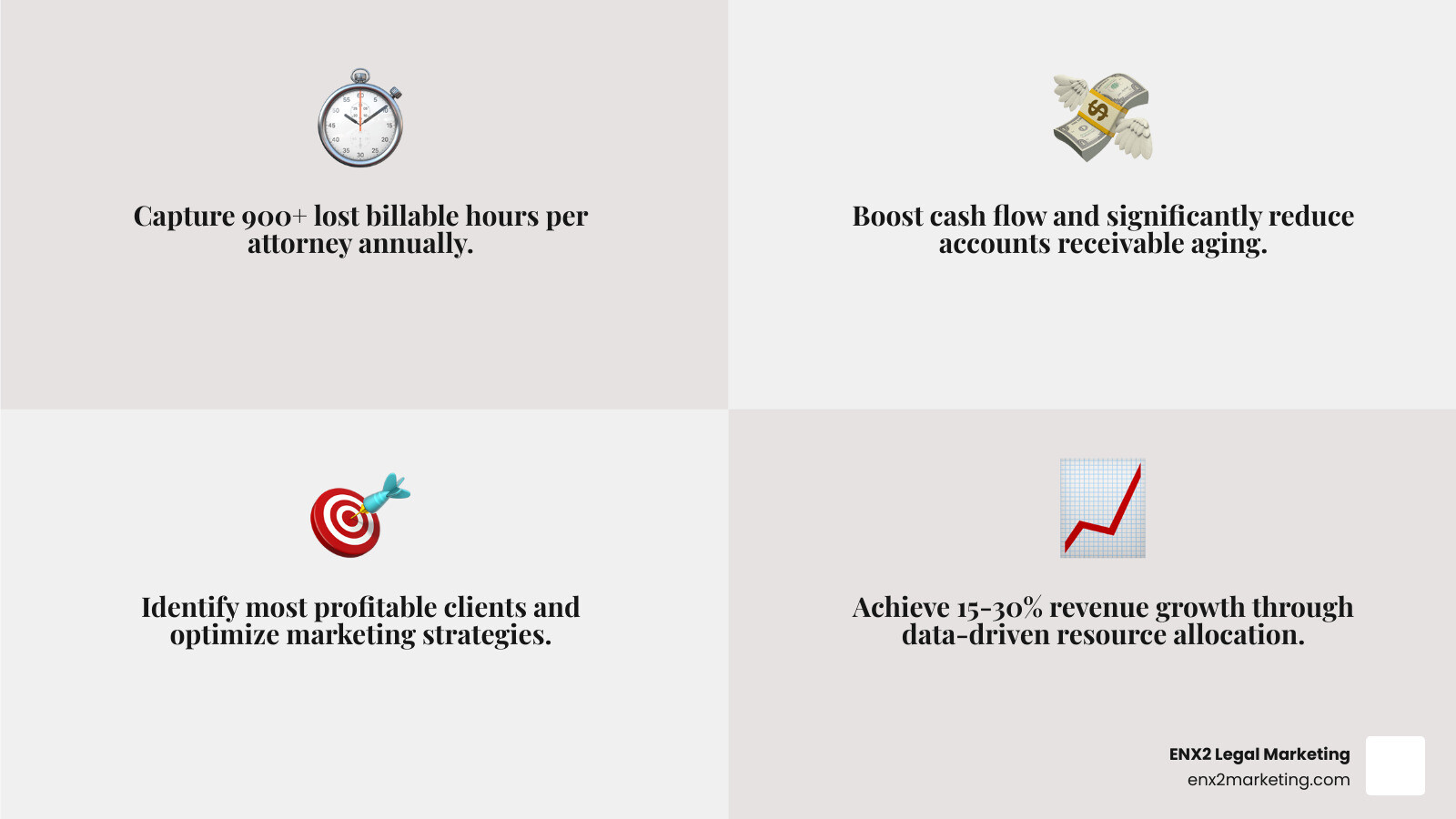
Key law firm reporting tools vocabulary:
The Core Capabilities of Top-Tier Law Firm Reporting Tools
Sophisticated law firm reporting tools turn raw operational data—like time entries, invoices, and client payments—into meaningful intelligence. This allows firm leaders to identify revenue drivers, measure staff efficiency, and manage the financial health of the business with precision. Without these tools, firms often struggle with scattered data and generic reports, leading to missed financial trends and inefficient time management.
Essential Reports for a 360-Degree Firm View
To truly understand your firm’s health, several reports are essential. They empower you to manage accounts effectively while providing deep insights into your financial standing.
- Billable Activity by User: Shows how much each attorney is billing, helping assess individual and firm-wide profitability.
- Accounts Receivable & Aging Invoices: Crucial for cash flow management, this report highlights what the firm is owed and which collections to prioritize.
- Payments Per Client: Helps identify your most profitable clients and flags those who are consistently behind on payments.
- Firm-Wide Matter Overview: Provides a high-level picture of your case volume by matter type, which is vital for resource planning.
- Trust Account Reports: Absolutely critical for compliance, these reports track balances and transactions to prevent the co-mingling of funds.
- Invoice Payment Status: Offers a clear, comprehensive view of all paid and unpaid invoices for proactive client account management.
- Matter Budget Reports: Allows you to set financial expectations for each case and track expenses against those budgets to prevent overruns.

Key Features to Look for in Law Firm Reporting Software
When evaluating law firm reporting tools, certain features are non-negotiable for modern practices.
- Customizable Dashboards: Generic reports rarely suffice. You need tools that offer configurable dashboards to track the specific KPIs that matter most to your firm.
- Real-Time Data: Outdated information is useless. Top-tier tools provide real-time data, with dashboards updating automatically as new information becomes available.
- Key Performance Indicator (KPI) Tracking: The software must track legal-specific KPIs like realization rates, case duration, and average revenue per client to measure performance against strategic goals.
- Integration Capabilities: Seamless integration with other essential systems, including practice management platforms and accounting software like QuickBooks Online, is crucial for a unified data flow.
- Security Protocols: Given the sensitive nature of legal data, robust security protocols are paramount. According to the American Bar Association, law firms are prime targets for cyberattacks, making features like data encryption and secure cloud-based access non-negotiable. For more on this, see their guide on cybersecurity for attorneys.
- Cloud-Based Access: The flexibility of cloud-based software means you can access reports and dashboards from anywhere, at any time, which is essential for remote and hybrid work models.
- Ease of Use & Export Options: The best tools are intuitive. Look for software that allows you to easily export reports to Excel or CSV for further analysis or sharing.
For those looking to deepen their understanding of best practices, exploring various Practice Resources – DC Bar can offer additional insights.
Boosting Your Bottom Line with Financial Analytics
The true power of law firm reporting tools is their ability to illuminate pathways to increased profitability and sustainable growth.
- Cash Flow Management: Real-time dashboards provide instant access to key reports, including outstanding invoices and total payments, giving you the financial clarity needed to manage cash flow effectively.
- Client and Matter Profitability: By analyzing what you’ve been paid per client and tracking expenses against specific matters, you can pinpoint your most profitable clients and practice areas, allowing for smarter resource allocation.
- Budget Tracking: Overspending on legal matters can quickly erode profits. Matter budget reports help you set financial expectations for each case and track expenses in real-time to prevent overruns and unnecessary write-offs.
- Trust Accounting Compliance: Reporting tools are instrumental in assisting with trust accounting by providing comprehensive, real-time reports on all account activity. This helps prevent the co-mingling of funds and ensures you meet strict regulatory requirements. For a deeper dive, the American Bar Association offers valuable resources on law firm financial management.
- Identifying Growth Areas: Beyond managing current finances, these tools help identify opportunities. By tracking metrics like lead sources, you can find which marketing channels deliver the highest-value cases and adjust your strategy accordingly.
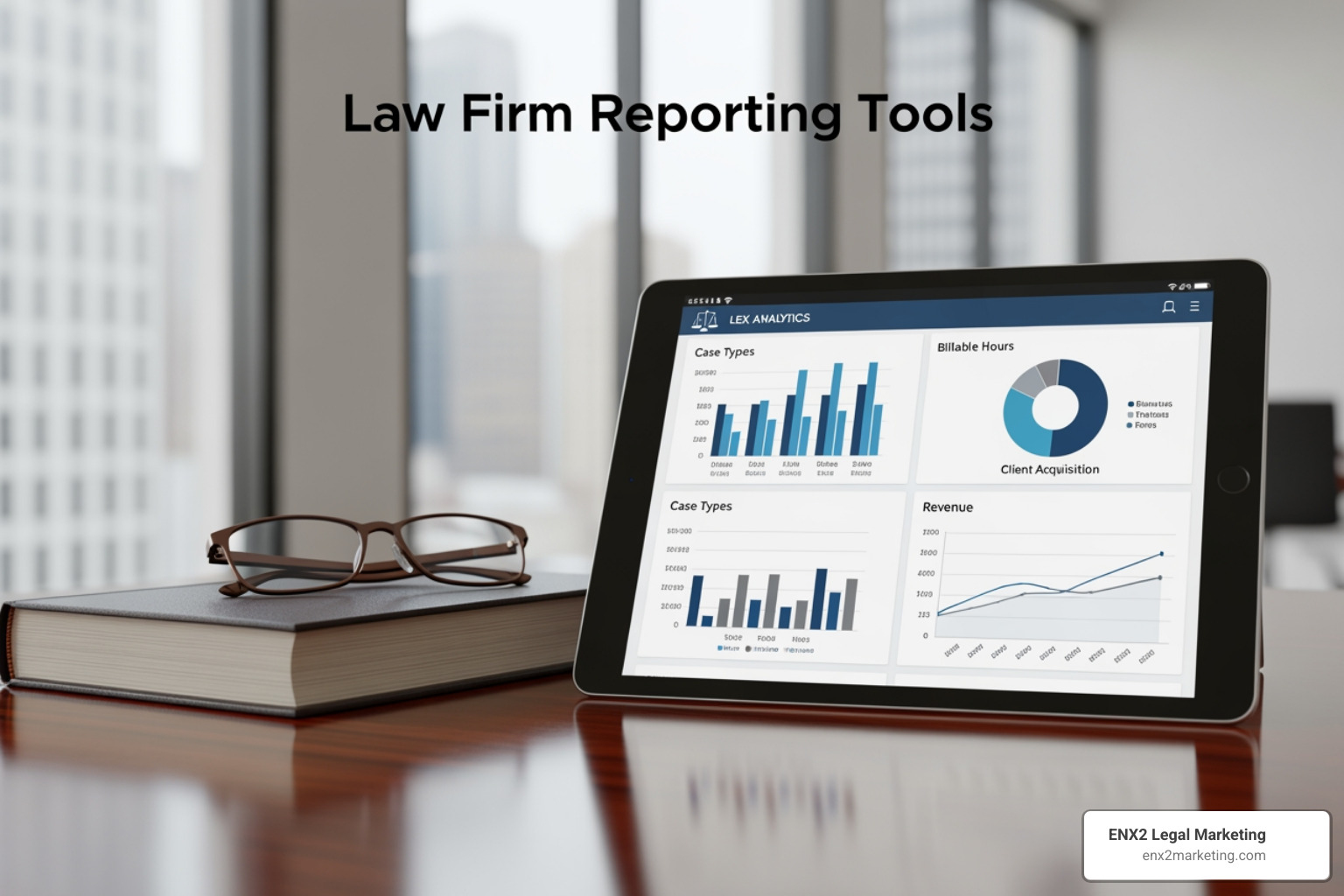
Enhancing Firm-Wide Efficiency with Advanced Law Firm Reporting Tools
Increased efficiency is a direct outcome of implementing sophisticated law firm reporting tools. These solutions offer granular insights that help optimize operations.
- Optimizing Time and Resources: Utilization rate tracking helps firms analyze how attorneys spend their time, making it easier to identify inefficiencies and improve billable hours. This data allows for smarter workload distribution.
- Identifying Bottlenecks: By tracking KPIs like case duration, you can identify bottlenecks in your workflows. If cases are taking too long to close, reporting provides the data needed to confirm the issue and adjust processes.
- Performance Measurement: Advanced tools allow you to track and compare KPIs like realization rates in real-time, making it easier to pinpoint billing issues and ensure the time spent on matters translates to collected revenue.
- Automating Data Aggregation: One of the biggest time-savers is automation. Reporting software automatically aggregates data from across firm activities, eliminating manual data collection and ensuring leaders always have accurate, current insights.
Implementing a Data-Driven Culture for Lasting Success
The impact of data-driven decision-making on a law firm’s success is profound. Firms that effectively use law firm reporting tools are not just more profitable and efficient; they are better positioned for long-term growth. They move beyond gut feelings, making choices rooted in concrete evidence to optimize operations and improve client satisfaction.
Overcoming Common Reporting Problems
Without advanced reporting, firms struggle with scattered data, tedious manual collection, generic reports, and significant security and compliance risks—especially with trust accounting. Law firm reporting tools solve these problems by centralizing data, automating aggregation, and offering customizable, real-time insights with built-in security and compliance features. They empower firms to track performance, identify inefficiencies, and make informed decisions that lead to higher profitability.
Your Next Step Towards a Data-Driven Firm
The future of legal practice is undeniably data-driven. Firms that accept this reality gain a significant competitive advantage. By investing in and effectively utilizing law firm reporting tools, you can transform your operations, optimize financial health, and make strategic decisions with confidence.
Embracing a data-driven strategy means moving from reactive problem-solving to proactive strategic planning. It’s about making every hour count, every dollar work harder, and every client relationship more valuable.
If your firm is still making business decisions based on guesswork, it’s time for a change. We at ENX2 Legal Marketing specialize in helping firms like yours leverage the power of data. Our expertise in law firm analytics consulting ensures that you not only implement the right tools but also understand how to interpret the data to drive your firm forward. We’re here to help you turn scattered data into clear, actionable insights that fuel your growth.
Ready to open up your firm’s full potential? Learn more about how strategic legal marketing consulting can help your firm harness the power of data and analytics.