

Why Data-Driven Decisions Are Now Essential for Law Firm Success
Law firm analytics consulting transforms raw data from billing, case management, and marketing systems into actionable strategies that drive profitability and growth. By analyzing financial, operational, and marketing metrics, consultants provide the strategic guidance needed to improve pricing, control costs, and optimize workflows. This allows firms to make confident decisions backed by real data, not guesswork, and gain a significant competitive advantage.
The numbers tell a compelling story. Research shows that data-driven law firms are more successful than their competitors. For example, one personal injury firm saved 40 hours per week on intake by using analytics to streamline its processes. Another saw a 251% increase in new visitors and a 24% increase in leads in just one month after implementing data-driven strategies.
Yet many firms struggle to extract these insights. Valuable information on case profitability, client acquisition costs, and operational bottlenecks often remains hidden in disconnected spreadsheets and reports. Law firm analytics consulting bridges this gap. It connects your disparate systems to create a unified view of firm performance, helping you identify your most profitable work, eliminate wasted time, and maximize marketing ROI.
I’m Nicole Farber, founder of ENX2 Legal Marketing. For over a decade, I’ve helped law firms leverage law firm analytics consulting to achieve measurable growth. My experience has proven that the right data insights are a powerful catalyst for changing a firm’s profitability and market position.
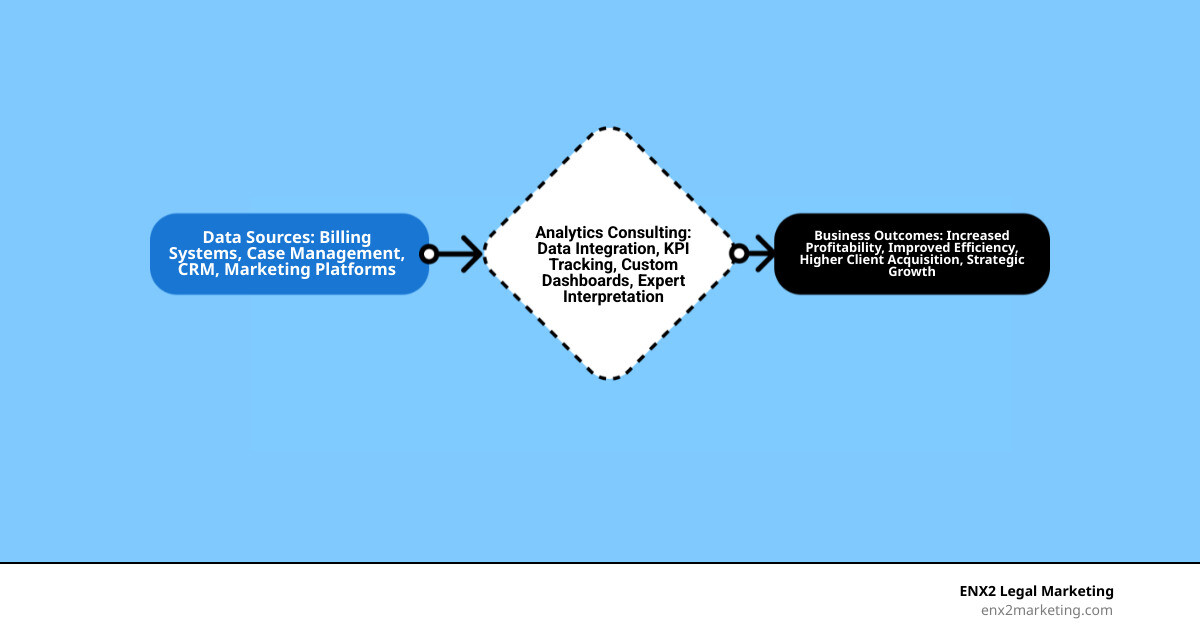
The Core of Law Firm Analytics Consulting: From Data to Decisions
The legal landscape is changing fast, and law firms that want to stay ahead need to think differently about their data. This isn’t about collecting more information—it’s about turning numbers into strategies that work. This section explores how law firm analytics consulting takes your firm from raw data to real results.
What is Law Firm Analytics Consulting and Why is it Crucial?
Law firm analytics consulting acts as a translator for your firm’s data. Experts in both data science and the legal industry collect information from your billing, case management, and marketing systems to uncover actionable insights. This process replaces guesswork with fact-based decisions, revealing hidden opportunities for growth and efficiency.
In today’s competitive legal market, relying on old habits is a recipe for falling behind. Data-driven firms consistently outperform their peers by embedding analytics into their daily operations to gain a competitive edge. As noted by legal industry observers, this shift toward data is becoming essential for success. For more on this trend, see Harvard Law Today: How Data is Changing Law.
Analytics consulting directly addresses common challenges that hinder law firms, including:
- Stagnant Growth: By identifying which practice areas and client types are most profitable.
- Inefficient Operations: By streamlining cumbersome processes, like the firm that saved 40 hours weekly on intake.
- Unclear Marketing ROI: By clarifying which advertising efforts actually deliver clients.
- Low Profitability: By revealing the true cost and return of each case.
A core problem is disconnected data systems, where financial, practice management, and CRM software don’t communicate. Analytics consulting integrates these sources to create a unified, real-time view of your firm, enabling confident forecasting and strategic planning.
Key Metrics and Technologies That Drive Success
Effective law firm analytics consulting focuses on three critical data categories to paint a complete picture of firm performance.
- Financial Metrics: Go beyond surface-level revenue to analyze profitability by practice area, attorney, and client. Key indicators include billing efficiency (hours billed vs. hours worked), collection rates (cash collected vs. amounts billed), and realization rates (revenue collected vs. the standard value of time worked). Analyzing these metrics helps firms understand not just how much they bill, but how much they actually earn, allowing them to maximize revenue and control costs with precision.
- Operational Metrics: Measure how efficiently your firm runs. Utilization rates (billable hours recorded divided by the number of available work hours) and realization rates are vital for optimizing resource allocation and productivity. High utilization with low realization, for example, might signal that attorneys are working hard on heavily discounted matters, pointing to a need for pricing strategy adjustments. These metrics help leadership ensure that every team member’s time is being used effectively.
- Marketing Metrics: Pinpoint what drives growth. Analytics tracks lead sources, conversion rates from inquiry to consultation to signed client, and client acquisition costs (CAC). By understanding the CAC for each marketing channel (e.g., SEO, PPC, social media), firms can confidently allocate their marketing spend to the channels that deliver the highest return on investment (ROI).
These metrics are consolidated into Key Performance Indicators (KPIs) and displayed on custom dashboards. To achieve this, consultants use powerful technologies like Business Intelligence (BI) platforms and data visualization tools like Power BI and Tableau to transform complex data into clear, interactive reports.
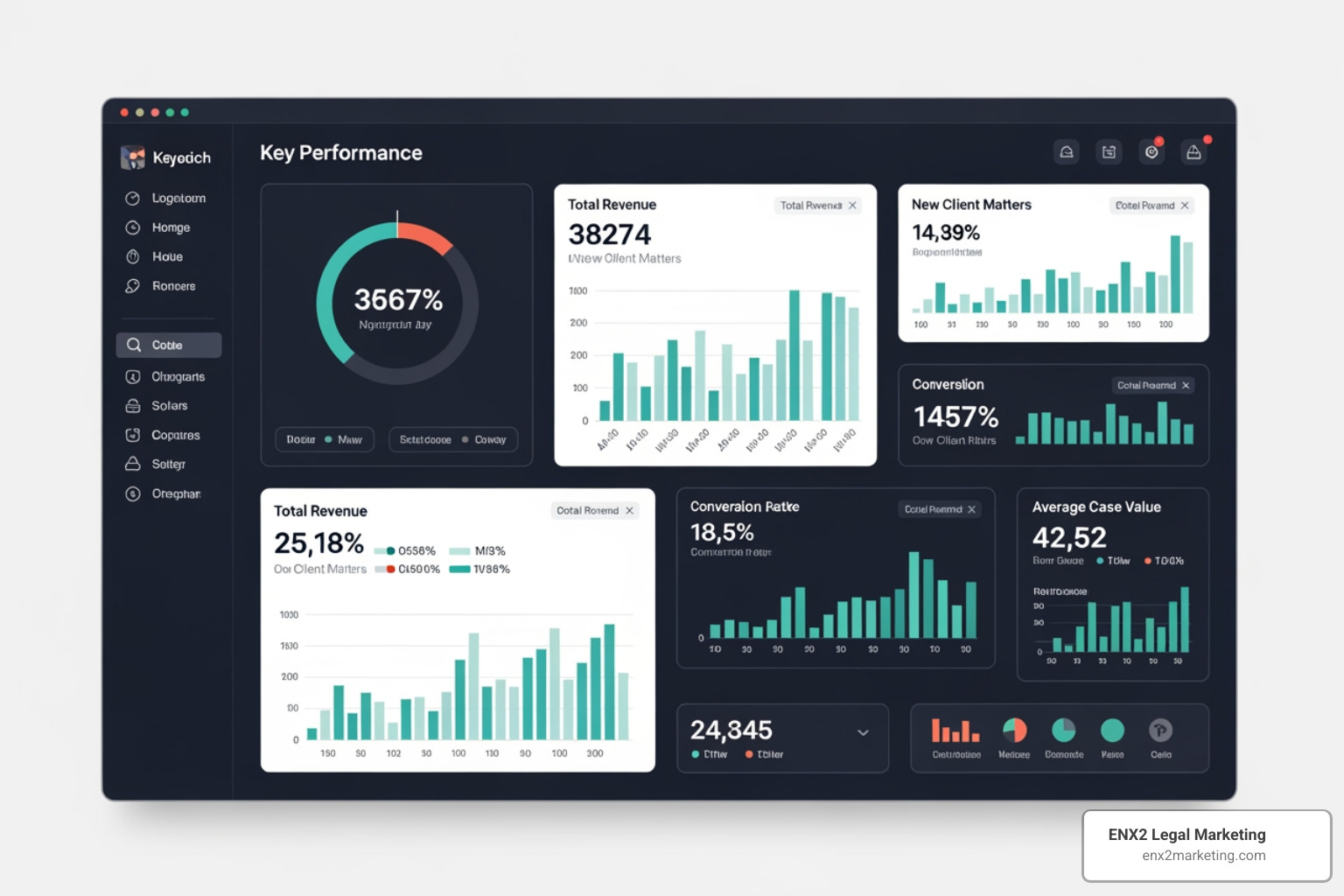
These tools provide a dynamic view of firm health that goes far beyond static reports. To learn more about the technology shaping the industry, read the American Bar Association: Legal Analytics.
The Tangible Benefits: Boosting Profitability and Operational Efficiency
Law firm analytics consulting delivers tangible results by helping you make more money and work smarter. It’s about turning insights into measurable improvements in profitability and efficiency.
Profitability Gains:
- Optimized Pricing: Analyze historical data to understand which pricing models (hourly, flat-fee, contingency) work best for different case types. This allows firms to move beyond guesswork and set rates that reflect both the value delivered and market demand, leading to more profitable engagements.
- Focused Business Development: Data reveals which clients, cases, and practice areas generate the most profit—not just the most revenue. This allows firms to strategically target their business development efforts on high-value work, ensuring resources are spent attracting the right kind of clients.
- Strategic Cost Management: Identify and trim non-essential overhead by analyzing spending patterns against performance. Analytics helps firms make smart reductions that improve the bottom line without sacrificing the quality of legal services or client support.
- Accurate Revenue Forecasting: By analyzing historical trends and current pipelines, firms can create reliable revenue forecasts. This empowers leadership to plan for growth, manage cash flow effectively, and allocate resources with confidence.
Operational Efficiency Improvements:
- Streamlined Intake: Eliminate bottlenecks in your client intake process. One firm saved 40 hours per week on intake alone.
- Improved Resource Allocation: Track workloads with real data to prevent burnout and maximize productivity.
- Increased Billable Hours: Pinpoint and reduce unproductive time to improve overall efficiency.
The results are clear. One firm, Meyerson & O’Neill, saw a 251% increase in new visitors and a 24% increase in leads in their first month of using data-driven strategies. For more on how tracking client interactions drives success, see ENX2 Marketing: Law Firm Call Analytics.
Choosing the Right Law Firm Analytics Consulting Partner
Selecting the right law firm analytics consulting partner is a critical decision. You need a strategic ally who understands the legal industry, not just a technician. Here’s what to look for:
- Deep Legal Industry Expertise: Your partner must understand the unique operational structures, billing practices, and ethics of the legal field. Look for a proven track record and ask for case studies that show measurable results.
- Customized Strategy: Avoid one-size-fits-all solutions. A good consultant will tailor their approach to your firm’s specific goals.
- Robust Data Security: Since law firms handle sensitive information, your partner must have stringent security protocols and a deep understanding of legal compliance.
- Technology Proficiency: Ensure they are experts in modern BI tools and can integrate data from your various practice management, CRM, and financial systems.
- A True Partnership Approach: The right partner provides ongoing training and support to empower your team and is invested in your long-term success.
At ENX2 Legal Marketing, we have over a decade of experience delivering customized law firm analytics consulting strategies. We serve firms in Pennsylvania, Washington D.C., New York, California, and Tennessee, helping them act on their data to drive profitability. For more on our approach, visit ENX2 Marketing: Digital Marketing for Law Firms.
Conclusion: Transform Your Firm with a Data-Driven Strategy
The shift from collecting data to using it for strategic decisions is no longer optional—it’s what separates thriving law firms from those falling behind. Just as you wouldn’t enter a courtroom unprepared, you shouldn’t run your business on guesswork. Law firm analytics consulting provides the evidence-based strategy needed to win in a competitive market.
As we’ve seen, data-driven firms achieve remarkable results, from saving 40 hours a week on intake to boosting leads by 24% in a single month. These outcomes stem from a clear understanding of what drives profitability, efficiency, and marketing ROI.
The future of legal analytics is even more promising, with AI and predictive modeling offering unprecedented forecasting capabilities. However, technology alone is not enough. Success requires a partner who understands both data science and the business of law—one who can translate complex numbers into practical, actionable strategies.
At ENX2 Legal Marketing, we have spent over a decade helping firms across Pennsylvania, Washington D.C., New York, and California do just that. We don’t just deliver data; we partner with you to interpret it and take decisive action. The firms that will dominate the market tomorrow are investing in their data today. Don’t let your most valuable asset sit unused.
Ready to turn your data into your greatest competitive advantage? Explore our legal marketing consulting services to see how we can help. For more insights, the American Bar Association offers excellent resources on the impact of legal analytics.