

Why Your Firm’s Digital Storefront is its Most Valuable Asset
Website design for lawyers is the foundation of successful digital marketing. It serves as your firm’s digital storefront and 24/7 sales representative, forming the first impression that either builds credibility or drives potential clients to competitors.
Quick Answer for Law Firms Seeking Website Design:
- 87% of law firms have websites, but only 65% of solo practitioners maintain an online presence
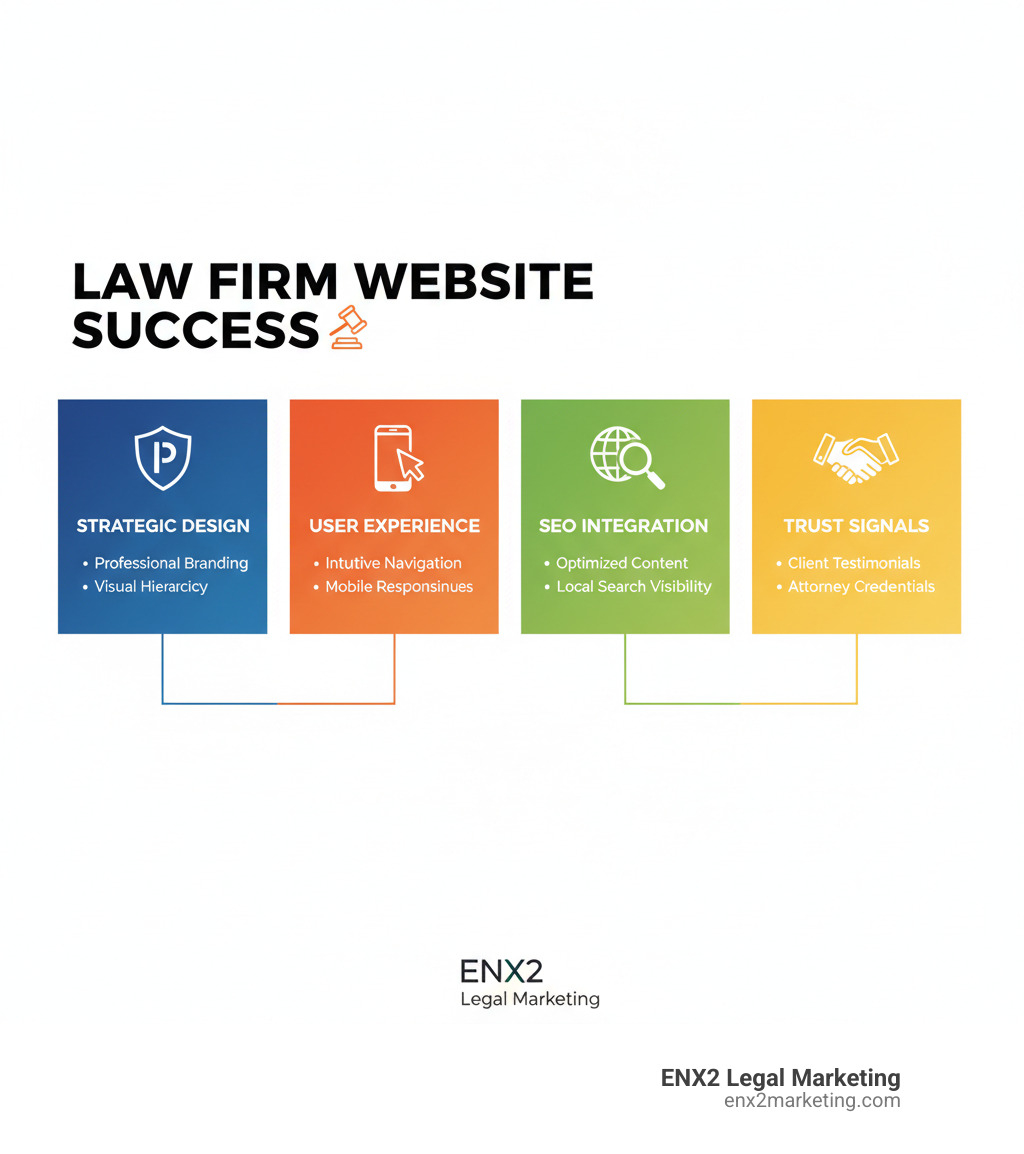
- Essential elements: Professional branding, mobile-first design, clear navigation, attorney profiles, and strong calls-to-action
- Key features needed: Fast loading speeds (under 2 seconds), SEO optimization, client testimonials, and lead capture forms
- Success metrics: Track qualified leads, conversion rates, and organic traffic growth
- Investment range: Simple sites start around $5,000, while custom builds reach $20,000+
While 87% of law firms have a website, the disparity in adoption reveals a critical opportunity. Large and mid-sized firms have near-universal adoption (97% and 95%), but the gap widens for smaller practices. This leaves substantial room for solo and small firms to gain a competitive advantage with a professional web presence.
A sophisticated website allows a smaller firm to punch above its weight, projecting an image of stability and expertise that rivals larger competitors. It levels the playing field by enabling direct communication with potential clients who are actively seeking specific legal help, often in niche areas that bigger firms may not prioritize. By establishing a strong digital footprint, solo and small firms can capture highly qualified leads that might otherwise default to more established names.
Modern clients expect more than basic contact information; they want to see attorney credentials, understand your approach, and easily schedule a consultation. Your website must inspire confidence, clearly communicate your strengths, and guide visitors toward taking action.
I’m Nicole Farber, and as the owner of ENX2 Legal Marketing for over 12 years, I’ve helped hundreds of law firms transform their online presence. My experience shows that the right website becomes your firm’s most powerful marketing tool, converting visitors into clients while you focus on practicing law.
The Essential Elements of High-Converting Website Design for Lawyers
Creating a website design for lawyers that converts visitors into clients requires a strategic blend of design, technology, and psychology. Your website must actively guide potential clients from their first click to scheduling a consultation.
Building the Foundation: Branding, UX, and Mobile-First Design
Your website is your firm’s digital embassy, and its design must reflect the professionalism clients expect. This starts with a cohesive brand identity—your logo, color palette, and typography—applied consistently across all materials. A criminal defense firm might use bold colors to convey strength, while a family law practice may opt for warmer tones to communicate empathy.
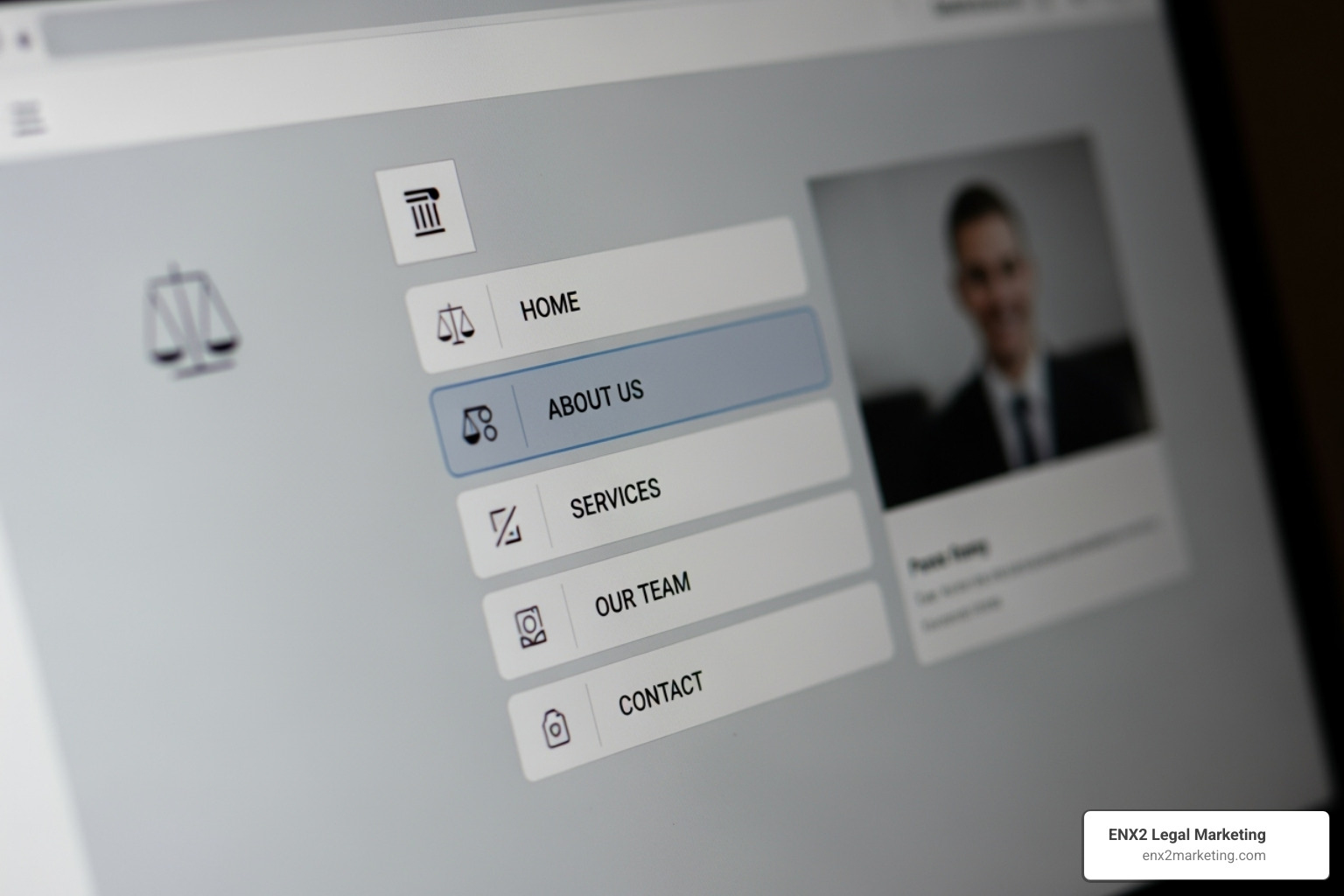
Great user experience (UX) is critical. If visitors can’t easily find what they need, they will leave. Navigation should be intuitive, with clear menu labels and content organized logically. Avoid legal jargon where plain English works better—your audience needs help, not a lecture.
With 54% of web traffic coming from mobile devices, a mobile-first design is non-negotiable. Your site must function flawlessly on a smartphone. Furthermore, accessibility ensures everyone can use your site, including those with disabilities. Simple adjustments like adding alt text to images and ensuring high color contrast make a significant difference. You can check your site’s accessibility with W3 tools to find areas for improvement.
Showcasing Expertise and Building Unshakable Trust
Potential clients are often in distress; they need to feel confident in your expertise. Detailed attorney profiles are among the most visited pages on a law firm’s site. Go beyond credentials; share your background, your legal philosophy, and include a professional headshot. A missing photo can be a red flag.

Practice area pages should explain how you solve a client’s specific problem, not just list a service. Social proof like client testimonials, case results, and awards provides credibility that marketing copy alone cannot. Video testimonials are especially powerful. Always adhere to your state bar’s ethical rules regarding the advertisement of case results.
Finally, use original, high-quality photography of your team and office. It helps your firm stand out from competitors who rely on generic stock photos and signals an investment in quality—a trait clients value in their legal representation.
Integrating SEO into Your Website Design for Lawyers
A beautiful website is useless if no one can find it. Search engine optimization (SEO) must be integrated from the ground up. This includes clean code, fast load times, and a logical site structure.
Content marketing and blogging are essential for demonstrating expertise and targeting the search terms your ideal clients use. Instead of generic legal articles, address real-world concerns. A divorce attorney might write about protecting assets during a separation, directly answering a question potential clients are searching for. This approach builds your expertise, experience, authoritativeness, and trustworthiness (E-E-A-T), a framework Google uses to evaluate content quality. Because legal advice falls under the ‘Your Money or Your Life’ (YMYL) category, search engines hold it to the highest standard. Demonstrating E-E-A-T involves showcasing attorney credentials (Expertise), detailing case histories (Experience), earning backlinks from reputable legal sources (Authoritativeness), and providing clear contact information and client reviews (Trustworthiness). High E-E-A-T signals to search engines that your content is reliable, leading to better rankings.
Local SEO is vital, as most legal services are location-specific. Optimizing your Google Business Profile and encouraging reviews helps you appear in local map listings. As AI-powered search grows, your content must provide comprehensive, conversational answers that AI can confidently recommend.
Driving Action: From Visitor to Valued Client
Your website’s ultimate goal is to convert visitors into clients. Use compelling calls-to-action (CTAs) that are specific and action-oriented, such as “Schedule Your Free Consultation” or “Get Your Case Evaluated.” These should stand out visually and be easy to click on mobile devices.

Offer streamlined contact methods like simple forms, live chat for immediate questions, and online scheduling. The faster your page speed, the better. Pages should load in under 2 seconds to keep visitors from leaving. Interactive features like client portals or online payment systems can also improve the client experience and set your firm apart.
Measuring Success and Choosing Your Design Partner
An exceptional website design for lawyers is just the first step. To maximize your investment, you must measure its impact and partner with the right team.
Key Metrics to Track for Website Performance
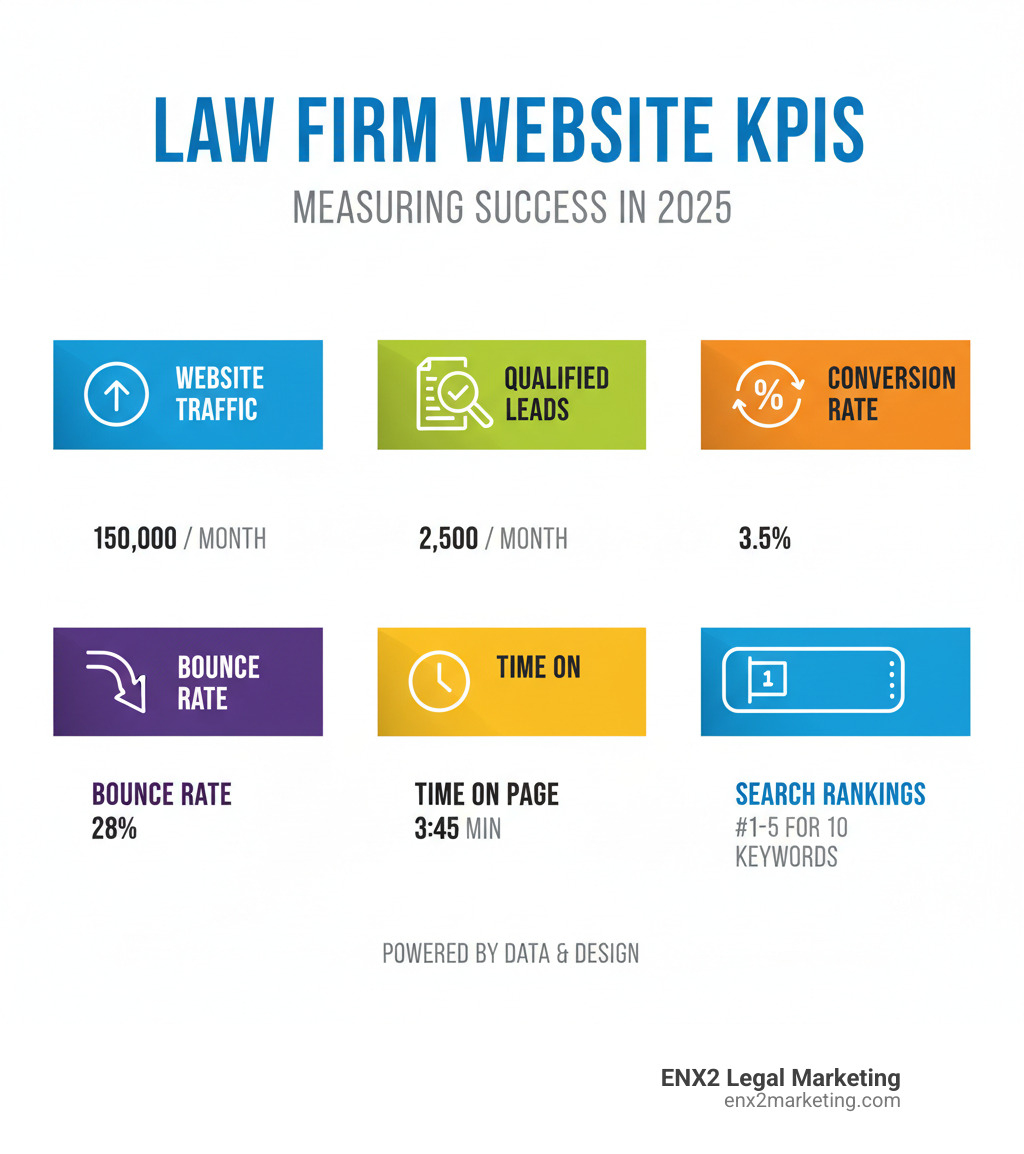
Digital marketing is measurable, providing concrete data on what works. Instead of getting lost in vanity metrics, focus on the Key Performance Indicators (KPIs) that drive growth. Tools like Google Analytics provide detailed insights into these metrics.
- Qualified Leads: How many visitors fit your ideal client profile and contact you through forms, chat, or calls?
- Conversion Rate: What percentage of your website visitors take a desired action (e.g., contact you)? A good benchmark for law firms is 2-5%.
- Website Traffic & Sources: How many people are finding you, and where are they coming from (e.g., Google, social media, referrals)?
- Search Engine Rankings: Where do you rank for your most important keywords, like “Denver divorce lawyer”? Higher rankings mean more visibility.
- Bounce Rate: What percentage of visitors leave after viewing only one page? A high bounce rate can indicate slow load times or irrelevant content.
- Return on Investment (ROI): Is your website generating more revenue than it costs? This is the ultimate measure of success.
Finding the Right Agency for Your Website Design for Lawyers
Choosing a marketing partner is a critical decision. You need a team that understands the legal industry and can deliver measurable results.
Red Flags to Avoid
Be wary of agencies that lock you into proprietary platforms. This means you are essentially “renting” your website, and if you leave, you could lose your design, content, and SEO progress. Another major red flag is any promise of “guaranteed #1 rankings.” SEO is a complex, ongoing process, and no one can guarantee specific results on search engines like Google. Also, avoid generalist web designers who don’t understand the legal industry’s strict ethical and advertising rules. A mistake here can lead to compliance issues with your state bar.
The Value of True Partnership
At ENX2 Legal Marketing, we have spent over a decade exclusively serving law firms. We understand that your website is a critical business development tool. We build every site on open-source platforms like WordPress, ensuring you maintain complete ownership and control.
Our approach goes beyond just design; we focus on building long-term partnerships and holding ourselves accountable for results. We bring specialized legal marketing expertise to every project, whether it’s data analytics, content marketing, or comprehensive SEO strategies.
Professional website design for lawyers isn’t an expense—it’s an investment in a powerful engine for growth that consistently attracts and converts your ideal clients.
Ready to see how the right website can transform your practice? Learn more about our law firm website design services and find how we can help your firm stand out in today’s digital marketplace.