

Why Your Firm’s Identity is Its Greatest Asset
Lawyer branding is the complete identity and reputation your law firm builds in the minds of clients. It’s not just a logo; it’s the promise of expertise, the feeling of trust, and the consistent experience you deliver. In a market with nearly 450,000 law firms across the U.S., a strong brand is essential for standing out.
Why does it matter so much? The data is clear:
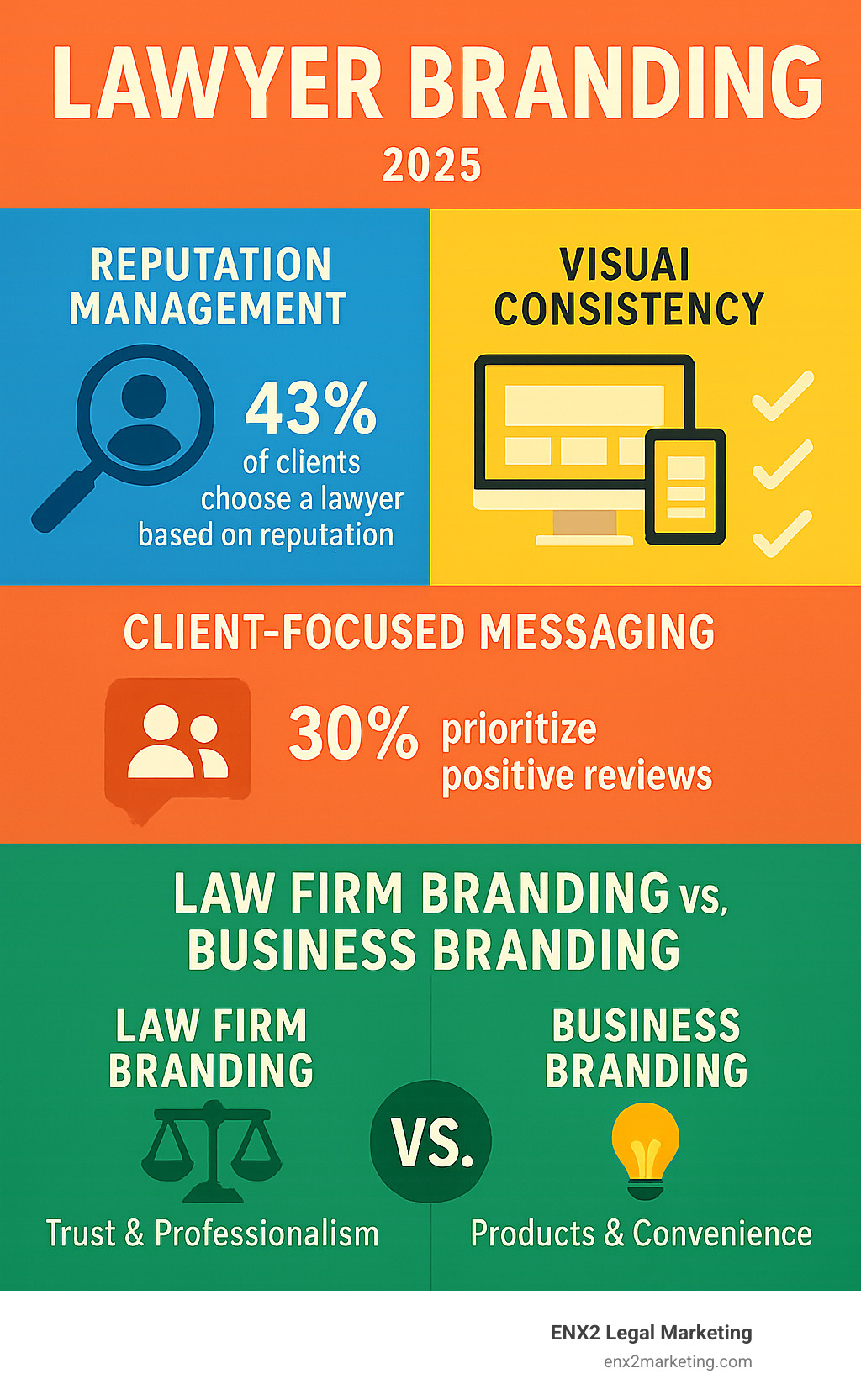
- 43% of clients choose lawyers based on reputation.
- 30% prioritize positive reviews over low fees.
- Only 16% of clients care most about hourly rates.
Unlike general business branding that might focus on products or convenience, legal branding is built on a foundation of trust and professionalism. As the American Bar Association highlights, clients are not buying a simple service; they are seeking a trusted advisor for life-changing decisions like navigating a complex lawsuit or planning their family’s future. This high-stakes environment means trust isn’t just a bonus—it’s the currency of the legal profession. Every touchpoint, from your website to your office reception, must reinforce your competence and reliability.
I’m Nicole Farber, and for the past 10 years at ENX2 Legal Marketing, I’ve helped hundreds of law firms craft powerful brands that attract their ideal clients. My experience in lawyer branding has proven that firms with clear, consistent identities consistently outperform those that treat branding as an afterthought.
Building Your Brand Blueprint: From Core Values to Client Connection
Building a strong law firm brand is a strategic process, not guesswork. Your brand is your firm’s personality—it’s the story you tell, the values you embody, and the experience you deliver. The goal is to create an identity that clients trust and relate to, built on the pillars of consistency and clarity. A unified brand message not only attracts clients but also unites your team with a shared purpose.
Our approach is client-centric: we position the client as the hero of their story and your firm as the trusted guide. This narrative helps potential clients see your firm as the solution to their challenges.
Defining Your Core: Mission, Values, and Unique Selling Proposition (USP)
Before designing any visuals, we define your firm’s essence. This starts with your target audience. We create detailed client profiles to understand their pain points and aspirations, ensuring your message resonates. As HubSpot’s Target Audience Guide explains, this clarity is the cornerstone of effective marketing.
Next, we articulate your core values and mission. What drives your team every day? This mission statement becomes a compass for your firm’s culture and client experience. Finally, we identify what makes you different. By analyzing the legal landscape, we establish your unique selling proposition (USP). While many firms assume clients want low rates, research shows reputation and experience are far more critical. Your USP should highlight these strengths.
To find your USP, ask:
- What specific problem do we solve better than anyone else?
- What unique approach or philosophy defines our practice?
- What makes our firm the obvious choice for our ideal client?
This isn’t about being the cheapest; it’s about being the best choice. For example, your USP could be your firm’s exclusive focus on a niche area of intellectual property law, your proprietary process for handling personal injury cases that maximizes client communication, or your team’s unique background in a specific industry you serve. This specificity is what transforms a generic law firm into a distinct brand.
Designing the Experience: Visuals, Voice, and Brand Story
With your core defined, we translate it into a tangible experience. Your visual identity—logo, color palette, and typography—is your first impression. Colors are particularly powerful; for instance, blues and greens are often used in law to instill trust. Dive deeper into how colors can define your brand with this insightful article on the power of color in marketing.

Beyond visuals, your brand voice shapes your advertisements, taglines, and content. A memorable slogan, like Morgan & Morgan’s “For the People,” clearly communicates a mission. We also craft a compelling brand story that positions the client as the hero, with your firm as their guide to overcoming conflict, whether it’s injustice or complexity.
The Strategic Framework for Effective Lawyer Branding
Brand consistency is the glue that holds everything together. A disjointed experience, where your business card doesn’t match your website, erodes confidence. To prevent this, we create a “Brand Bible”—a comprehensive style guide detailing everything from logo usage and color codes to the specific tone of voice for all communications. This document ensures every asset looks and feels like your brand. As Forbes notes, a strong brand identity is built on this very consistency and clarity.
Activating Your Brand: Implementation, Amplification, and Evolution
Creating a brand blueprint is just the start; the real work begins with implementation. Brand implementation means weaving your identity into every aspect of your firm, from how the phone is answered to your website’s user experience. This isn’t a one-time task. Your brand must be a living part of your firm, evolving with the legal landscape and your clients’ needs. The goal is consistency across all channels, creating a recognizable and trusted presence.
Deploying Across Channels: Your Website, Social Media, and Beyond
Your digital presence is your modern-day handshake. Your website is your firm’s digital headquarters and a key marketing channel for most firms—81% of small firms and 69% of solo firms rely on it. It must be professional, fast, and optimized for search engines. Lawyer SEO is how clients find you during their moments of need. This involves more than just general keywords; it requires a deep understanding of local search, practice-area-specific terminology, and the questions potential clients ask when they are in distress. Optimizing for phrases like ‘car accident lawyer near me’ or ‘how to file for divorce in [State]’ is critical for visibility.

Content marketing, through blogs and videos, demonstrates expertise and builds trust. Social media is also crucial, with over 40% of small and solo firms using it to connect with clients. While platforms differ, your core message must remain consistent. Finally, don’t overlook legal tech tools like CRMs and client intake software, which help deliver a seamless, professional experience that reflects your brand’s efficiency.
The Human Element: Personal Branding and Community Ties
Clients hire lawyers, not just law firms. The personal brands of your attorneys are powerful assets. When your lawyers become thought leaders by writing articles for legal journals, contributing to industry publications, or speaking at events, they lift the entire firm’s credibility. An active, professional LinkedIn profile where attorneys share insights and engage in discussions can also be a powerful tool. Personal branding for lawyers isn’t about ego; it’s about strategically showcasing the human expertise behind your brand and building individual reputations that, in turn, strengthen the firm’s.

Community engagement demonstrates your values in action. Sponsoring a local team or offering pro bono services builds genuine emotional connections. Being visible and active in your community reinforces that you are more than just a business—you are trusted advisors and neighbors.
Common Pitfalls in Lawyer Branding and How to Avoid Them
Even the sharpest firms can make branding mistakes. Here are the most common ones to avoid:
- Inconsistency: A disjointed look across your website, business cards, and social media creates confusion and erodes trust.
- Vague Messaging: Trying to be everything to everyone makes you memorable to no one. Focus on your unique strengths, as most clients prioritize reputation over low rates.
- Ignoring Your Audience: Without understanding your ideal client’s needs, your message will fall flat.
- Copying Competitors: Imitation is a dead end. Your brand must reflect your firm’s unique personality and value.
- Neglecting Online Presence: In an age where clients vet professionals online, an outdated website or a collection of poor reviews can be a deal-breaker. According to BrightLocal’s consumer research, the vast majority of consumers read online reviews for local businesses. A negative online reputation can deter potential clients before they ever contact you. Proactively managing your online presence, including soliciting reviews from satisfied clients, is non-negotiable.
- Underestimating Visuals: A poorly designed logo or inconsistent visual identity fails to convey the professionalism that clients expect.
Building an effective law firm brand takes strategy and expertise. After 10 years of helping law firms transform their marketing, I’ve seen how the right branding can change a firm’s trajectory. When you’re ready to create a brand that truly connects with your ideal clients, we’re here to help.