

The Visual Gavel Why Your Logo is Your Firm’s First Impression
Law office logo design is the cornerstone of your practice’s visual identity. It’s your silent advocate, working 24/7 to communicate professionalism, build trust, and differentiate your firm in a competitive legal marketplace. Your logo is often the first touchpoint for potential clients, appearing on everything from your website and business cards to social media profiles, legal directories, and office signage.
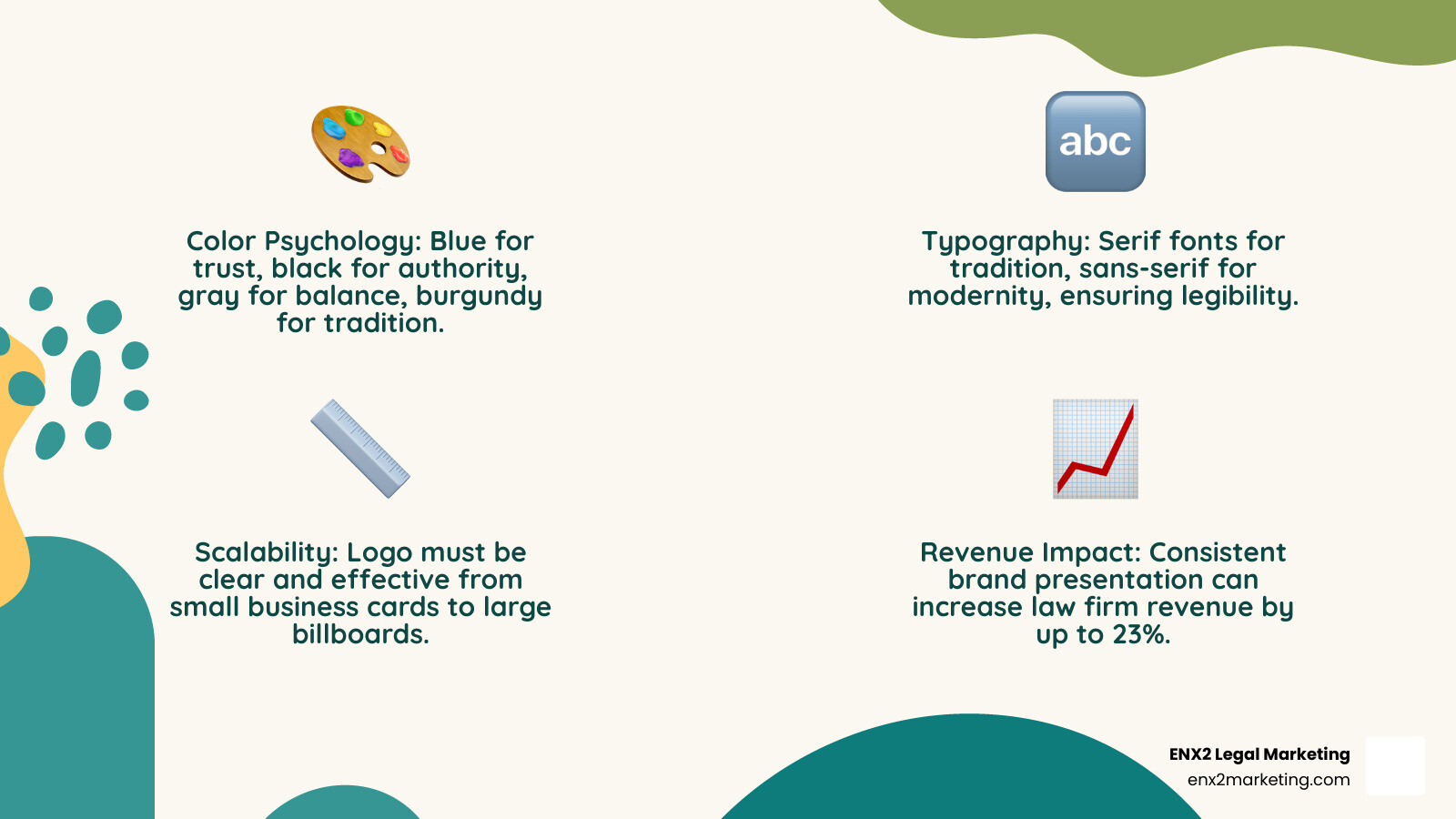
In a profession where credibility is paramount, your visual identity must immediately convey competence. The stakes are high; research shows that consistent brand presentation can increase a law firm’s revenue by up to 23%. This isn’t just about looking good; it’s about building a perception of reliability and stability. When your visual identity is cohesive across all platforms, it makes your firm more memorable, more referable, and ultimately, more trusted by clients making high-stakes decisions. Yet many firms rely on outdated or generic logos that fail to build the recognition needed to attract new clients in a crowded digital space.
“A logo is to a company what a face is to a person,” and in the legal field, that face must project authority, expertise, and approachability. Whether you’re a solo practitioner or a large firm, your logo is the visual shorthand for your brand promise.
I’m Nicole Farber, CEO of ENX2 Legal Marketing. For over a decade, I’ve helped law firms develop compelling law office logo design strategies that drive recognition and revenue. I’ve seen how the right visual identity can transform a practice’s market presence.
The Anatomy of an Unforgettable Law Office Logo Design
Creating an effective law office logo design requires the same strategic thinking as building a winning case. Your logo is your firm’s visual elevator pitch, communicating who you are, what you stand for, and why clients should trust you. This starts with defining your brand personality—are you an aggressive corporate firm or a compassionate family practice? Understanding your target audience and analyzing competitors helps identify opportunities to stand out authentically.
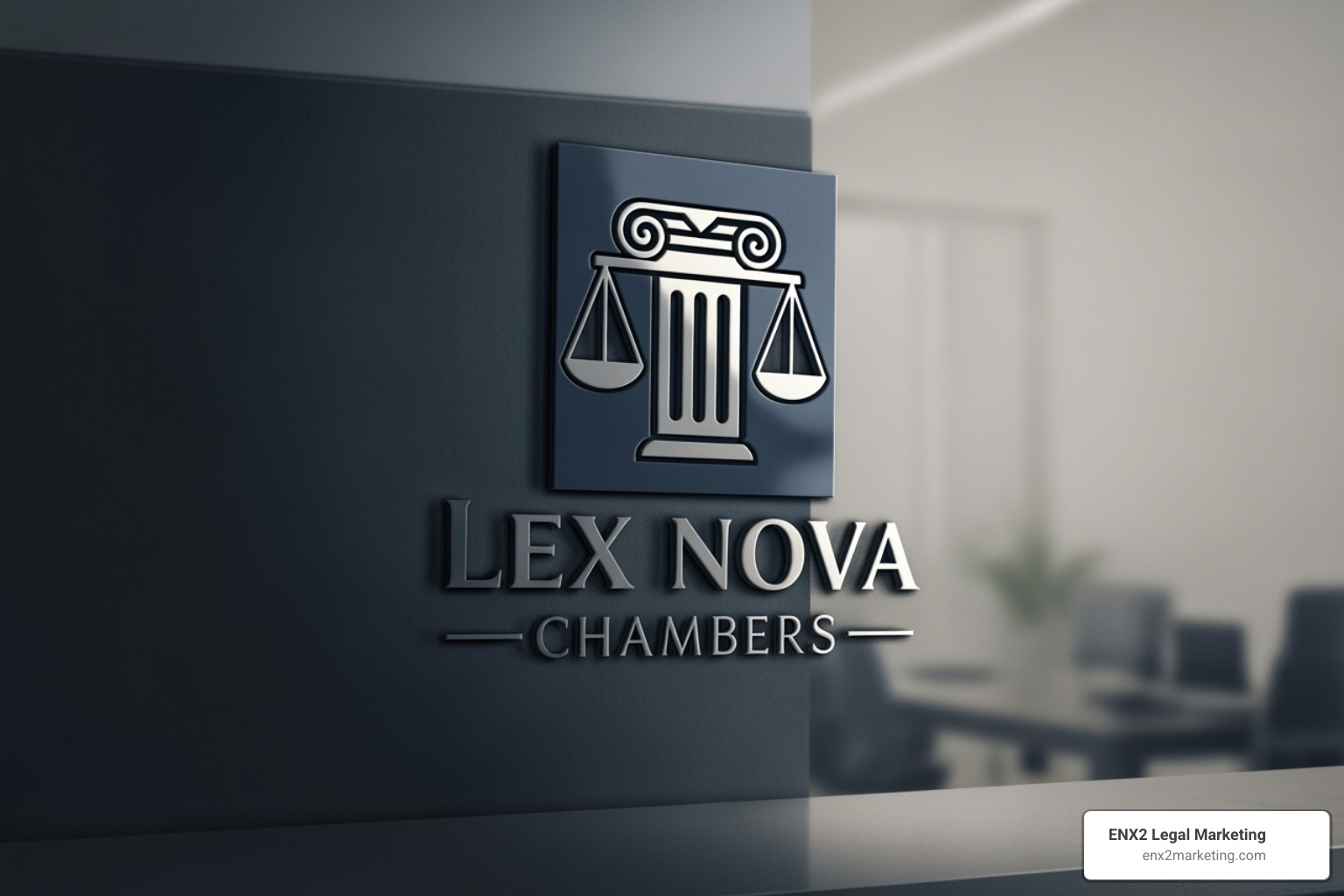
Memorable logos share four qualities: simplicity, memorability, scalability, and timelessness. A great logo is easy to recall and works perfectly whether on a business card or a billboard.
Building Blocks: Color, Typography, and Symbolism
These elements work together to create a compelling whole.
-
Color Psychology: Color theory is crucial in the legal field. Blue communicates trust and stability, making it a dominant choice. Black conveys authority, gray suggests balance, and burgundy implies tradition. While some firms use bold colors to stand out, credibility is key. Stick to a palette of two or three colors for a clean, cohesive look.
-
Typography: Your font choice is your brand’s voice. Serif fonts (like Times New Roman) feel traditional and authoritative, while sans-serif fonts (like Helvetica) appear modern and approachable. The most critical factor is legibility at any size. We always ensure we use web-safe fonts for consistent digital display.
-
Symbolism: Moving beyond clichés like gavels and scales is essential for differentiation. These symbols have become visual white noise. Instead, consider abstract shapes or imagery that reflects your specific expertise—protection for a personal injury firm or innovation for an IP practice. The goal is a unique symbol that feels connected to your services.
Choosing a Structure: Key Logo Types for Law Firms
Different logo structures serve different purposes. Understanding your options helps in selecting the best fit for your firm.
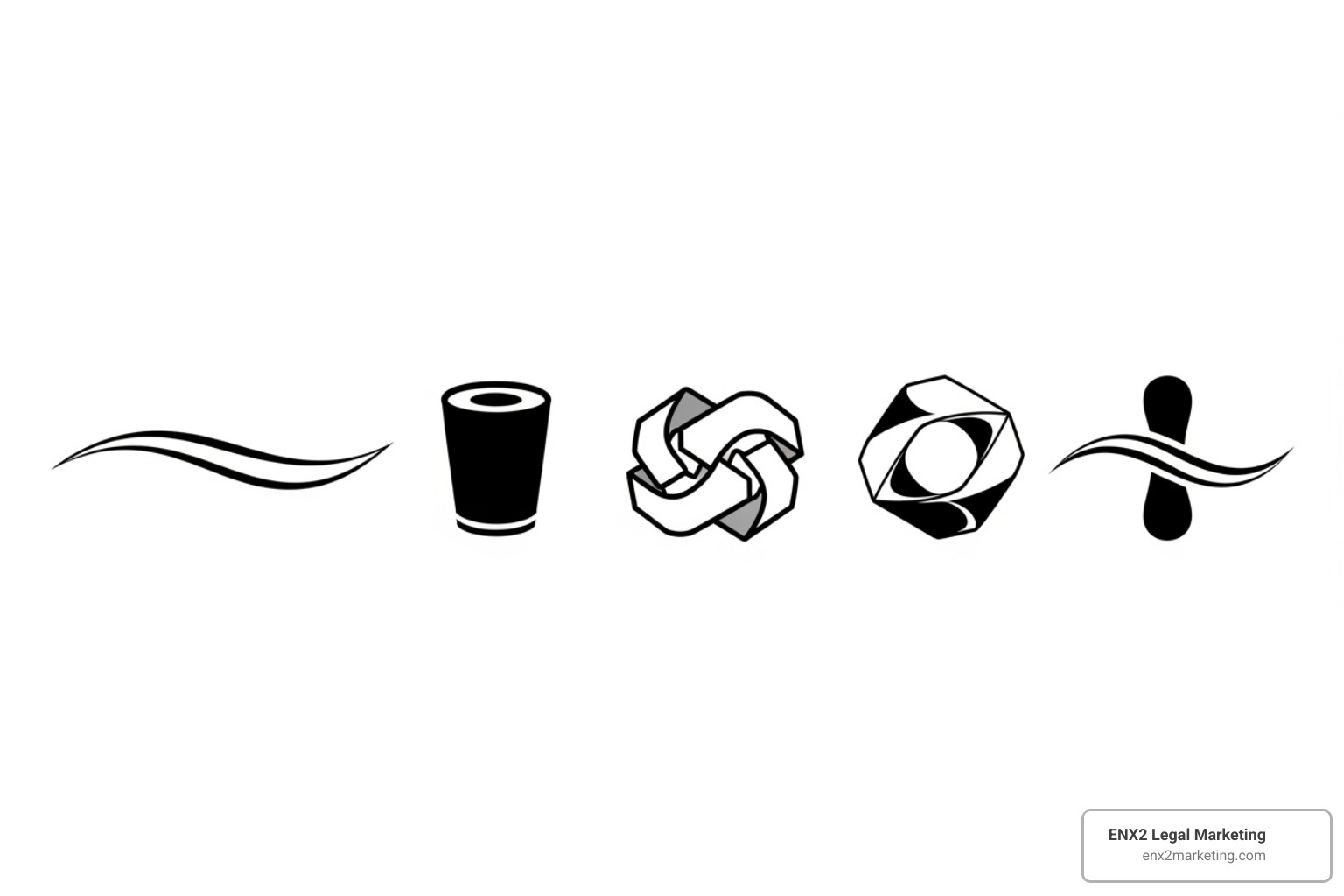
- Wordmarks: Focus entirely on your firm’s name in a distinctive typeface.
- Monograms: Use initials to create a sophisticated mark, ideal for firms with long names.
- Combination Marks: Blend text and a symbol. This is the most popular and versatile choice for law firms, offering name recognition and a unique visual element.
- Abstract & Pictorial Marks: Use unique shapes or recognizable symbols. These can be powerful but often require more brand-building to establish a connection.
Essential Best Practices for Your Law Office Logo Design
Follow these proven best practices to ensure your logo works hard for your firm.
- Keep it Simple & Scalable: A simple design is memorable and reproduces clearly at any size, from a tiny browser favicon to a large banner.
- Ensure Versatility: Your logo must look professional on your website, letterhead, social media, and signage. A design that works in black and white is a sign of a strong concept.
- Aim for a Timeless Feel: Avoid trendy elements that will quickly look dated. Classic design principles have more staying power.
- Avoid Common Pitfalls: Steer clear of overly complex designs that are hard to decipher, poor typography with illegible fonts or awkward spacing, and copying competitors, which can lead to brand confusion and legal issues. One of the most common mistakes is relying on generic legal symbols like gavels, scales of justice, or columns. While they seem relevant, they have been used so extensively that they no longer differentiate a firm; they simply blend into the background. Furthermore, low-quality execution can ruin even a great concept. This includes pixelated images, poorly constructed vector files that printers reject, or a design that doesn’t translate well to a single-color format. Professional design is a worthwhile investment to avoid these costly errors.
From Concept to Collateral: Executing and Protecting Your Brand
Designing a logo is just the first step. The real value emerges when that design is executed consistently across all brand touchpoints and is legally protected.
The design process is a collaboration. It begins with a deep dive into your firm’s vision and goals. From there, designers develop initial concepts for your review. Your specific, actionable feedback guides the revision phase until the design perfectly matches your vision. The final step is the delivery of a complete brand package, often including brand guidelines that act as a roadmap for consistent logo usage.
The Strategic Process of Law Office Logo Design: Why Work with a Professional
While DIY logo makers exist, a professional law office logo design is a strategic asset. A professional designer brings expertise in visual communication, creating a unique logo custom to your market. We understand that a personal injury firm needs to project compassion and strength, while a corporate practice must emphasize sophistication. These nuances are reflected in every design choice.
At ENX2 Legal Marketing, our process includes a thorough consultation, a collaborative workflow, and a detailed contract. Professional design is an investment, with our custom law firm logo packages starting at $1,250. This reflects the dedicated work required to create a logo that captures your firm’s culture and aspirations through our graphic design services.
Protecting Your Visual Identity: Trademarking Your Logo
Once your law office logo design is finalized, you must protect it. While using your logo provides some common-law rights, federal registration with the U.S. Patent and Trademark Office (USPTO) offers comprehensive protection.
Federal registration provides exclusive rights to use your logo nationwide, serves as public notice of ownership, and allows you to sue for infringement in federal court. Before you register, it’s crucial to conduct a thorough trademark search to ensure your design is unique. This preliminary step can save you from costly rebranding efforts and potential legal disputes over infringement down the road. The registration process can be complex, so consulting an IP attorney is often a wise decision.
Activating Your Brand: Using Your Logo Across Platforms
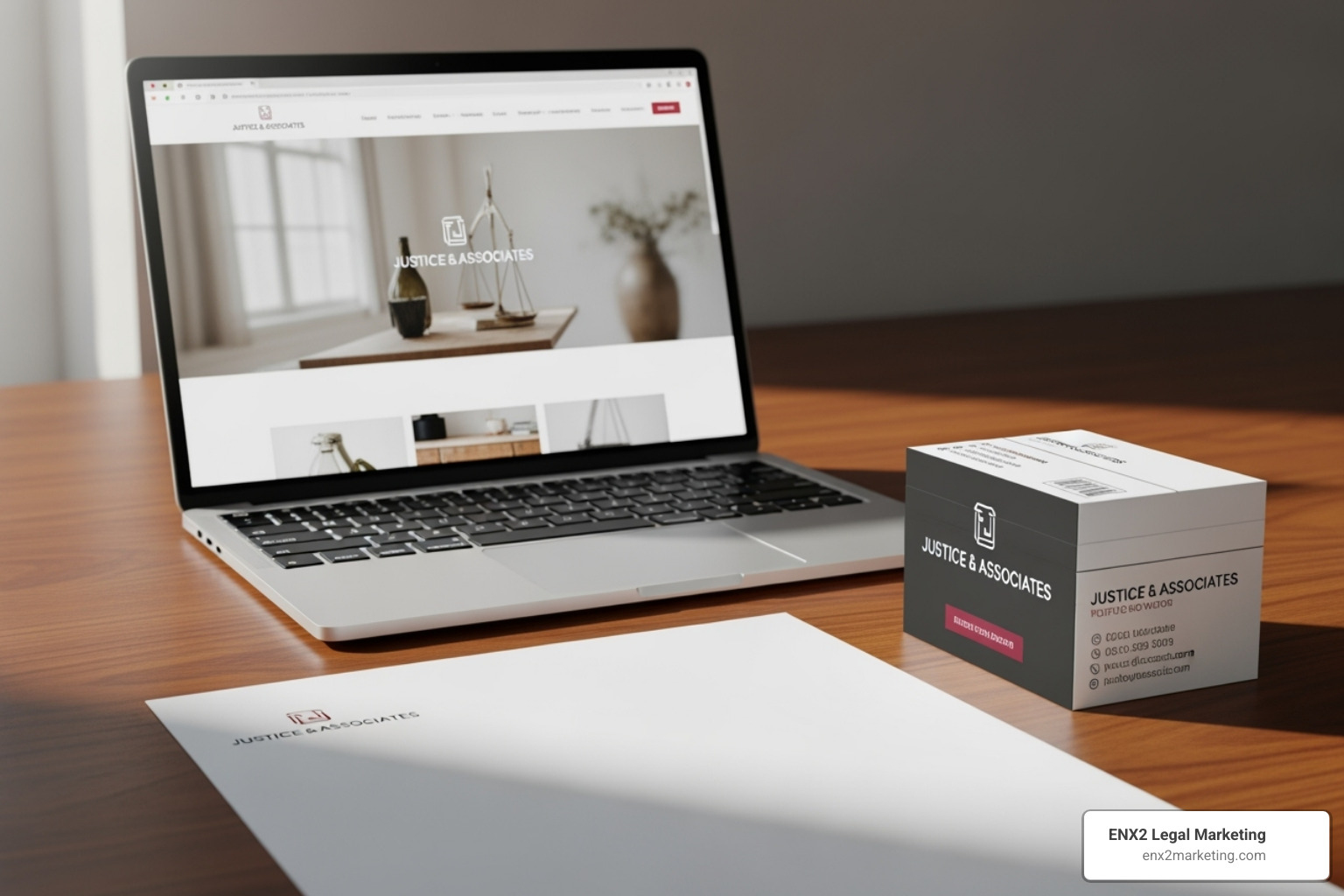
A great logo only works if it’s used consistently. To ensure this consistency, a professional designer will typically provide a brand style guide along with your final logo files. This document is the rulebook for your brand’s visual identity. It specifies approved logo variations, clear space requirements, official color palettes (with codes for print and web), and typography guidelines. A style guide empowers your team and external vendors to apply your branding correctly, ensuring a unified and professional appearance in every application. Understanding file types is also key for proper application.
- Vector files (AI, EPS, SVG) are essential for scalability. They can be resized infinitely without losing quality, perfect for everything from business cards to billboards.
- Raster files (PNG, JPG) are used for digital applications. PNGs are ideal for web use with transparent backgrounds, while JPGs are suitable for photographs.
Your logo should be applied consistently across all platforms to build recognition and trust. This includes:
- Website: Prominently in the header and as a favicon.
- Social Media: As your profile picture on LinkedIn, Facebook, etc.
- Email Signatures: A branding opportunity in every message.
- Print Materials: Business cards, letterhead, and marketing collateral.
- Office Signage: Exterior and interior branding.
At ENX2, our Law Firm Website Design and digital marketing services ensure your logo is integrated seamlessly, creating a cohesive brand experience that makes your firm memorable and trustworthy.