

When Financial Crisis Demands Immediate Action
An emergency bankruptcy filing is a streamlined legal process for individuals facing immediate financial threats like foreclosure or wage garnishment. It allows you to file minimal initial paperwork to quickly gain protection from creditors. This “skeleton filing” instantly triggers the automatic stay, a legal injunction that halts most collection actions.
Quick Answer for Emergency Filers:
- What it is: A bare-bones bankruptcy petition to get immediate creditor protection.
- When to use: Facing imminent foreclosure, wage garnishment, repossession, or a lawsuit.
- Immediate benefit: The automatic stay stops most creditor actions the moment you file.
- Key deadline: You must file all remaining forms within 14 days, or your case will be dismissed.
- Required documents: A voluntary petition, creditor list, Social Security statement, and credit counseling certificate.
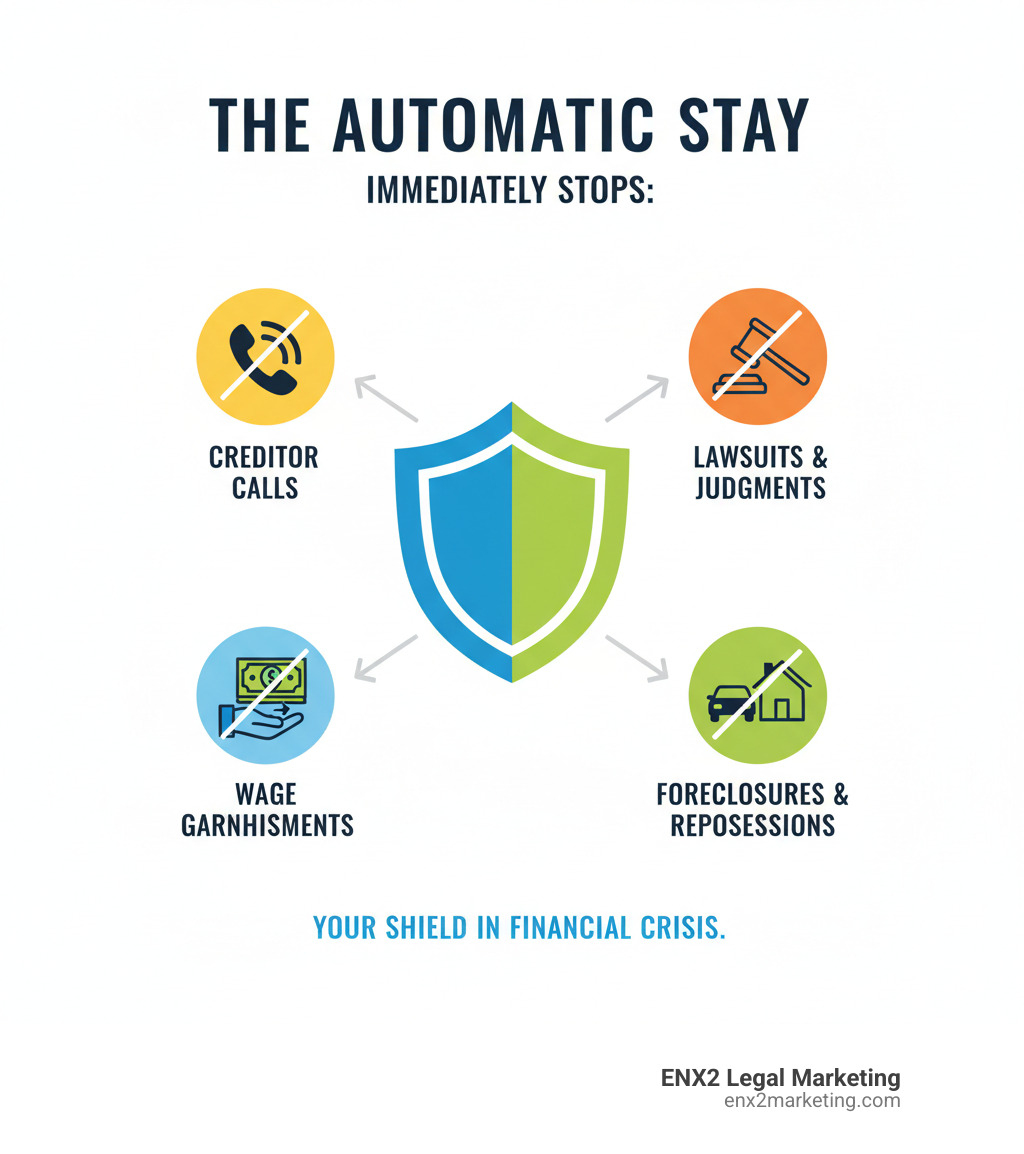
The automatic stay is your shield. It instantly stops foreclosure sales, repossessions, wage garnishments, and harassing creditor calls. However, this powerful protection is temporary if you don’t follow through. The 14-day deadline to complete your filing is absolute. Missing it means your case is dismissed, and creditors can resume their collection efforts. Rushing can also lead to errors, so while speed is essential, accuracy is paramount.
I’m Nicole Farber, CEO of ENX2 Legal Marketing. I’ve spent years helping bankruptcy attorneys connect with clients in crisis. I understand the urgency and the legal complexities of emergency bankruptcy filing cases, and this guide is designed to help you steer this challenging process.
What is an Emergency Bankruptcy Filing and When is it Necessary?
When you’re facing a financial crisis that can’t wait—like a foreclosure sale next week or a wage garnishment starting tomorrow—an emergency bankruptcy filing can be a lifeline. Also known as a “skeleton” or “bare-bones” filing, this process allows you to file a minimum set of documents to initiate a bankruptcy case and get immediate protection.
The moment your case is filed, the automatic stay takes effect. This powerful legal tool acts as a shield, instantly stopping most creditors from continuing collection efforts. It’s a pause button on your financial nightmare, but it comes with a critical catch: you have only 14 days to submit all the remaining bankruptcy paperwork. If you miss this deadline, your case is dismissed, and creditors can resume their actions.
When Urgent Action is Required
An emergency filing is reserved for situations where time is of the essence. Consider this option if you are facing:
- An imminent foreclosure sale: Filing bankruptcy can stop the auction of your home, giving you time to explore options like a Chapter 13 repayment plan.
- Wage garnishment: The automatic stay can halt deductions from your paycheck, protecting the income you need for essential living expenses.
- Car repossession: If your vehicle is at risk of being taken, an emergency filing can prevent the repossession and help you keep your transportation.
- A bank levy: This can stop a creditor from freezing your bank account and seizing your funds.
- An impending lawsuit: Filing bankruptcy can pause legal proceedings that could lead to judgments and asset seizure.
As the U.S. Courts website confirms, the automatic stay provides immediate relief, which is what makes this type of filing so powerful.
Emergency vs. Standard Bankruptcy: The Time Factor
A standard bankruptcy filing is a marathon, involving weeks of careful preparation to gather documents and complete a 50+ page petition. An emergency bankruptcy filing is a sprint. You file minimal documents to get immediate protection, then race to complete the rest of the paperwork within 14 days.
While the automatic stay’s protection is the same in both scenarios, the risk is much higher with an emergency filing. The compressed timeline increases the chance of errors or omissions, which can jeopardize your case. The court expects the same level of accuracy, regardless of how quickly the forms were prepared. This high-stakes maneuver requires precision and, ideally, professional guidance.
Your Step-by-Step Guide to an Emergency Bankruptcy Filing
An emergency bankruptcy filing is a precise process. Understanding each step is key to successfully navigating it.

Step 1: Fulfilling Pre-Filing Requirements
Before filing, two things must be done:
Credit Counseling Course: You must complete a credit counseling course from an approved provider within 180 days before filing. These courses are available online or by phone and typically take about 90 minutes. You will receive a certificate of completion, which is required for your filing.
Choose Your Bankruptcy Chapter:
- Chapter 7 (Liquidation): Best for discharging unsecured debts like credit cards and medical bills. You must pass a “Means Test” based on your income. It may not be ideal for saving a home from foreclosure if you are behind on payments.
- Chapter 13 (Reorganization): Involves a 3-to-5-year repayment plan to catch up on missed payments for secured debts like mortgages or car loans. It is often the better choice for stopping foreclosure and keeping assets.
The right chapter depends on your goals and financial situation. Expert legal advice is invaluable here, which is why attorneys focus on Bankruptcy Attorney Marketing to reach clients who need this critical guidance.
Step 2: Gathering Essential Documents for an Emergency Filing
For a skeleton filing, you need a few key documents to start the process:
- Voluntary Petition (Form 101): The main form that starts your case.
- Creditor Matrix: A list of all your creditors and their mailing addresses.
- Statement of Social Security Numbers (Form 121): For identification purposes.
You can download these official forms from the U.S. Courts website. You must also pay the filing fee ($338 for Chapter 7, $313 for Chapter 13) or file a motion to pay in installments or waive the fee if you qualify based on income.
Step 3: The Filing Process and Activating the Automatic Stay
For an emergency bankruptcy filing, file your documents in person at the bankruptcy court. This avoids mail delays. The court clerk will give you a case number, and the automatic stay is effective immediately. You or your attorney should then notify key creditors (like your mortgage lender or employer’s payroll department) of the filing and your case number to ensure they halt actions like foreclosure or garnishment right away. Law firms that excel at Digital Marketing for Bankruptcy Lawyers are easier to find when you need this kind of swift action.
Step 4: Post-Filing Deadlines and Responsibilities
The work isn’t over once you file. You must meet these critical post-filing obligations:
- The 14-Day Deadline: You have exactly 14 days to file all remaining documents, including your detailed schedules of assets, debts, income, and expenses. Failure to do so will result in the dismissal of your case and the loss of automatic stay protection.
- Meeting of Creditors (341 Hearing): About 30-45 days after filing, you must attend this meeting. The bankruptcy trustee will ask you questions under oath about your financial situation. Attendance is mandatory.
Risks, Alternatives, and When to Seek Professional Help
An emergency bankruptcy filing provides powerful, immediate relief, but it is a high-stakes strategy with significant risks. Rushing is sometimes necessary, but it can lead to costly mistakes.

Potential Downsides of an Emergency Filing
The speed required for an emergency filing can create problems:
- Errors and Omissions: Rushing to complete paperwork increases the risk of inaccurate information, which can lead to filing amendments, extra costs, and a poor impression on the court trustee.
- Risk of Dismissal: The 14-day deadline to file remaining forms is strict. Missing it results in case dismissal, which dissolves the automatic stay and leaves you vulnerable to creditors again.
- Limited Automatic Stay for Repeat Filers: If you had a bankruptcy case dismissed within the past year, the automatic stay in a new case may only last 30 days. If you had two or more cases dismissed, the stay may not apply at all without a special court order.
Alternatives and Seeking Legal Counsel
While alternatives like creditor negotiation or loan modification exist, they often take too long to resolve a true emergency. When a foreclosure sale is days away, only the automatic stay from a bankruptcy filing can provide the immediate, legally-binding stop you need.
This is why professional help is not just recommended—it’s essential. You should consult a bankruptcy attorney immediately when facing an urgent financial crisis. An experienced lawyer can:
- Ensure your skeleton filing is completed correctly and filed promptly.
- Help you choose the right bankruptcy chapter for your goals.
- Guide you in meeting the 14-day deadline to avoid dismissal.
- Steer complexities like repeat filing rules.
At ENX2 Legal Marketing, we specialize in helping attorneys improve their online presence through strategies like SEO for Bankruptcy Lawyers. We know how vital it is for people in crisis to quickly find a qualified professional who can provide peace of mind and expert guidance.

The stakes in an emergency filing are too high to go it alone. Having an expert on your side makes all the difference.