
Introduction: Decoding the Data in Every Call
Call analytics is the process of analyzing phone call data to gain insights into customer behavior, campaign performance, and operational efficiency. Despite the growth of digital channels, voice remains a critical customer service touchpoint. Yet, for many businesses, phone calls are a blind spot in their marketing data.
Call analytics solves this by connecting every call to the marketing touchpoint that drove it, whether it’s a Google ad, a webpage, or a social media campaign. It captures crucial data like:
- Campaign attribution: Which channels, keywords, or ads drove the call.
- Call details: Duration, time of day, and caller information.
- Performance metrics: Answer rates, abandonment rates, and conversion status.
- Conversation insights: Customer sentiment, needs, and agent performance.
By implementing call analytics, businesses can see a 25-30% increase in conversions, improve marketing ROI, and make data-driven decisions. Modern solutions use AI to analyze conversation content, changing raw data into strategic intelligence.
I’m Nicole Farber, and for over 12 years at ENX2 Legal Marketing, I’ve helped law firms use call analytics to optimize client acquisition. In this guide, I’ll show you how to put it to work for your business.
The Core Components and Benefits of Call Analytics
Think of call analytics as your secret decoder ring for phone conversations. Every time your phone rings, there’s a story behind that call—a journey that started with a Google search or a Facebook ad. Call analytics helps you understand that story, turning simple phone calls into actionable intelligence.
For businesses like law firms, where that first phone call often makes or breaks a potential client relationship, this intelligence is pure gold.
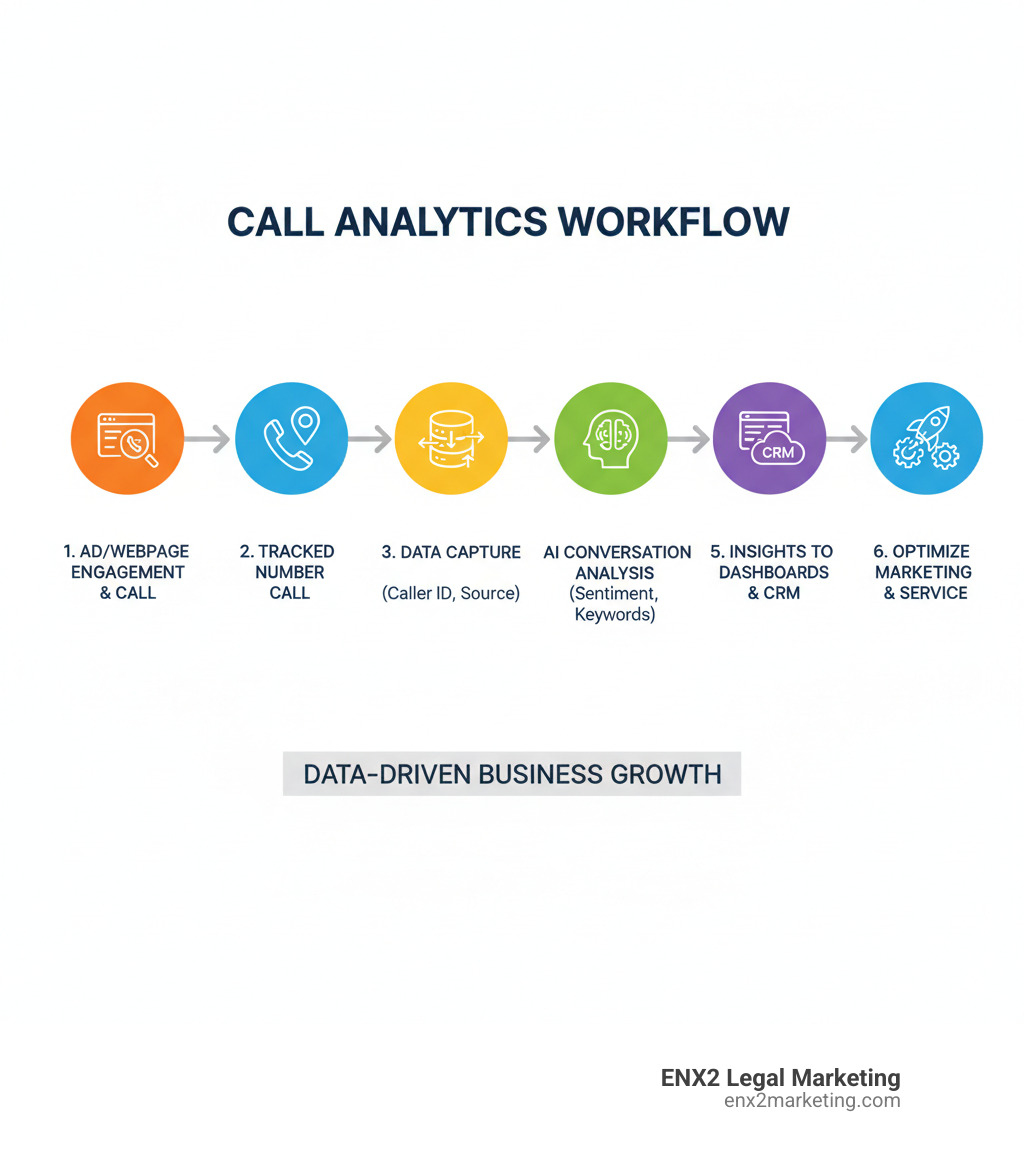
How It Works: Capturing and Processing Call Data
At its core, call analytics uses call tracking to assign unique phone numbers to different marketing channels. When a potential client calls, the system instantly identifies the source, turning a simple phone call into actionable intelligence.
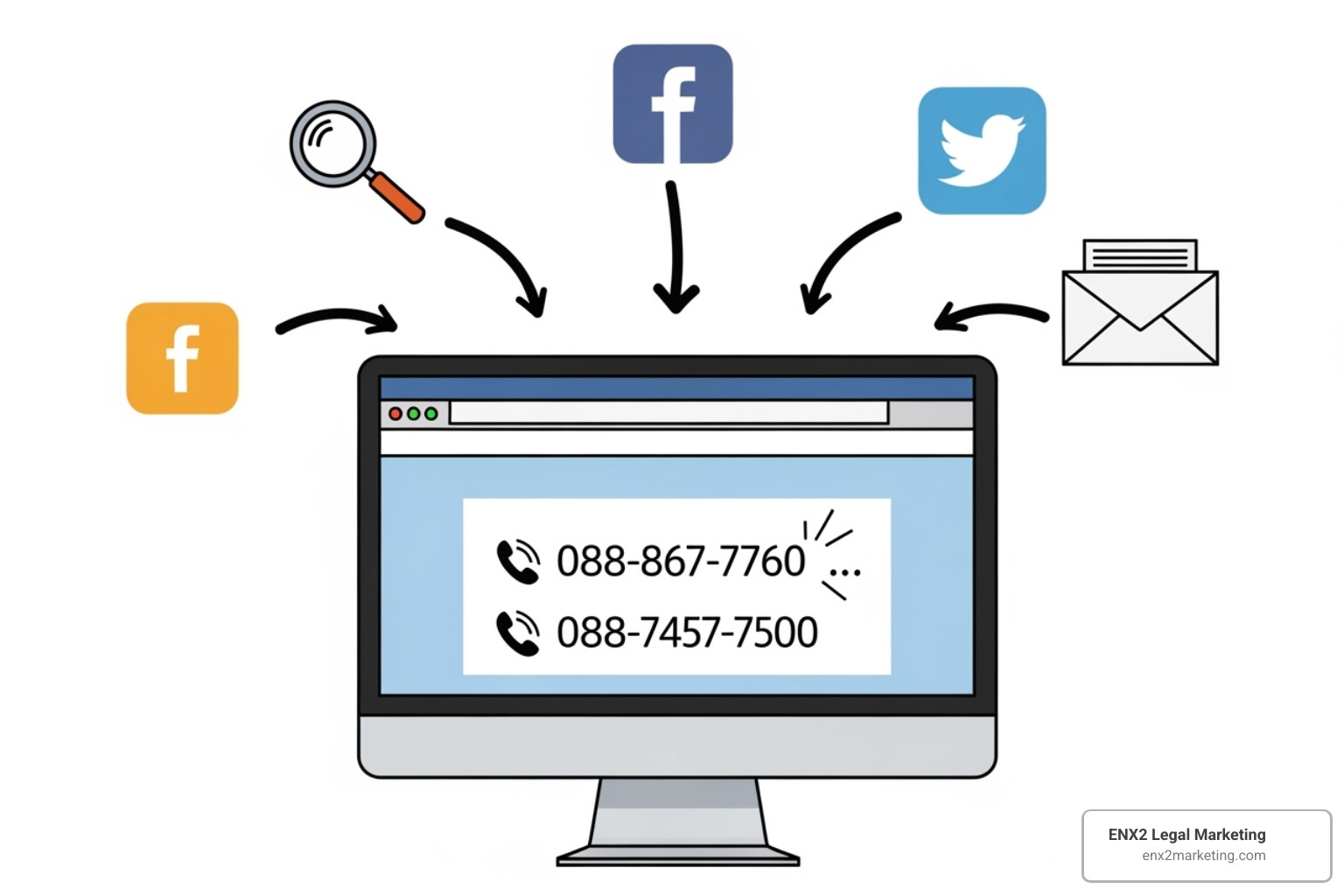
For online sources, Dynamic Number Insertion (DNI) displays a unique phone number on your website based on how a visitor arrived—for example, from a specific Google search or Facebook ad. This allows the system to capture their entire digital journey, including the keyword, ad, and pages visited. For offline marketing like print ads, dedicated virtual numbers are used for each campaign.
Beyond the source, modern platforms capture a wealth of data: caller information, location, call duration, answer rates, and complete marketing attribution. Advanced systems can also record and transcribe conversations, analyzing call outcomes, sentiment, and key phrases. As more businesses are shifting rapidly towards VoIP lines, the infrastructure for this deep analysis is becoming more robust and scalable, creating a complete profile for every call.
Opening up Growth: The Transformative Benefits for Your Business
Implementing call analytics provides a clear path to measurable growth. The insights gained can fundamentally change how you operate and market your business.
- Improved Customer Experience: By understanding why people call and what questions they ask, you can refine your services and website content. Analyzing call patterns helps you proactively address client needs, which is the first step in creating a better customer experience.
- Data-Driven Decision Making: Replace guesswork with concrete evidence. If one campaign generates more high-quality calls than another, you can confidently reallocate your budget based on performance data, not assumptions.
- Improved ROI: Precise attribution means you stop wasting money on ineffective campaigns. Businesses often see a 25-30% conversion increase by investing in what works and cutting what doesn’t.
- Operational Efficiency: Identify and fix bottlenecks you might otherwise miss. High abandonment rates or long call times can point to staffing or training needs, helping you streamline workflows and run a more efficient operation.
These benefits work together to transform your client acquisition strategy. For a deeper look, explore our guide on Call Tracking Benefits.
Mastering Marketing Attribution with Call Analytics
For many marketers, phone calls are a black box in the customer journey. You know people are calling, but you don’t know which marketing efforts are responsible. This is a massive blind spot that call analytics eliminates.
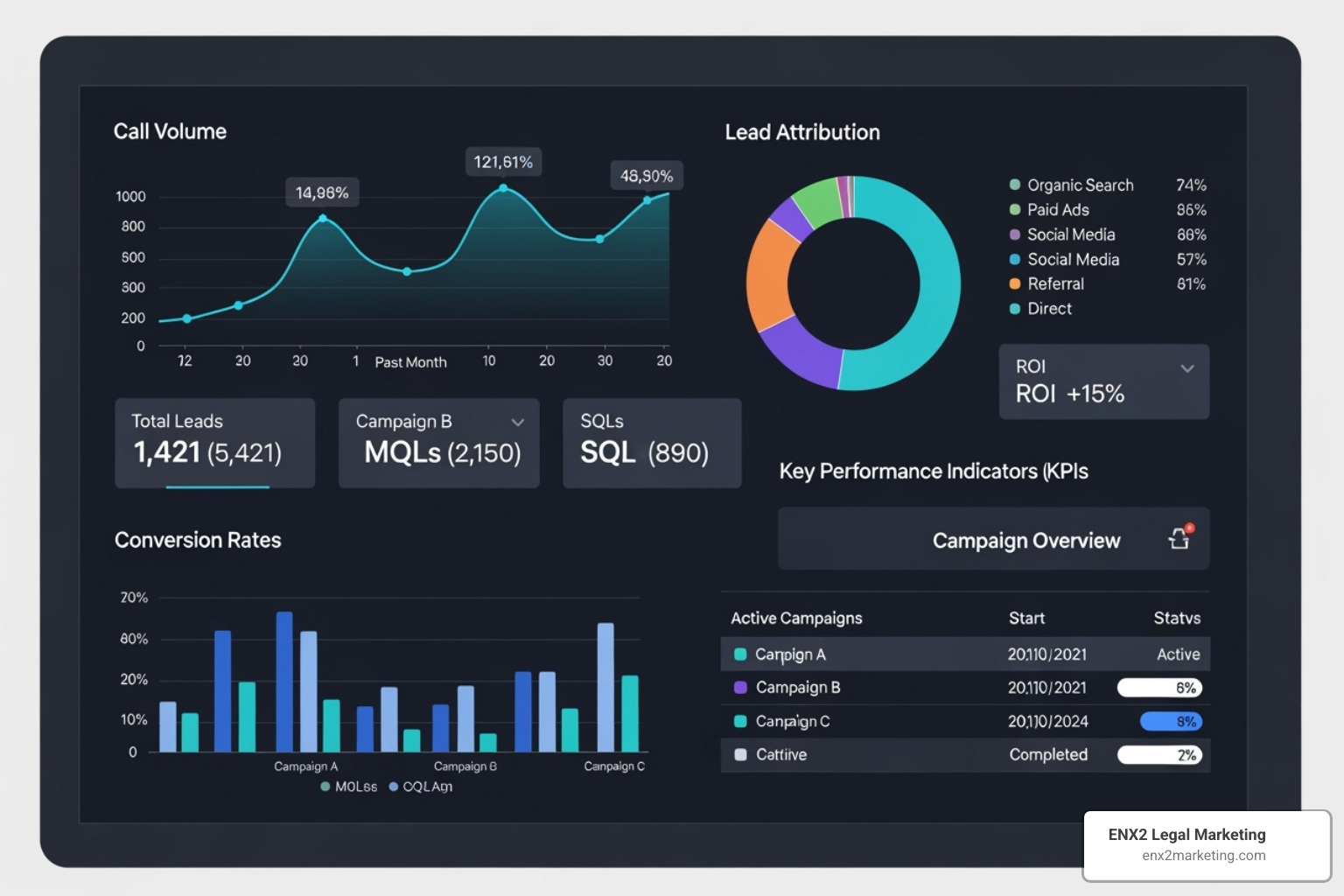
By connecting every call to its source, you gain complete visibility. Unique tracking numbers assigned to different channels—from paid ads to direct mail—allow you to see exactly what works. This attribution can be incredibly granular, tracking down to the specific keyword, ad creative, or landing page that prompted the call.
This data is transformative for optimizing ad spend. You can identify which keywords generate high-value calls and invest more in them, while pulling back from campaigns that produce unqualified leads. This directly improves your return on ad spend (ROAS) by ensuring every marketing dollar works smarter.
Furthermore, call analytics informs your SEO and content strategy. By analyzing the actual language and questions from callers, you uncover what your audience truly needs. If a specific legal issue comes up repeatedly, that’s a clear signal to create targeted content like blog posts or service pages, closing the loop on the customer journey from first click to final conversation.
Putting Insights into Action: Advanced Applications and Strategy
Once you’ve established the fundamentals of collecting and attributing call data, you can apply these insights to refine operations, lift team performance, and drive sustainable growth.
Leveraging Data for Agent Coaching and Performance
For service-based businesses like law firms, the first call is a pivotal moment. Call analytics provides the tools to ensure every conversation is effective.
Call recording and transcription create a searchable library of client interactions. This isn’t for micromanagement; it’s for identifying what works. You can review how agents handle objections, spot patterns, and ensure quality assurance and compliance, which is critical for maintaining professional and ethical standards.
The data naturally reveals your top performers. By analyzing their calls, you can identify best practices—like building rapport or addressing concerns—and use those insights to train the entire team. Conversely, the data also highlights training opportunities for team members who may be struggling with certain metrics, allowing for specific, objective coaching.
Analyzing transcripts also helps refine your processes. If callers repeatedly ask the same question, you know to make that information more prominent on your website or adjust call scripts. By tracking metrics like handling time and resolution rates, you can continuously improve the client experience, ensuring callers feel heard and confident in your firm.
The Future is Now: AI and Machine Learning in Modern Call Analytics

The integration of artificial intelligence has revolutionized call analytics, allowing businesses to understand the substance and emotion of every conversation at scale.
- Speech Analytics: AI-powered systems go beyond simple transcription to analyze acoustic characteristics, identify keywords, and spot trends across thousands of calls. This provides insights from 100% of your conversations, not just a small sample.
- Sentiment Analysis: By evaluating the tone of both the caller and the agent, AI classifies interactions as positive, negative, or neutral. This helps you gauge client satisfaction and identify calls that require follow-up.
- Conversation Intelligence: This cutting-edge capability understands context and intent. It can identify the reason for a call, detect specific intents like scheduling a consultation, and even generate automatic summaries to reduce manual documentation.
- Predictive Analytics: Using historical data, AI can forecast outcomes, such as which leads are most likely to convert. This allows for more strategic resource allocation.
For law firms, these AI capabilities are transformative, helping to identify legal needs and ensure ethical standards are met. At ENX2 Legal Marketing, our work in Law Firm Call Analytics helps practices leverage these advanced features to grow.
Choosing the Right Solution and Next Steps
Selecting the right call analytics platform is a critical decision. Look for a solution with these key features:
- Seamless Integration: The platform must integrate with your existing CRM, Google Analytics, and advertising platforms to create a unified view of the customer journey.
- Robust Reporting: Intuitive, customizable dashboards are essential for turning raw data into actionable insights.
- AI Capabilities: Prioritize platforms with speech-to-text transcription, sentiment analysis, and conversation intelligence to open up the deepest insights.
- Security and Compliance: Ensure the solution complies with regulations like HIPAA and GDPR and offers features like data encryption and redaction to protect sensitive client information.
- Scalability: Choose a platform that can grow with your business without performance issues or prohibitive costs.
Industries like legal services, healthcare, real estate, and automotive gain immense advantages from call analytics. For law firms, tracking the journey from search to retained client is crucial for growth. At ENX2 Legal Marketing, we specialize in implementing custom call analytics solutions for legal practices nationwide. You can learn more about Call Tracking for Lawyers to see how these tools can transform your client acquisition.
Choosing a platform is an investment in a clearer understanding of your clients, your team, and your path to growth.