

Facing Financial Hardship? A First Look at Bankruptcy Costs
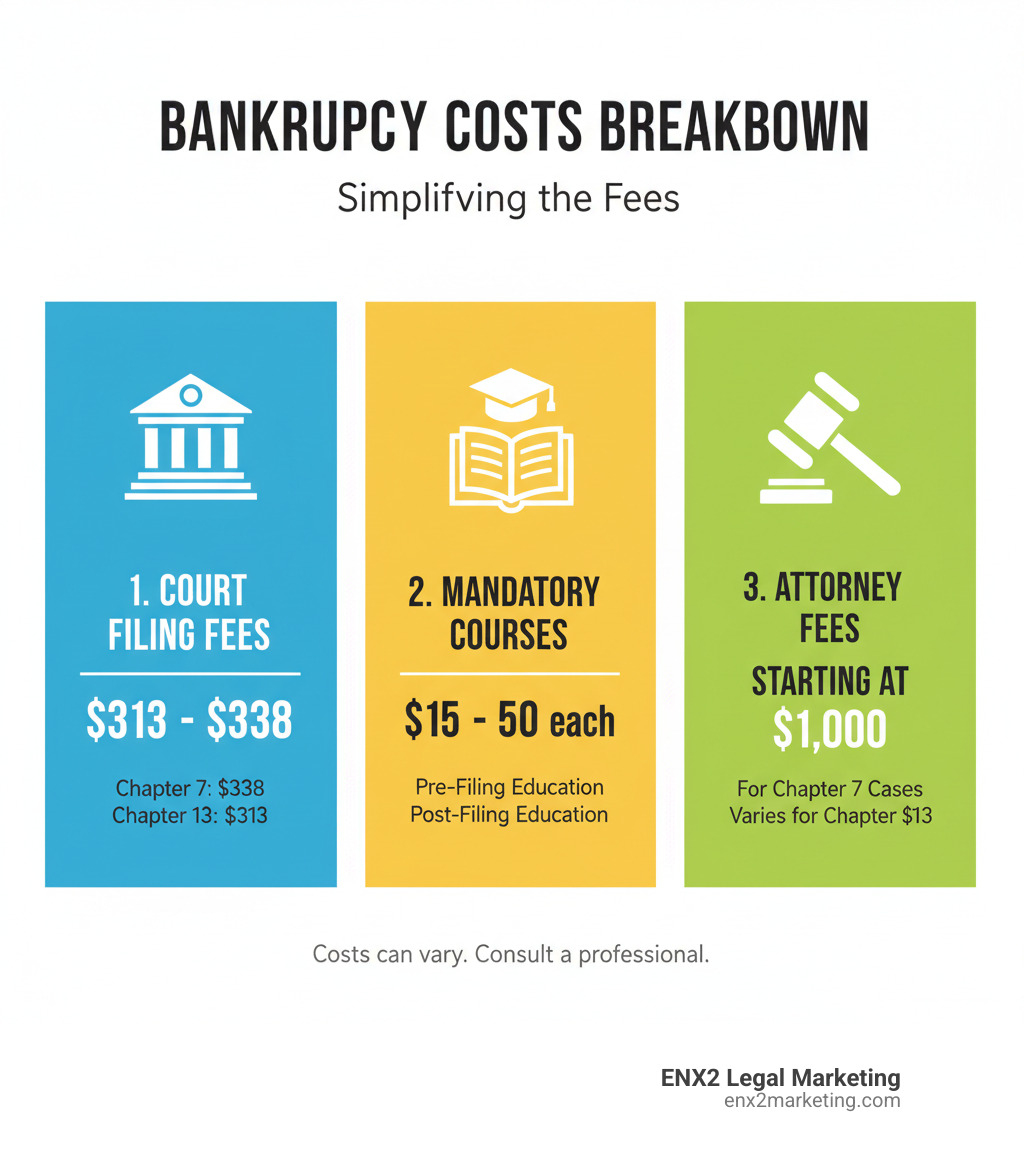
Bankruptcy filing fees range from $313 to $338 for the most common types of bankruptcy, but the total cost of filing can reach $3,000 or more when you include attorney fees and mandatory courses. Here’s what you need to know about the main costs:
- Chapter 7 filing fee: $338 (includes $245 filing fee + $78 administrative fee + $15 trustee surcharge)
- Chapter 13 filing fee: $313 (includes $235 filing fee + $78 administrative fee)
- Credit counseling courses: $15-$50 each (pre-filing and post-filing required)
- Attorney fees: $1,000-$2,000+ for Chapter 7, typically higher for Chapter 13
- Fee waivers available: For Chapter 7 if income is below 150% of poverty line
- Payment plans allowed: Up to 4 installments over 120 days for filing fees
When you’re facing overwhelming debt, understanding these costs upfront helps you plan your path to financial relief. The good news is that multiple options exist to make bankruptcy more affordable, including fee waivers and installment payment plans.
Many people assume bankruptcy is expensive and out of reach, but the reality is more nuanced. While there are required costs, the bankruptcy system includes built-in protections for those who truly cannot afford the fees. For instance, if your income falls below 150% of the federal poverty guidelines, you may qualify to have the Chapter 7 filing fee waived entirely.
The total cost varies significantly based on your situation, the type of bankruptcy you file, and whether you hire an attorney. Understanding these expenses helps you make an informed decision about whether bankruptcy is the right debt relief option for your circumstances.
I’m Nicole Farber, and through my 12+ years of experience helping legal professionals market their services, I’ve seen how understanding bankruptcy filing fees can remove barriers for those seeking debt relief. My work with bankruptcy attorneys has given me deep insight into the financial challenges clients face when considering this important legal option.
A Complete Breakdown of Bankruptcy Filing Fees and Other Costs
When you’re already struggling financially, the thought of paying additional fees to file for bankruptcy might feel overwhelming. I understand that concern completely – it’s one of the most common questions I hear from people considering this fresh start option. The good news is that understanding these costs upfront helps you plan effectively, and there are more payment options available than most people realize.
Let’s walk through every expense you might encounter, from the required court fees to attorney charges and mandatory courses. I’ll also share the helpful payment alternatives that can make bankruptcy more accessible, even when money is tight. For legal professionals looking to better serve clients in this situation, you can find more info about digital marketing for bankruptcy lawyers to connect with those who need guidance most.
Understanding Chapter 7 and Chapter 13 Bankruptcy Filing Fees
The bankruptcy filing fees are set by federal courts and remain consistent across the country, though they do change periodically. Think of these fees as covering the administrative costs of processing your case through the court system.
Chapter 7 bankruptcy currently costs $338 to file. This total breaks down into three specific components: a $245 filing fee, a $78 administrative fee, and a $15 trustee surcharge. Each piece serves a different purpose in supporting the bankruptcy system that will help you get your fresh start.
Chapter 13 bankruptcy has a slightly lower filing fee of $313. This includes a $235 filing fee and the same $78 administrative fee as Chapter 7, but no trustee surcharge. The difference reflects the different administrative needs of each bankruptcy type.
These fees are the same whether you file in Texas, California, New York, or any other state. These fees are non-refundable once you file, regardless of how your case turns out. For the most current fee information, you can always find the most up-to-date fee schedule on the U.S. Courts website.
Here’s how the fees compare side by side:
| Fee Type | Chapter 7 Filing Fee | Chapter 13 Filing Fee |
|---|---|---|
| Base Filing Fee | $245 | $235 |
| Administrative Fee | $78 | $78 |
| Trustee Surcharge | $15 | $0 |
| Total Fee | $338 | $313 |
Options for Paying Bankruptcy Filing Fees If You Can’t Afford Them
Here’s where things get more hopeful – the bankruptcy system recognizes that people filing for bankruptcy often can’t afford large upfront payments. There are two main options to help make these fees more manageable.
Fee waivers are available for Chapter 7 cases if your income falls below 150% of the federal poverty guidelines for your household size. This means if you’re truly struggling financially, you might not have to pay the filing fee at all. You’ll need to complete Form 103B to apply for this waiver. Unfortunately, Chapter 13 filers don’t qualify for fee waivers since they’re proposing a repayment plan that demonstrates some ability to pay.
Payment plans offer another solution when you can’t afford the full fee upfront but don’t qualify for a waiver. By filing Form 103A, you can request to pay your bankruptcy filing fees in up to four installments over 120 days. In some cases, courts may extend this to 180 days if you can show good cause.
This flexibility has helped countless people access the bankruptcy system when they need it most. You can check if you qualify for a fee waiver based on federal poverty guidelines to see if this option might work for you.
Working with an experienced attorney can help you steer these payment options effectively. For more information on connecting with qualified legal professionals, you can explore more info about bankruptcy attorney marketing.

The Required Costs of Credit Counseling and Debtor Education
Beyond court fees, you’ll need to complete two educational courses as part of your bankruptcy journey. These aren’t just bureaucratic problems – they’re designed to help you understand your financial situation and build better money management skills for the future.
The pre-filing credit counseling course must be completed within 180 days before you file your bankruptcy petition. This course typically costs between $15 and $30 and helps you explore all your debt relief options before committing to bankruptcy.
The post-filing debtor education course happens after you file but before your debts are discharged. This course usually runs about $35 and focuses on budgeting and financial management skills to help prevent future financial problems.
Both courses are capped at $50 unless a provider receives special permission from the U.S. Trustee’s Office. Since these agencies operate as non-profits, they keep costs reasonable and must offer fee waivers or reductions if you can’t afford the course fees. Don’t let these small amounts prevent you from moving forward with bankruptcy if it’s the right choice for your situation.

How Much Do Bankruptcy Attorneys Typically Charge?
While you can technically file bankruptcy without an attorney, the process is complex enough that most people benefit significantly from professional guidance. Attorney fees typically represent the largest portion of your total bankruptcy costs.
Chapter 7 attorney fees generally range from $1,000 to $2,000, with most attorneys charging a flat fee for the entire case. This predictable pricing helps you budget effectively. However, Chapter 7 attorney fees usually must be paid in full before filing, since the bankruptcy will discharge most debts, including any unpaid attorney fees.
Chapter 13 attorney fees tend to be higher due to the longer case duration and increased complexity. Chapter 13 cases last three to five years and require ongoing legal work to manage your repayment plan, handle creditor issues, and make any necessary modifications.
Payment plan options vary significantly between the two bankruptcy types. For Chapter 7, some attorneys offer pre-filing payment plans, letting you pay in installments leading up to your filing date. For Chapter 13, attorneys often allow you to include a portion of their fees in your court-approved repayment plan, spreading the cost over several years and making it much more manageable.
This flexibility in attorney fee payment has made bankruptcy accessible to many more people who need debt relief. If you’re looking for qualified legal representation, you can learn more about connecting with experienced professionals through more info about bankruptcy attorney leads.

Comparing the Total Cost: Chapter 7 vs. Chapter 13
The choice between Chapter 7 and Chapter 13 involves significant cost differences that reflect how fundamentally different these two approaches are.
Chapter 7 bankruptcy offers a quicker, more straightforward path with lower overall costs. With a $338 filing fee and attorney fees typically between $1,000 and $2,000, your total upfront costs usually range from about $1,400 to $2,400. The entire process typically takes just three to four months from start to finish. The trade-off is that most fees need to be paid upfront, and you may need to surrender some assets.
Chapter 13 bankruptcy has a slightly lower $313 filing fee but higher total attorney fees due to the case’s complexity and duration. However, the payment structure is often more flexible – you can spread attorney fees over your three-to-five-year repayment plan, making the monthly financial impact more manageable. This option lets you keep your assets while reorganizing your debts.
The key difference is timing and payment flexibility. Chapter 7 requires more money upfront but resolves quickly, while Chapter 13 spreads costs over time but keeps your case open for years. Your income level, asset situation, and cash flow will help determine which approach makes more financial sense for your circumstances.
For legal professionals helping clients steer these choices, more info about bankruptcy lawyer marketing provides insights into reaching people who need this guidance most.
Are There Other Miscellaneous Bankruptcy Fees?
While filing fees, courses, and attorney fees cover most bankruptcy costs, several other fees might apply depending on your specific situation. These are less common but worth understanding upfront.
Case modification fees can arise if you need to make changes after filing. Reopening a closed Chapter 7 case costs $245, while reopening a Chapter 13 case costs $235. Converting from Chapter 13 to Chapter 7 costs $25, covering the fee difference and trustee surcharge.
Document and administrative fees include $34 for amending your bankruptcy schedules if you need to add forgotten creditors or correct information. If you need to file a complaint within your bankruptcy case, that costs $350. Returned payment fees run $53 if a check bounces or payment is denied.
Record and research fees apply when you need copies of court documents ($0.50 per page) or searches of bankruptcy court records ($34 per name or item searched). Other specialized motions, like terminating the automatic stay, carry their own fees around $199.
Most people won’t encounter many of these additional fees, especially with careful preparation and accurate initial filing. However, knowing they exist helps you budget appropriately and understand the importance of getting everything right the first time.

Navigating Your Path to Financial Freedom
When you’re drowning in debt, the thought of paying bankruptcy filing fees on top of everything else can feel overwhelming. But here’s the truth: understanding these costs isn’t just about budgeting—it’s about recognizing that financial freedom is within your reach, even when money is tight.
Throughout this guide, we’ve walked through every expense you might encounter on your bankruptcy journey. The court filing fees of $338 for Chapter 7 and $313 for Chapter 13 represent just the starting point. Add in the mandatory credit counseling and debtor education courses at $15-$50 each, plus attorney fees ranging from $1,000 to $2,000 or more, and you’re looking at a significant investment in your financial future.
But here’s what makes bankruptcy different from other legal processes: the system itself recognizes that people filing for bankruptcy are struggling financially. That’s why fee waivers exist for Chapter 7 if your income falls below 150% of the poverty line. It’s why you can pay filing fees in installments over 120 days. It’s why even the mandatory courses offer fee waivers for those who can’t afford them.
The choice between Chapter 7 and Chapter 13 often comes down to more than just cost. Chapter 7 typically costs less upfront and moves faster, making it ideal when you need quick relief and qualify for the means test. Chapter 13 might involve higher attorney fees, but it offers something invaluable: the ability to pay those fees through your repayment plan rather than all at once.
Don’t let the fear of miscellaneous fees for things like reopening cases or filing amendments derail your plans either. These costs are uncommon and usually only arise when specific circumstances require additional court actions. Most people complete their bankruptcy without encountering these extra charges.
The most important takeaway? Bankruptcy filing fees shouldn’t be the barrier that keeps you from getting the fresh start you deserve. Whether through fee waivers, installment plans, or working with an attorney who offers flexible payment arrangements, there are paths forward even when money is extremely tight.
If you’re ready to take that next step, consulting with a qualified bankruptcy attorney is your best move. They’ll help you steer not just the costs, but the entire process of rebuilding your financial life. At ENX2 Legal Marketing, we’ve spent over a decade helping legal professionals connect with people exactly like you—people who need expert guidance during their most challenging financial moments.
Your journey to financial freedom doesn’t have to wait until you have thousands of dollars saved up. With the right information and professional support, you can start that journey today.

To learn more about how legal professionals can reach and help individuals like you, learn more about SEO for bankruptcy lawyers.