
Your Guide to Amazon’s Advertising Powerhouse
Amazon pay per click advertising management is the strategic process of creating, optimizing, and monitoring paid advertising campaigns on Amazon’s platform to increase product visibility, drive sales, and maximize return on investment. Here’s what you need to know:
Key Components:
- Campaign Types: Sponsored Products, Sponsored Brands, Sponsored Display
- Pricing Model: Pay only when customers click your ads (CPC) or per 1,000 impressions (CPM)
- Core Metrics: ACoS (Advertising Cost of Sales), ROAS (Return on Ad Spend), CTR (Click-Through Rate)
- Management Tasks: Keyword research, bid optimization, negative keyword management, performance analysis
Amazon’s advertising platform operates on an auction-based system where sellers bid on keywords to get their products featured in prime real estate—the top of search results and product detail pages. With paid ads accounting for about 10% of all clicks on Amazon, mastering this system is no longer optional. As one industry expert noted, “each day you’re not running PPC ads on Amazon is a day you’re losing money.”
What makes Amazon PPC unique is its direct connection to purchase intent. Unlike other advertising platforms where users might just be browsing, Amazon shoppers are ready to buy. This creates massive opportunities but also intense competition that requires smart strategy and constant optimization.
I’m Nicole Farber, and I’ve spent over 12 years helping businesses steer complex digital marketing challenges through my company ENX2 Legal Marketing. While my expertise spans across various industries, I’ve seen how mastering amazon pay per click advertising management can transform a business’s revenue stream when executed with the same precision we apply to legal marketing campaigns.
The Core Components of Amazon Pay Per Click Advertising Management
Understanding Campaign Types and Costs
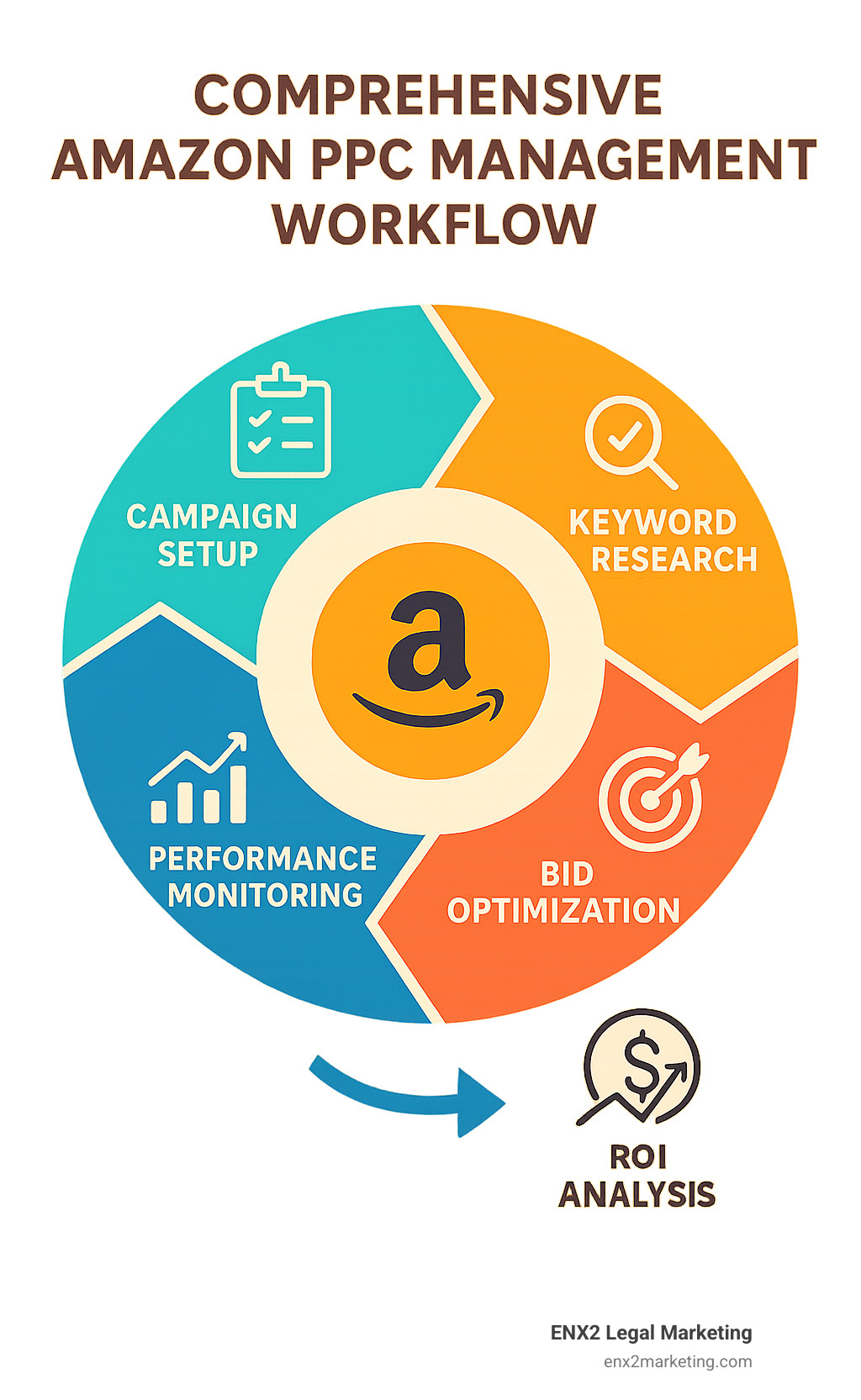
When we talk about amazon pay per click advertising management, we’re primarily referring to three main campaign types: Sponsored Products, Sponsored Brands, and Sponsored Display. Each serves a unique purpose in the advertising funnel.
- Sponsored Products: These are the most common ad type, appearing prominently in Amazon search results and on product detail pages. They are ideal for driving sales of individual products and operate on a cost-per-click (CPC) model, meaning you only pay when a customer clicks on your ad.
- Sponsored Brands: Available to brand-registered sellers, these ads highlight your brand logo, a custom headline, and a selection of products. They appear in high-visibility areas, typically at the top of search results, to improve brand exposure. Like Sponsored Products, they operate on a CPC model.
- Sponsored Display: These ads help you reach shoppers both on and off Amazon. They can retarget those who have previously viewed your products or target audiences based on their shopping behaviors. Sponsored Display operates on a CPC or CPM (cost per 1,000 impressions) model, making it useful for both brand awareness and direct sales.
Here’s a quick comparison of these campaign types:
| Feature | Sponsored Products | Sponsored Brands | Sponsored Display |
|---|---|---|---|
| Goal | Drive sales, product visibility | Brand awareness, product portfolio visibility | Retargeting, audience reach (on/off Amazon) |
| Placement | Search results, product detail pages | Top of search results, product detail pages | On/off Amazon, product detail pages, third-party sites |
| Targeting | Keywords, products (ASINs), categories | Keywords, products (ASINs) | Audiences (views, purchases, interests), products, categories |
| Pricing Model | CPC | CPC | CPC or CPM |
| Requirement | Any seller | Brand Registered Seller/Vendor | Any seller |
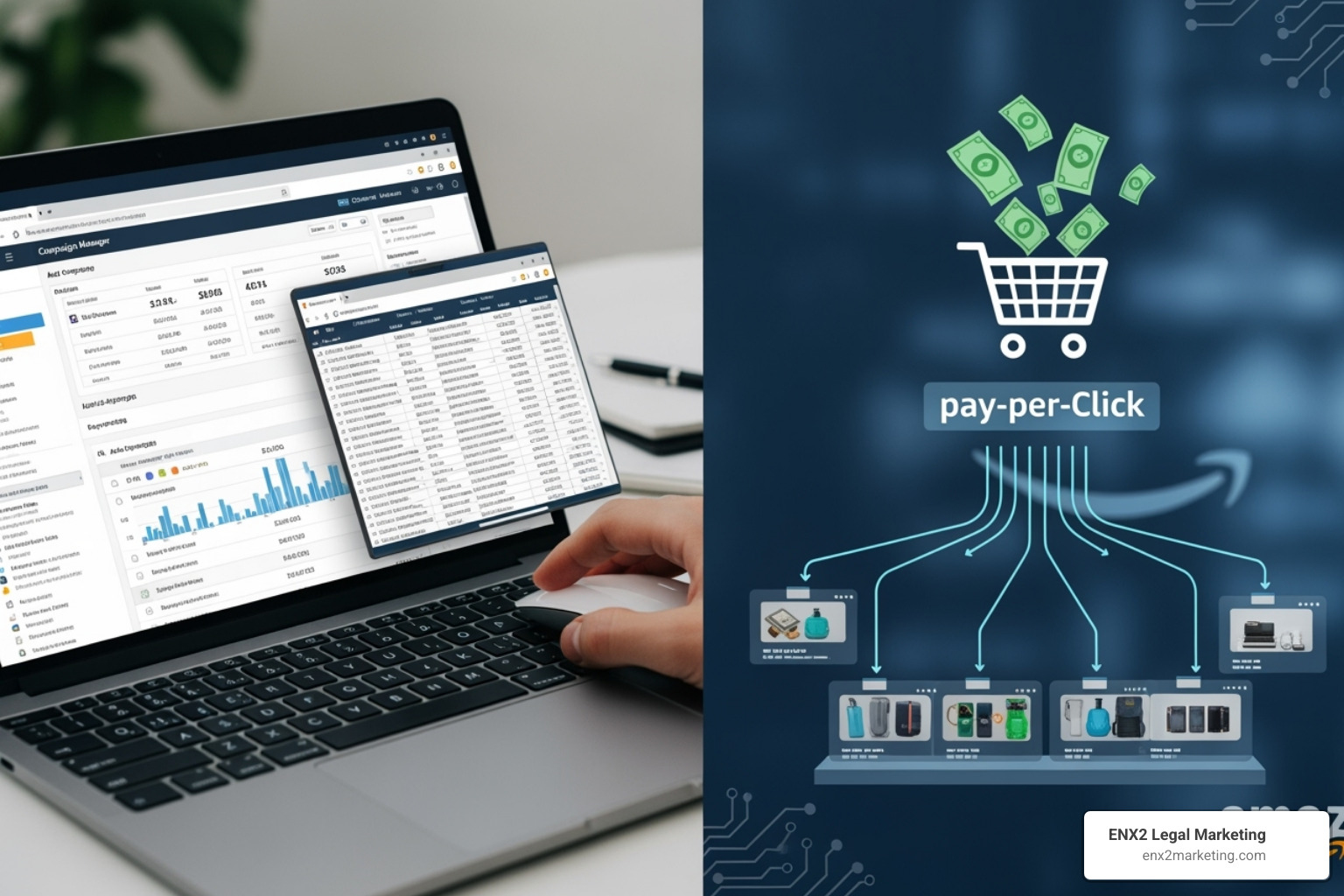
Amazon PPC operates primarily on a cost-per-click (CPC) model, where costs can vary based on product category and keyword competition. You control spending with a daily budget. We use two key metrics to gauge profitability:
- Advertising Cost of Sales (ACoS): This is the ratio of your ad spend to the revenue generated from those ads (Ad Spend / Ad Revenue). A lower ACoS indicates better efficiency. Your ‘breakeven ACoS’ is equal to your profit margin—if your ACoS is higher than this, you’re losing money on ad sales.
- Return on Ad Spend (ROAS): The inverse of ACoS, ROAS measures the revenue generated for every dollar spent on advertising (Ad Revenue / Ad Spend). A higher ROAS is desirable.
For detailed specifications on ad creatives, we always refer to authoritative sources like the Amazon Sponsored Brand video ad guidelines. The Amazon Advertising Learning Console is another invaluable resource for staying updated.
Building Your Foundation: A Strategic Approach to Amazon Pay Per Click Advertising Management
Getting started with amazon pay per click advertising management is straightforward: register as an advertiser, create your first campaign (we suggest Sponsored Products with automatic targeting), and set a daily budget. The heart of a successful strategy lies in keyword research.

- Broad Match: Catches a wide net, including synonyms and related searches. Great for keyword findy.
- Phrase Match: More restrictive, capturing searches that include your exact phrase.
- Exact Match: The most precise, targeting only searches that exactly match your keyword. Ideal for high-performing terms.
Just as important as choosing what to target is deciding what not to target. Negative keywords prevent your ads from showing for irrelevant searches, saving you money. For example, if you sell premium water bottles, you’d add “free” as a negative keyword.
After your campaigns have run for a few weeks, analyze your search term reports. Look for high-performing keywords to “harvest” and move to manual campaigns with an exact match. Add low-performing terms with many clicks but no sales to your negative keyword list to stop wasted spend.
Advanced Strategies: Bidding, Ranking, and Optimization
Once you’ve got the basics down, it’s time to dive into more nuanced aspects of amazon pay per click advertising management.
Bidding Strategies: Amazon offers manual bidding for granular control and automated (dynamic) bidding, where the system adjusts your bids based on conversion potential. A blended approach often works best, using automation for findy and manual adjustments for critical keywords.
Improving Ad Rank and Visibility: Your ad rank is influenced by your bid and relevance. To improve it:
- Product Listing Optimization: A well-optimized product listing (good title, bullet points, images, and A+ content) improves your conversion rate, which indirectly boosts ad rank.
- High Click-Through Rate (CTR): Relevant ads with compelling copy are more likely to be clicked, signaling quality to Amazon.
- Product Reviews: Products with more positive reviews tend to have higher conversion rates, making your ads more effective.
While software can help with efficiency, the human element in amazon pay per click advertising management remains crucial. A specialized agency provides expert knowledge, strategic oversight, and saves you time. We can integrate your PPC efforts with other digital marketing strategies, such as Amazon SEO, to create a holistic growth plan. This highlights a critical concept in digital marketing: PPC and SEO work better together.

Measuring Success: KPIs for Your Amazon Pay Per Click Advertising Management
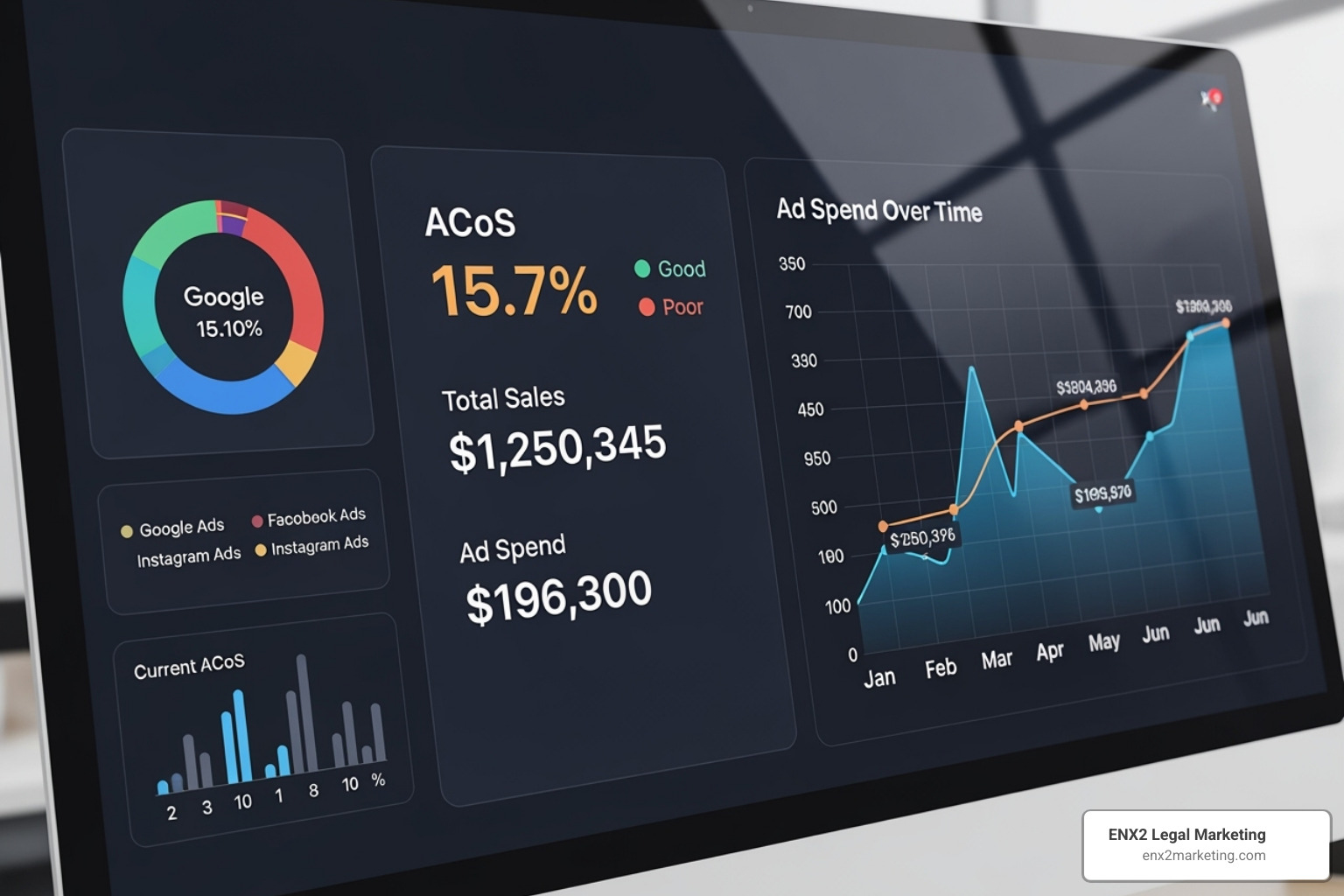
Knowing how to measure the success of your efforts is paramount. We rely on a set of Key Performance Indicators (KPIs) to track campaign performance.
- Impressions: The number of times your ad was shown to shoppers.
- Clicks: The number of times shoppers clicked on your ad.
- Click-Through Rate (CTR): The percentage of impressions that resulted in a click (Clicks / Impressions). A higher CTR indicates your ad is relevant.
- Conversion Rate: The percentage of clicks that resulted in a sale.
- Advertising Cost of Sales (ACoS): As discussed, this measures the efficiency of your ad spend relative to ad revenue.
- Total Advertising Cost of Sales (TACoS): This metric provides a broader view by considering total sales (both organic and ad-driven) against your total ad spend. It helps assess how PPC is contributing to overall brand growth.
- Return on Ad Spend (ROAS): The revenue generated for every dollar spent on advertising.
Amazon PPC stands out due to its position in the buyer’s journey. Shoppers are in a transactional mindset, which often leads to higher conversion rates compared to other platforms. For ongoing insights, we frequently consult the Amazon Advertising Blog.
Conclusion: From Clicks to Conversions and Beyond
As we wrap up our deep dive into amazon pay per click advertising management, it’s clear that this isn’t just another marketing channel. It’s a powerful engine for growth when handled with care and strategy.
We’ve explored the ins and outs, from understanding the different campaign types and their costs to building a solid foundation with expert keyword research. We then moved to advanced bidding strategies and learned how to truly optimize for sales by measuring success through key performance indicators.
The biggest takeaway? It all comes down to data-driven decisions. Amazon PPC is a dynamic, ever-changing system. You can’t just “set it and forget it.” Instead, think of it like tending a garden: continuous monitoring, thoughtful analysis, and timely adjustments are crucial for sustained success. It’s about more than just racking up clicks; it’s about changing those clicks into profitable sales and leveraging your ad spend to boost your organic ranking. When done right, your PPC efforts can create a powerful flywheel effect, driving long-term growth.
At ENX2 Legal Marketing, we apply the same meticulous, data-driven approach we use for our legal marketing clients to every digital challenge. Our expertise in data and analytics, combined with a deep understanding of the digital landscape, positions us uniquely to help businesses like yours achieve significant growth. We believe your digital strategy should be a powerful, blended approach where every element works together to amplify your online presence and transform your sales trajectory.