



The Essential Guide to CRM for Legal Practices and Services
Why Modern Law Firms Can’t Afford to Ignore CRM Technology
CRM for legal industry is specialized software that helps law firms manage client relationships, streamline intake processes, track billable hours, and automate administrative tasks while maintaining ethical compliance and data security standards unique to legal practice. In an era where client expectations are shaped by seamless digital experiences, law firms must adapt or risk losing business to more responsive competitors. The legal market has shifted from a traditional, referral-only model to a highly competitive digital landscape where the first firm to respond often wins the case.
Quick Answer: What is CRM for Legal Industry?
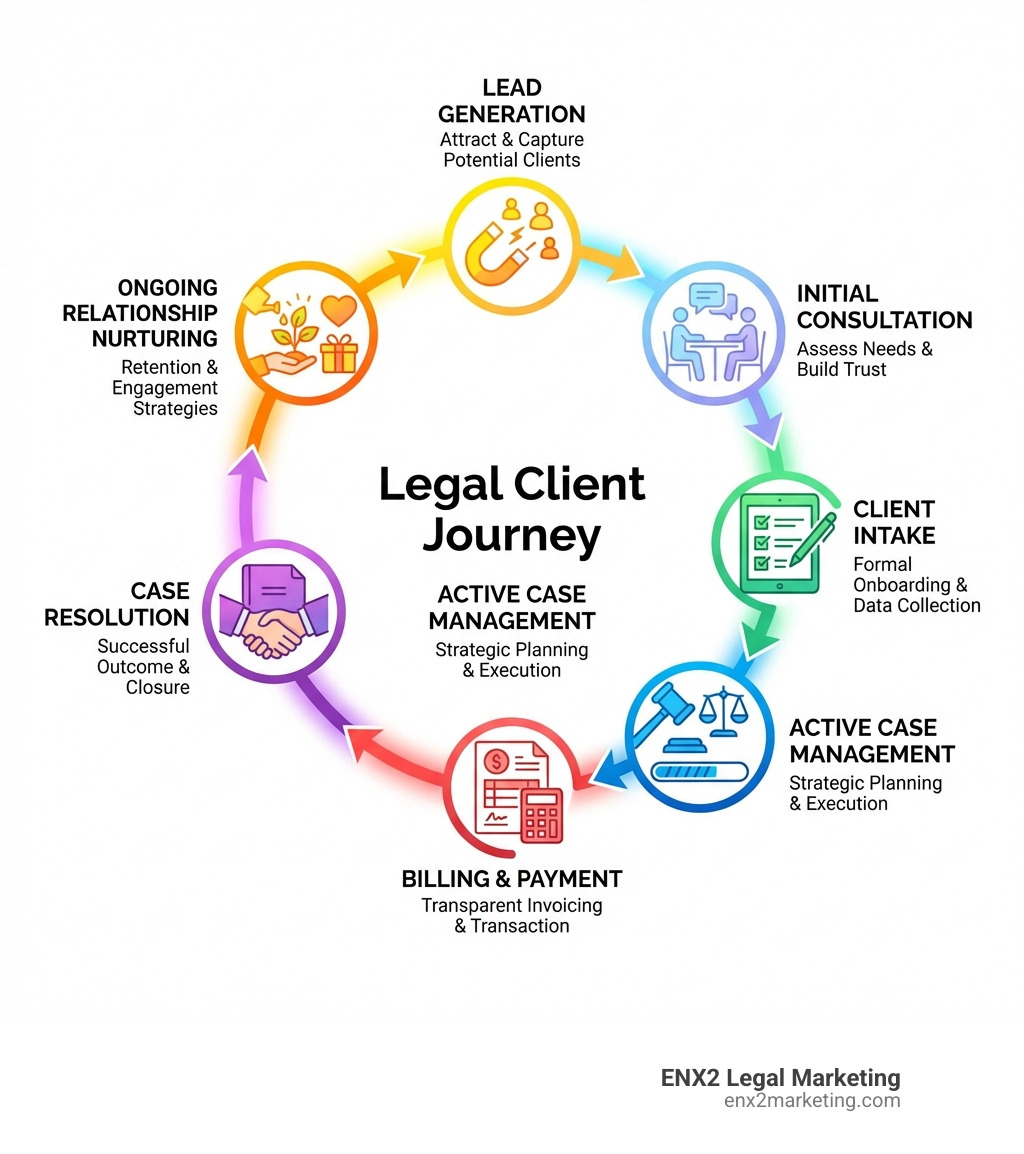
- Purpose: Manages the client journey from lead generation through communication and case resolution, giving a unified view of every touchpoint. It ensures that no lead is left behind and every client feels prioritized.
- Key Difference: Unlike generic CRMs built for product sales, legal CRMs are designed for multi-party relationships, conflict checking, and legal workflow tracking. They account for the nuances of attorney-client privilege and the specific stages of a legal matter.
- Core Benefits: Centralizes client data, automates follow-ups, improves efficiency, and reduces missed opportunities during intake. It transforms a firm from a reactive entity into a proactive business.
- Who Uses It: Administrative staff, intake specialists, attorneys, and firm owners across firm sizes, from solo practitioners to global enterprises.
The legal landscape has changed dramatically. Clients no longer choose firms based only on prestige or the size of a mahogany desk. Today, the quality of the client relationship and responsiveness often drives the decision. People expect clear communication, transparency, and a smooth digital experience that respects their time. This is often referred to as the “Amazon effect” in professional services—clients want to know exactly where their case stands at any given moment.
Yet some firms still operate without a CRM, relying on spreadsheets, inboxes, and memory to track relationship and intake data. That approach creates massive blind spots: missed follow-ups, duplicated work, and prospects who never convert because no one responded quickly enough. With a strong CRM workflow, firms can reduce no-shows through automated reminders, shorten onboarding time, and gain better visibility into what marketing channels produce signed matters. By implementing these systems, firms can move away from the chaos of manual entry and toward a streamlined, data-backed operation.
I’m Nicole Farber, founder of ENX2 Legal Marketing. For more than a decade, our team has helped law firms improve their digital presence and implement effective CRM for legal industry solutions that support intake, communication, and measurable growth. We understand that technology should serve the firm, not the other way around.

The Strategic Role of CRM for Legal Industry Growth
In an increasingly competitive legal market, firms in Washington D.C., New York, California, Tennessee, and Pennsylvania need systems that help them respond faster and operate more consistently. A CRM for legal industry is not just a digital rolodex. It is a strategic platform that centralizes leads, client communications, and key relationship data so teams can deliver a reliable experience at every stage. When a firm scales, the lack of a centralized system becomes a liability, leading to fragmented data and lost revenue.


Consider this: research on CRM adoption in professional services found that some firms still operate without a CRM, leaving a gap in follow-up consistency and reporting. Without a dedicated system, important details live in separate tools, making it harder to track conversations, manage intake handoffs, and understand what is working. Furthermore, according to trends highlighted by The National Law Review, client experience is now a primary differentiator for law firms, making the efficiency provided by a CRM essential for survival.
| Feature | Manual Tracking (Spreadsheets, Email) | CRM Automation |
|---|---|---|
| Client Data | Scattered, error-prone, difficult to keep current. | Centralized, accessible, consistently updated. |
| Communication | Inconsistent follow-ups, fragmented histories. | Logged histories, automated reminders, structured outreach. |
| Efficiency | Time-consuming entry, duplicated effort. | Automated tasks and workflows that reduce administrative burden. |
| Reporting | Manual and incomplete, limited visibility. | Real-time dashboards and customizable reporting. |
| Security | Inconsistent access controls and higher risk of mishandling. | Role-based permissions and stronger safeguards when properly configured. |
| Scalability | Breaks down as the firm grows and new staff are onboarded. | Repeatable processes and collaboration features that scale with the team. |
For many firms, the most practical benefit is clarity: a CRM creates a single source of truth for the relationship, the matter pipeline, and the tasks that keep intake moving. This clarity allows partners to focus on high-level strategy rather than micromanaging administrative details.
Key Features of a CRM for Legal Industry Success
When evaluating a CRM for legal industry, focus on functions that align with legal workflows and ethical responsibilities. A generic tool may require extensive customization that never quite fits the legal mold.
- Matter and Pipeline Visibility: Track the stages from inquiry to consult to signed engagement so the firm can see where prospects stall and improve response time. This visibility allows for “bottleneck identification,” where you can see if a specific attorney or intake specialist is overwhelmed.
- Conflict Checking Support: While conflict processes vary by firm and jurisdiction, the CRM should help capture parties, related entities, and prior relationships to support conflict checks before intake progresses. This is vital for adhering to ethical standards regarding concurrent representation.
- Time Tracking and Billing Integration: Where appropriate, integrations make it easier to capture work and support accurate invoicing, strengthening law-firm-client-engagement. Accurate billing is not just about revenue; it is about client trust.
- Document Automation and Management: Centralize key documents, reduce duplicate drafting, and improve consistency for routine forms and communications. This ensures that every engagement letter or fee agreement sent out meets the firm’s quality standards.
- Marketing Attribution and Analytics: Connect intake outcomes to marketing sources and reporting, reinforcing a data-backed approach to legal-marketing-analytics and budgeting. Knowing which ad campaign resulted in the highest-value cases is the key to scaling profitably.
For broader context on how law practices are adopting technology, the American Bar Association’s TechReport is a useful benchmark for trends and planning. It highlights how firms are increasingly moving toward cloud-based solutions to facilitate remote work and better client access.
How CRM for Legal Industry Firms Differs from General Software
Generic CRMs were built for product sales cycles—selling a widget to a customer. Legal work involves referrals, repeat relationships, and nuanced intake steps that often include multiple stakeholders, such as co-counsel, expert witnesses, and opposing counsel.
- Multi-Party Relationships: A CRM should be able to associate contacts to matters and relationships in a way that supports legal context. You need to know not just who the client is, but who the judge, the adjuster, and the opposing counsel are.
- Billable Workflows: Even when the CRM is not the billing system, it should support handoffs and integrations that reflect how legal services are delivered, whether through flat fees, hourly billing, or contingency models.
- Ethical Compliance and Process Controls: Firms benefit from permissioning, structured intake steps, and auditability. This ensures that only authorized personnel can view sensitive case details.
- Confidentiality and Security Expectations: Role-based access and secure storage are essential given the sensitivity of client information. A breach of data is not just a technical failure; it is an ethical one.
- Relationship-Driven Growth: A legal CRM helps maintain a complete communication history so teams can provide timely, personalized service that supports retention and referrals. In law, your reputation is your most valuable asset, and a CRM helps protect it.
Implementation, Security, and Scaling for Success
Implementing a CRM for legal industry is not just installing software; it is a fundamental process change. Success depends on mapping the intake workflow, standardizing data entry, and training the team so the CRM becomes the default system of record. Many firms fail at implementation because they treat it as a one-time event rather than an ongoing evolution. For firms that need technical support during migration and configuration, reliable IT for Law Firms can be critical to avoid data loss and reduce downtime.
A well-implemented CRM can drive administrative automation: centralized communications, automated reminders, consistent task assignment, and faster internal handoffs. It also supports the shift toward a data-driven-law-firm by making reporting and attribution easier to access. When everyone in the firm uses the same system, the data becomes a powerful asset for forecasting future growth.
Streamlining Client Intake and Lead Generation
One of the most immediate benefits of a CRM for legal industry is improving intake speed and consistency. When prospects are routed correctly, followed up with quickly, and reminded automatically, firms reduce missed opportunities. In many practice areas, such as personal injury or criminal defense, the speed of the first response is the single most important factor in conversion.
Many firms also use CRM workflows to measure marketing performance. That might include tracking lead source, consult show rate, and conversion rate into signed engagements. When properly configured, automated follow-ups via email or SMS can reduce no-shows and keep prospects engaged during the critical “consideration” phase.
Common intake improvements include:
- Customizable Online Intake Forms: Capture needed details up front and reduce manual re-entry. These forms can be embedded directly on your website, feeding data straight into the CRM.
- Automated Lead Nurturing: Trigger outreach sequences for prospects who have not booked or retained. This keeps your firm top-of-mind without requiring manual effort from your staff.
- Appointment Scheduling and Reminders: Sync calendars and send reminders to reduce missed consultations. This professionalizes the experience and respects the attorney’s time.
- Pipeline Management: Track leads from inquiry to retained client and identify bottlenecks, supporting attorney-lead-generation and law-firm-lead-generation initiatives.
Data Security, Compliance, and AI Integration
Security and confidentiality are non-negotiable in the legal field. A CRM for legal industry should support strong safeguards such as encryption, multi-factor authentication, role-based permissions, and audit trails. Cloud-based platforms can be secure when configured correctly, but firms should still evaluate vendor security practices, access controls, and internal policies to ensure they meet the high bar of legal ethics.
AI features are increasingly common for summarization, reporting, and trend detection. Used responsibly, AI-powered analytics can help firms understand profitability by practice area, identify intake friction points, and forecast staffing needs. For example, AI can analyze communication patterns to predict which clients are at risk of leaving or which cases are likely to settle quickly. Firms should also establish rules for what data can be processed, who can access AI outputs, and how results are reviewed to maintain accuracy and confidentiality.
For additional guidance on protecting sensitive data, the FTC’s guidance on data security provides practical, non-vendor recommendations that are broadly applicable to any business handling sensitive consumer information.
Scaling CRM Solutions by Firm Size
The right CRM for legal industry should scale with the firm. What works for a solo practitioner will likely be insufficient for a 50-lawyer firm with multiple offices.
- Solo Practitioners: Prioritize simple automation, affordability, and a clean interface that supports fast follow-up without heavy administration. The goal here is to act as a “force multiplier,” allowing one person to do the work of three.
- Small and Mid-Sized Firms: Look for collaboration features, consistent intake assignment, shared templates, and reporting that supports management decisions. At this stage, the CRM is about creating repeatable processes that don’t rely on any one individual’s memory.
- Large-Scale Interoperability: Larger firms often require deeper integrations with practice management, document systems, and accounting tools, plus advanced reporting, permissioning, and segmentation. They may also need custom API connections to link the CRM with proprietary internal tools.
As firms grow, the CRM becomes a foundation for repeatable processes and better resource allocation, supporting law-firm-growth-strategies. It allows the firm to maintain a “small firm feel” with personalized service, even as the caseload grows into the thousands.
Conclusion: Partnering with ENX2 Legal Marketing for Success
A well-implemented CRM for legal industry is no longer optional for firms that want sustainable growth, efficient intake, and strong client experiences. It connects marketing to measurable outcomes, reduces administrative drag, and helps teams respond to prospects and clients with consistency. In a world where the competition is only a click away, having a robust system to manage your relationships is the ultimate competitive advantage.
At ENX2 Legal Marketing, led by CEO Nicole Farber, we help law firms in Pennsylvania, California, New York, Washington D.C., Tennessee, Wilkes-Barre, and Scranton choose, implement, and optimize CRM systems as part of a broader digital strategy. Our work spans CRM integrations, data and analytics consulting, custom web design and development, content marketing, SEO, PPC, call tracking, and more, so your CRM supports both operations and business development. We don’t just give you a tool; we give you a strategy for long-term success.
Ready to start your legal-digital-transformation? Contact ENX2 Legal Marketing today to discuss the right CRM for legal industry setup for your firm and take the first step toward a more efficient, profitable future.