



Why Google Ads Are a Non-Negotiable for Modern Law Firms
Lawyer Google advertising is the fastest path to client acquisition in the digital age. While organic SEO takes months, sometimes years, to yield consistent results, Google Ads places your firm directly in front of potential clients within hours of a campaign launch. It’s about being present at the exact moment someone needs you most.
Quick Answer: Google Ads for Lawyers
- Cost: The average cost-per-click (CPC) in the legal industry is $6.75, significantly higher than the $2.69 average across all industries. This reflects the high value of a legal client.
- Conversion Rate: Legal services see an impressive average conversion rate of 6.98%, nearly double the 3.75% industry average, indicating searchers have strong intent.
- Lead Generation: For 13% of lawyers, Google Ads is their single most important source of leads, highlighting its effectiveness.
- Campaign Types: The primary tools are Search Ads, Local Service Ads, and Display Ads, each serving a different strategic purpose.
- Budget Range: Firms in competitive markets should anticipate a monthly budget of $5,000-$20,000 to make a significant impact.
- Key Benefit: The core advantage is immediate visibility when clients are actively searching for legal help, bypassing the long wait for SEO.
The numbers are compelling. According to the 2021 Legal Trends Report, 57% of people search for a lawyer on their own, and search engines are a primary tool. The challenge? Legal keywords are among the most expensive on Google. Terms like “car accident lawyer” can exceed $100 per click. This high cost reflects the significant value of legal cases; when a single client can generate thousands in revenue, paying a premium for qualified leads is a smart investment.
Many firms mistakenly focus only on the 3% of consumers actively searching for legal services at any given moment. The real opportunity lies in building visibility across the entire client journey—from the initial awareness of a legal problem to the consideration of different firms and the final decision to hire. A robust Google Ads strategy engages potential clients at every stage.
I’m Nicole Farber, founder of ENX2 Legal Marketing. With over a decade of experience, I’ve seen how the right Google Ads approach can transform a firm from struggling for leads into a client acquisition machine. We help law firms master strategies that convert clicks into paying clients.
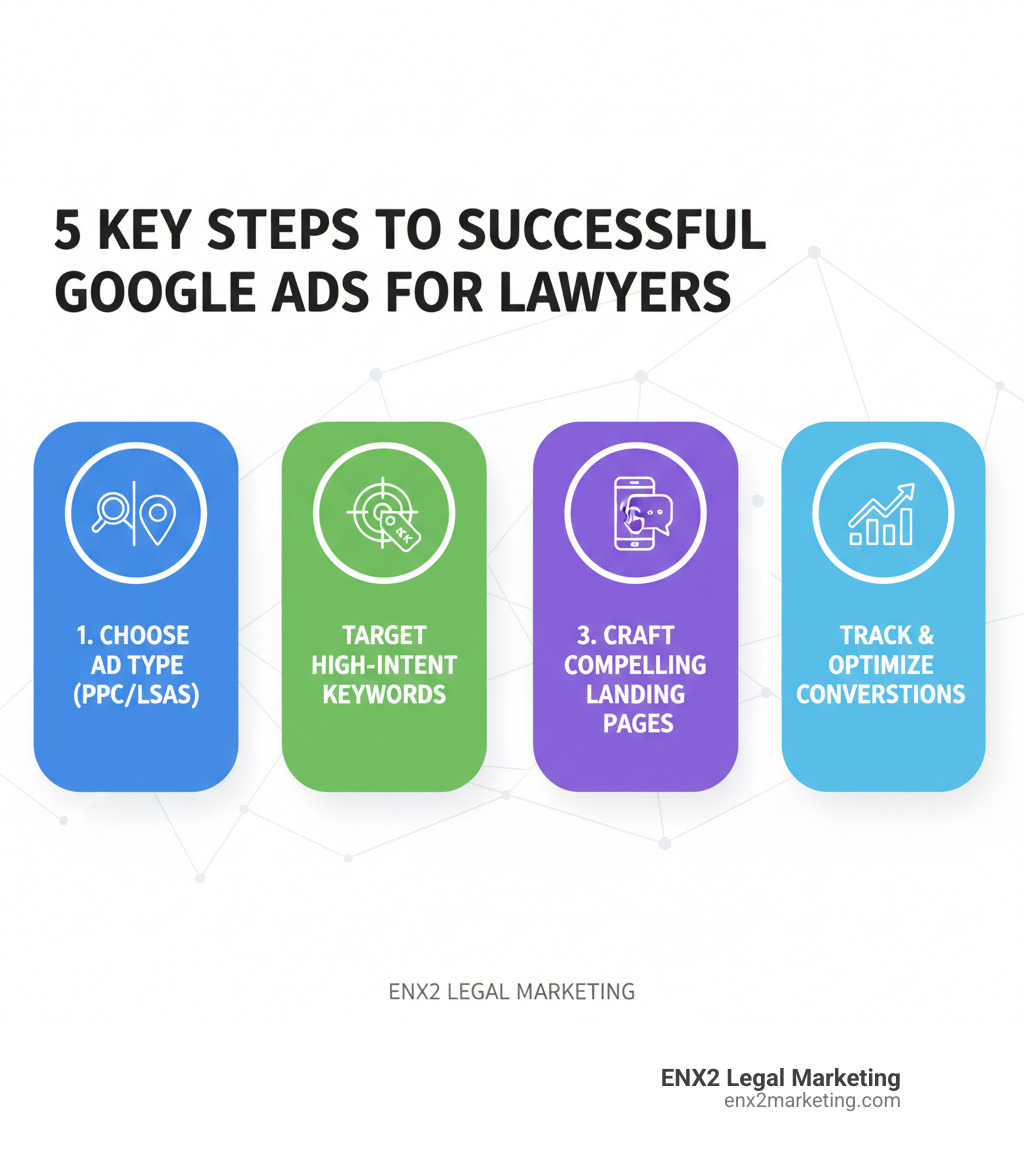

Building Your Winning Campaign: A Step-by-Step Guide to Lawyer Google Advertising
Building a campaign that brings in clients requires a strategic approach to lawyer Google advertising. The Pay-Per-Click (PPC) model is efficient because you only pay when an engaged user clicks your ad, making it an ideal, performance-based tool for lead generation.
Understanding the Ad Landscape: Traditional PPC vs. Local Service Ads (LSAs)
Your client acquisition strategy will involve several campaign types, but two are critical for law firms: traditional Search Ads and Local Service Ads (LSAs).
Search Ads are the text-based ads appearing in Google’s results when someone searches for terms like “personal injury lawyer near me.” They are the foundation of legal PPC, offering deep control over keywords, ad copy, and audience targeting.
Local Service Ads (LSAs) are a game-changer for local firms. Appearing at the very top of search results, these ads feature a Google Screened badge. This badge shows your firm has passed Google’s screening process, providing an invaluable credibility boost that can significantly increase trust. LSAs also operate on a pay-per-lead model, meaning you only pay for qualified calls or messages from potential clients, not just clicks.
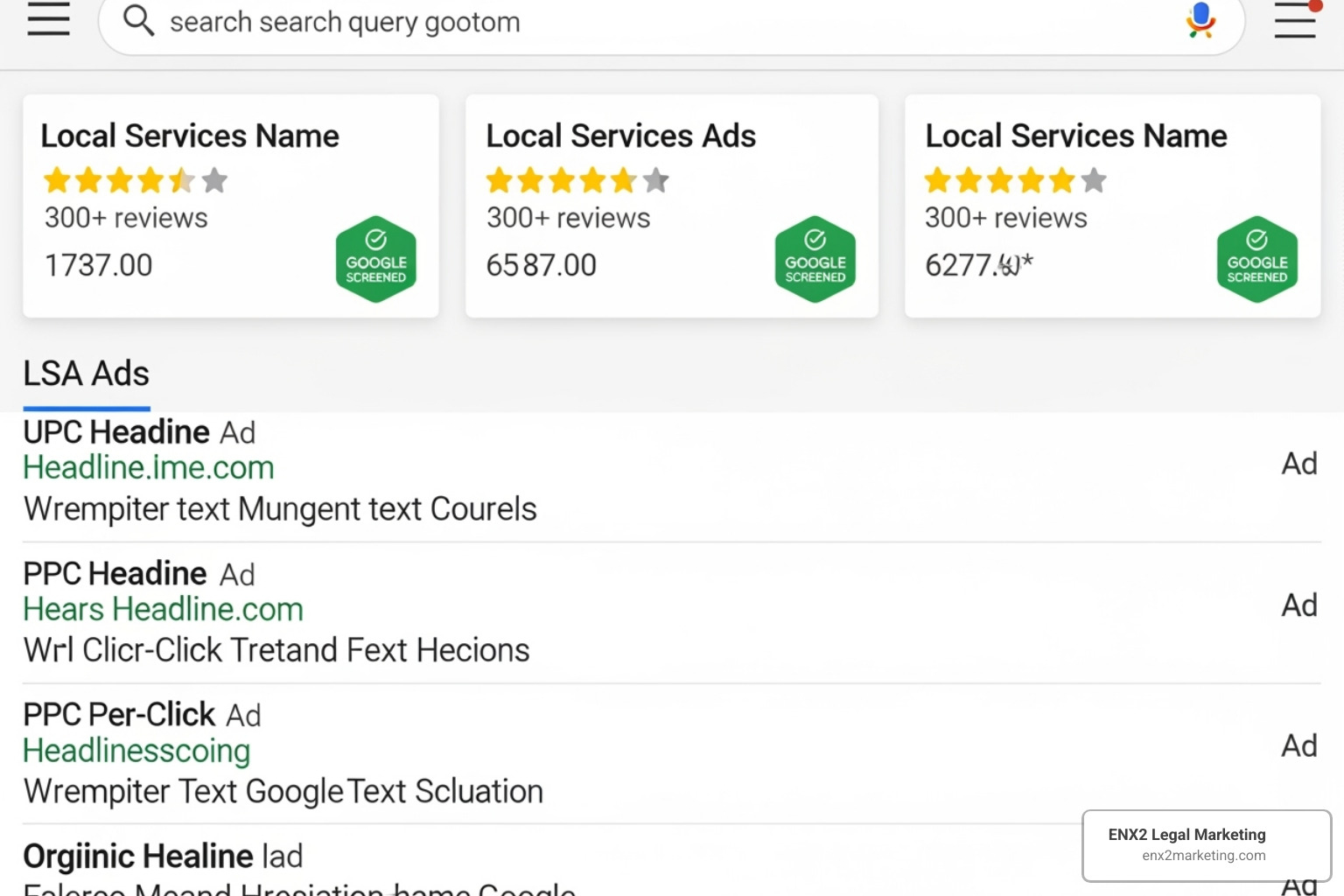

Here’s a quick comparison:
| Feature | Local Service Ads (LSAs) | Traditional PPC (Search Ads) |
|---|---|---|
| Payment Model | Pay-per-lead | Pay-per-click |
| Ad Placement | Very top of search results | Top/bottom of search results |
| Trust Signal | “Google Screened” badge | Relies on ad copy & landing page |
| Lead Quality | Often higher due to direct contact | Varies; requires strong targeting |
| Control | Less granular control over keywords/bids | High control over all campaign elements |
The most effective approach is often a combination. LSAs capture high-intent leads at the top, while traditional PPC allows for more nuanced targeting and brand building. Our PPC Services for Attorneys can help determine the right mix for your firm.
Keyword Strategy: The Foundation of Your lawyer Google advertising Campaign
Legal keywords are expensive because they are valuable. The key is to manage costs strategically by understanding keyword intent and match types.
- Long-tail keywords: Target specific, multi-word phrases like “divorce lawyer for military spouses in [City]” instead of the broad, costly “divorce lawyer.” These attract highly qualified prospects who are further along in their search, often at a lower cost-per-click.
- Match types: These rules control when your ads appear. Use exact match (
[car accident lawyer]) for maximum precision, showing your ad only for that exact search. Use phrase match ("car accident lawyer") for flexibility, showing for searches that include that phrase (e.g., “best car accident lawyer”). Use broad match with extreme caution and extensive negative keyword lists, as it can trigger many irrelevant searches. - Negative keywords: This is crucial for managing costs. Create a list of terms you don’t want to show up for. Add terms like “free legal advice,” “pro bono,” “jobs,” or “internship” to prevent wasting your budget on users not looking to hire an attorney.
Use tools like Google Keyword Planner to research opportunities and estimate costs. For more insights, explore our guide on Legal PPC.
Crafting Compelling Ads and High-Converting Landing Pages
Your ad copy must speak directly to a potential client’s problem and offer a clear, valuable solution. Use trust-building language like “Confidential Case Evaluation” or “No Win, No Fee.” Your landing page must then seamlessly continue that conversation.
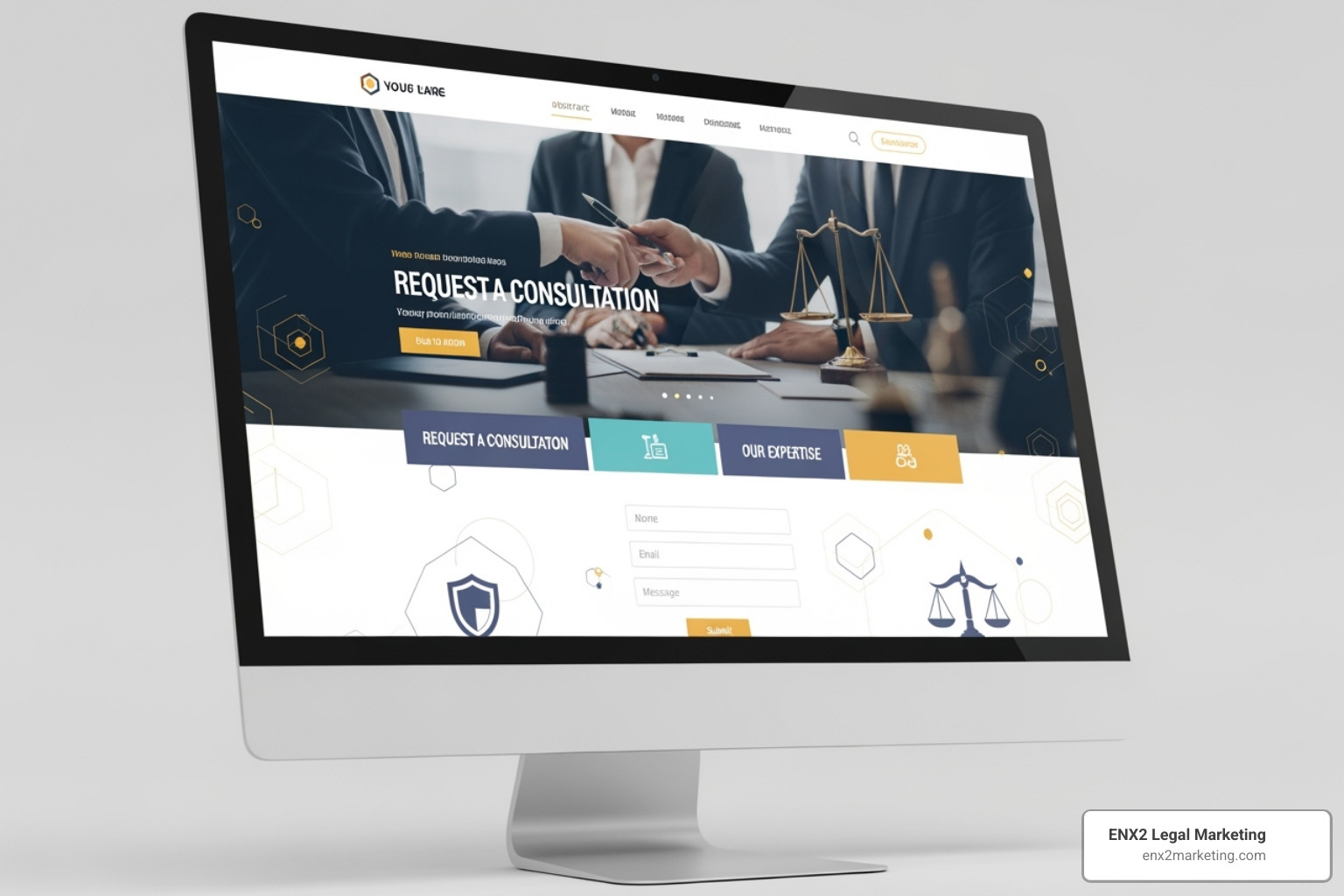
Key elements for a high-converting landing page include:
- Mobile-first design: A fast, functional mobile experience is non-negotiable. A slow page will frustrate a potential client and cause them to leave. Test your site’s performance with tools like Google’s PageSpeed Insights.
- Social proof: Client testimonials, case results (where permissible by your state bar), and awards or badges (like Avvo ratings or Super Lawyers) build immediate confidence.
- Clear call-to-action (CTA): Use prominent buttons and forms that guide visitors toward the next step, such as “Schedule a Free Consultation” or “Call Us Now.”
Continuous A/B testing of headlines, ad copy, and landing page elements is essential for optimizing conversion rates. Our PPC Management for Law Firms service handles this ongoing process.
Budgeting and Bidding in the Competitive Legal Market
Lawyer Google advertising budgets often range from $5,000 to $20,000 per month in competitive practice areas and locations. While a $100+ click seems high, it’s a sound investment if it leads to a client worth $10,000 or more. Smart budget management focuses on your Cost Per Acquisition (CPA) relative to the lifetime value of a client. Bidding strategies range from manual CPC for maximum control to Google’s AI-powered automated strategies like “Maximize Conversions” or “Target CPA.” Continuous monitoring and adjustment are key to ensuring every dollar works for your firm.
For guidance on budget allocation, see our breakdown on how much to spend on PPC campaigns.
Measuring, Optimizing, and Scaling for Long-Term Success
The most successful lawyer Google advertising campaigns aren’t built overnight. They’re crafted through careful measurement, continuous optimization, and strategic scaling. Think of it like building a case – you need solid evidence (data), ongoing analysis (optimization), and the ability to adapt your strategy based on what you find to win.
The Importance of Conversion Tracking for lawyer Google advertising
If you’re not tracking conversions, you’re advertising blind. Clicks don’t pay the bills—clients do. Conversion tracking provides clear, actionable insight into which parts of your campaign are generating actual leads and revenue.
For law firms, key conversions to track include:
- Phone calls: Often the most valuable lead type. Implementing call tracking with dynamic number insertion (which shows a unique tracking number to each user) is essential to attribute calls back to specific ads, keywords, and campaigns.
- Form submissions: Contact forms, case evaluations, and consultation requests represent serious interest from potential clients who prefer to write out their issues.
- Live chat engagements: For firms that offer it, tracking initiated chats provides another valuable source of immediate leads.
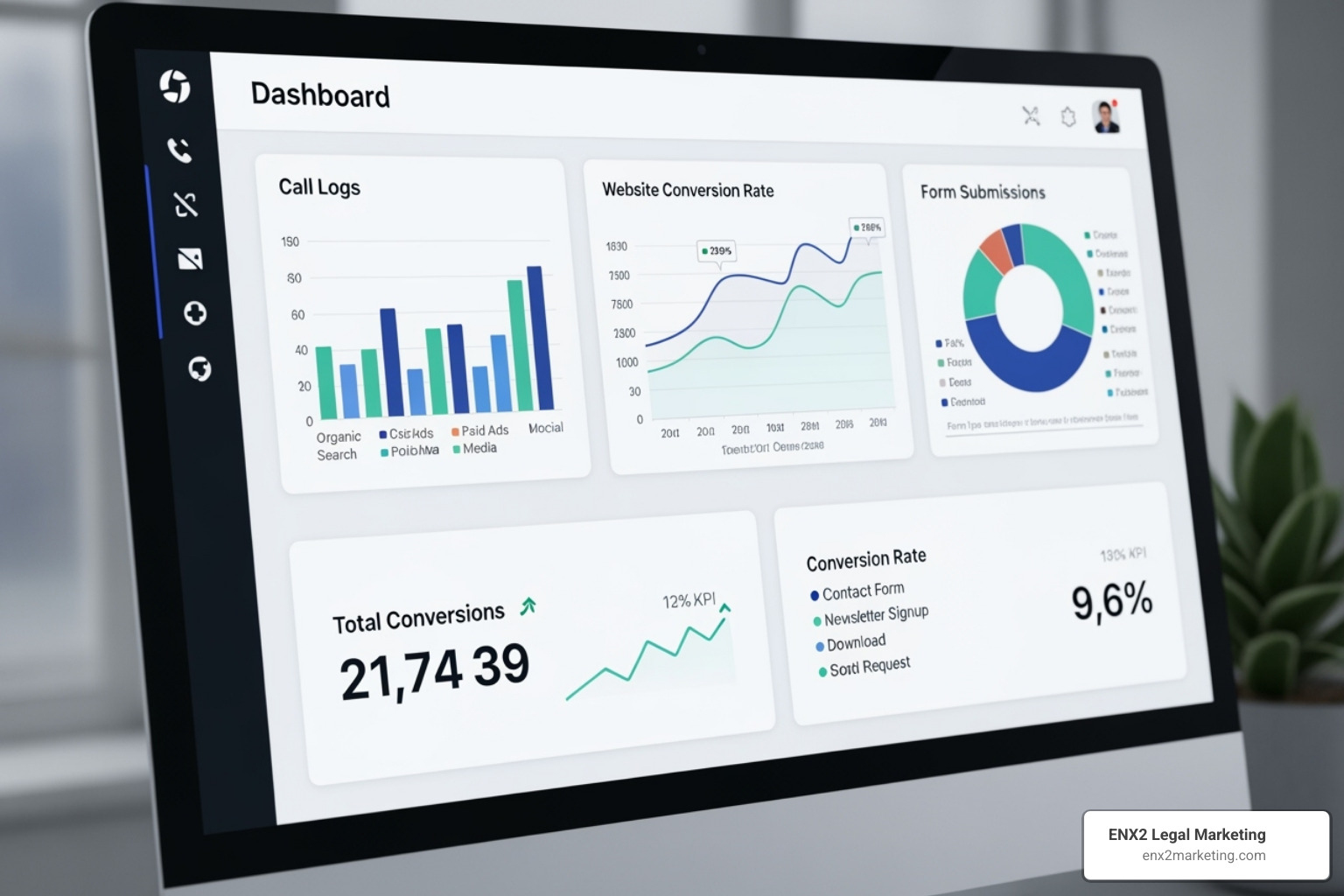
By integrating Google Ads with Google Analytics, we can track not just the volume of conversions, but also your return on ad spend (ROAS) and cost per acquisition (CPA). When you can prove that every dollar spent on ads generates three dollars in revenue, budget decisions become simple and data-driven. This data allows for continuous, intelligent optimization of bids, keywords, and ad copy. For a walkthrough on setting this up, see our guide on how to track your paid ads.
Advanced Tactics and Avoiding Common Pitfalls
Once the fundamentals are in place, advanced strategies can significantly improve results and efficiency.
- Ad Extensions: This is free ad real estate that makes your ads more prominent and useful. Essential extensions for lawyers include call extensions (for one-tap calling on mobile), location extensions (to sync with your Google Business Profile for local search), sitelink extensions (to highlight key pages like “Case Results” or “About Us”), and callout extensions (to showcase selling points like “24/7 Availability” or “Free Consultation”).
- Remarketing Lists for Search Ads (RLSA): This powerful tactic lets you show customized ads to users who have previously visited your site. These warm leads convert at much higher rates because they are already familiar with your firm. For example, a user visits your ‘child custody’ page but doesn’t convert. With RLSA, you can later show them a highly specific ad like “Still Have Custody Questions? Get a Confidential Consultation” when they search for related legal terms.
- Audience Targeting: Go beyond keywords by layering on Google’s audience data. Target In-Market Audiences to reach users Google has identified as actively shopping for legal services. This helps you find potential clients who may not be using your exact keywords.
Equally important is avoiding common pitfalls that derail campaigns:
- Don’t target overly broad keywords: This is the fastest way to waste budget on irrelevant clicks. Be precise and build a robust negative keyword list.
- Don’t send traffic to your homepage: Always use dedicated landing pages that match the ad’s message and user intent to maximize conversions.
- Don’t neglect mobile optimization: With the majority of searches happening on mobile, a slow or clunky mobile site will cost you clients.
- Don’t “set it and forget it”: Google Ads requires continuous monitoring. You must adjust bids, pause underperforming keywords, and test new ad copy to adapt to market changes and improve performance.
Finally, compliance is non-negotiable. All advertising must adhere to the American Bar Association’s Model Rules of Professional Conduct and any state bar requirements. Avoid unsubstantiated claims, guarantees of outcomes, or misleading statements to protect your professional reputation and license.
At ENX2 Legal Marketing, our decade of experience means we’ve developed systems to avoid these pitfalls while leveraging advanced tactics. We turn your lawyer Google advertising campaigns into a reliable, scalable, and profitable client acquisition machine.