


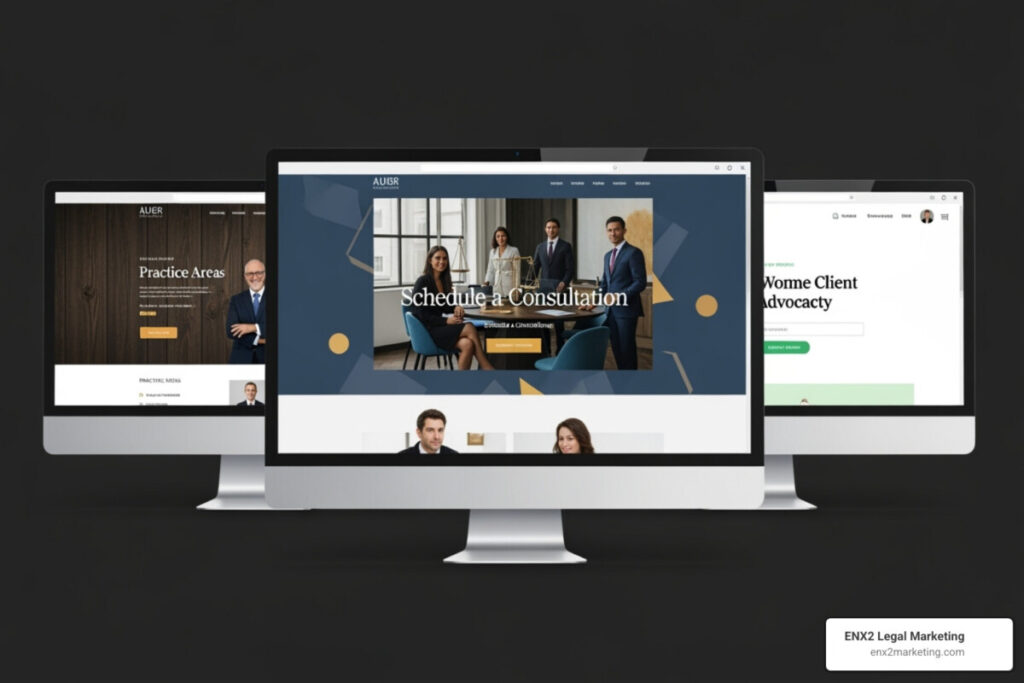
Why Your Law Firm’s Website is Your Most Important Asset
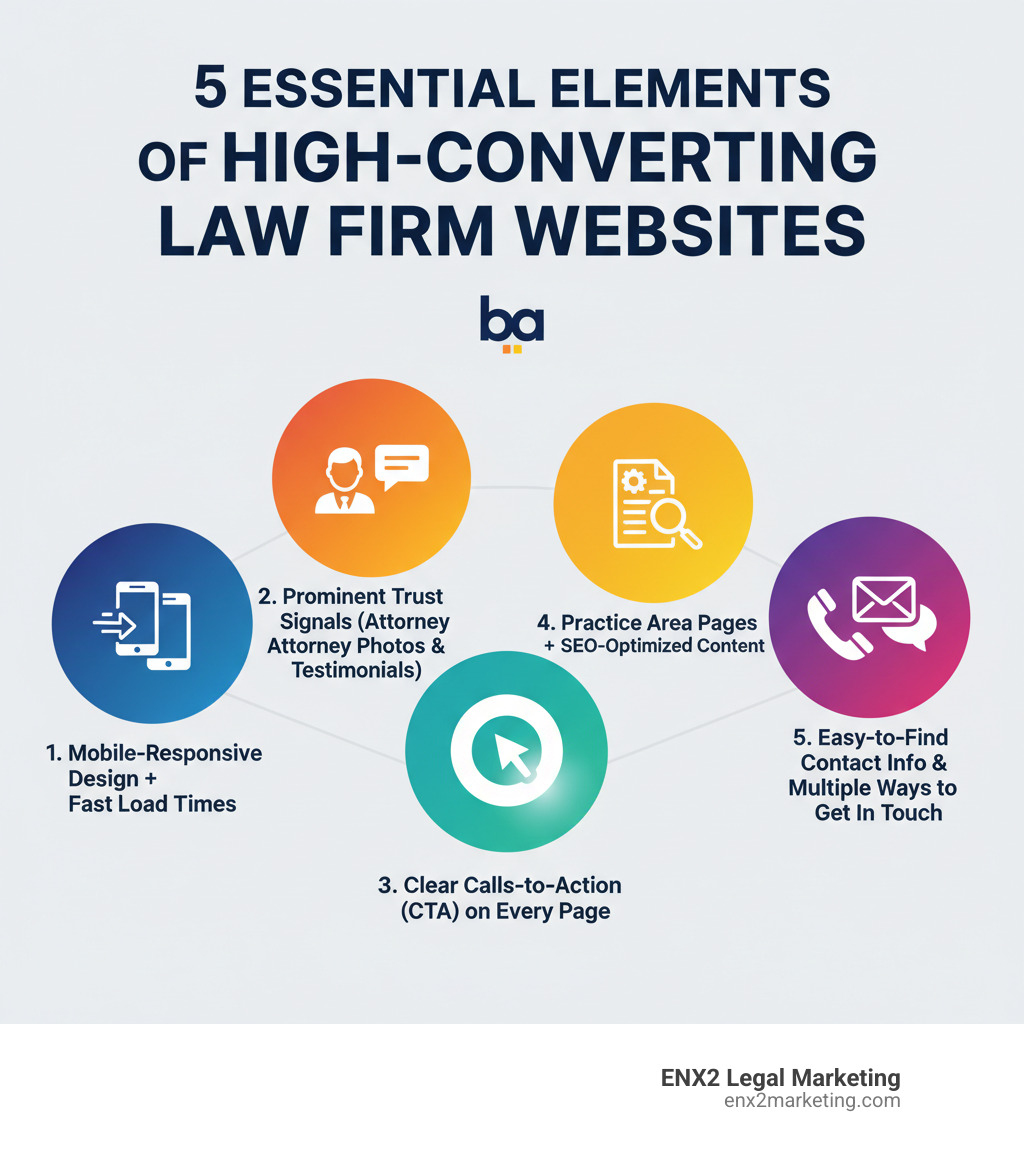
Lawyer website examples reveal the blueprint for what works—and what doesn’t—when it comes to attracting and converting clients online. Here are the top characteristics of high-performing law firm websites:
- Real attorney photos and bios that build trust and authenticity
- Mobile-responsive design that works seamlessly on all devices
- Clear calls-to-action (CTAs) like “Free Consultation” or “Call Now”
- Client testimonials and case results prominently displayed
- Fast load times (under 2 seconds) and intuitive navigation
- Practice area pages with detailed, client-focused content
- Strong SEO to rank for relevant local searches
Your website is often the first—and sometimes only—impression a potential client has of your firm. In a profession built on trust, credibility, and expertise, a poorly designed or outdated website can cost you cases before you even know they existed.
The stakes are high. According to the American Bar Association, 87% of law firms had a website in 2023, but adoption varies dramatically by firm size. Large firms lead at 97%, while only 65% of solo practitioners have established an online presence. This gap represents a massive opportunity—or a costly blind spot.
The return on investment for a well-designed law firm website is staggering. The research shows real-world results: one firm achieved a 1,062% ROI with a 285% increase in qualified leads after a website redesign. Another saw a 1,354% increase in qualified leads and 2,900% more organic traffic. These aren’t outliers—they’re what’s possible when you treat your website as the 24/7 sales representative it truly is.
But what separates the winners from the also-rans? It’s not just about looking good—it’s about converting visitors into clients through strategic design, compelling content, and trust-building features. The best lawyer website examples balance professionalism with approachability, showcase expertise without jargon, and make it ridiculously easy for stressed potential clients to take the next step.
I’m Nicole Farber, founder of ENX2 Legal Marketing, and over the past 12 years I’ve helped law firms transform their digital presence through strategic lawyer website examples and proven marketing systems. In this guide, I’ll walk you through the best law firm websites of 2025 and break down exactly what makes them work—so you can apply these insights to your own firm’s online presence.

The Verdict Is In: Key Elements of Winning Lawyer Website Examples
When I look at truly effective lawyer website examples, I’m not just admiring beautiful design—I’m analyzing digital platforms that work as hard as any attorney in your firm. These websites communicate your value proposition within seconds, establish trust immediately, and make it ridiculously easy for stressed potential clients to reach out. They’re sophisticated lead generation machines that never sleep, never take vacation, and consistently deliver results.
Building the Case: Trust-Building Features for Law Firm Websites
In the legal profession, trust isn’t just important—it’s everything. Your website is often where that trust begins, and the most successful lawyer website examples understand this at a fundamental level.
Let’s start with something simple but powerful: real attorney photos. I can’t tell you how many times I’ve seen firms default to stock imagery because it feels “safer” or more polished. But here’s the thing—when someone is searching for a divorce attorney at 11 PM after a difficult conversation, or researching criminal defense lawyers after an arrest, they don’t want to see generic stock models in suits. They want to see the actual human being who might represent them.
Real photos create an immediate connection. They communicate authenticity in a way that perfectly posed stock images never can. The firms we work with who accept authentic photography consistently report stronger engagement. Potential clients tell them, “I felt like I already knew you before we met.” That’s the power of showing up as your genuine self.


Client testimonials and reviews are your secret weapon. People inherently trust what other people say about you more than what you say about yourself. This isn’t just marketing theory—it’s basic human psychology. When we redesigned the Jacob D. Fuchsberg Law Firm website and prominently featured client testimonials, their qualified leads jumped 285%. That’s not a coincidence.
Video testimonials take this even further. There’s something about hearing a real person’s voice, seeing their expressions as they describe how your firm helped them through a difficult time, that text alone can’t capture. It’s emotional, authentic, and incredibly persuasive.
Beyond testimonials, showcasing case results and displaying awards and badges provides concrete proof of your capabilities. Yes, legal ethics guidelines shape how we present this information, but within those boundaries, there’s tremendous opportunity. When Yarborough Law Group leveraged their Google reviews and legal association credentials, they saw a 45% increase in qualified leads.
Industry recognition, bar association memberships, and media mentions all contribute to a narrative of competence and success. But here’s what matters most: balancing professionalism with approachability. You need to communicate that you’re an expert who knows what you’re doing, while also being someone a stressed person would feel comfortable calling. That balance is where trust truly lives.
Compelling Visuals and UX: Best Practices for Lawyer Websites
Visual design isn’t just about making things look pretty—it’s about creating an experience that guides visitors effortlessly toward the information they need and the action you want them to take.
Color psychology plays a fascinating role in how visitors perceive your firm. Deep blues and grays communicate trust and stability—there’s a reason so many financial and legal firms default to these palettes. But that doesn’t mean every firm needs to follow the same playbook. Some of the most memorable lawyer website examples break from convention in ways that align with their brand personality. Bold colors can convey confidence and energy. Warm tones can communicate compassion and approachability. The key is intentionality—choosing colors that reinforce your firm’s identity and resonate with your ideal clients.
Layout and navigation might sound technical, but they’re actually about respect for your visitors’ time. When someone lands on your site, they’re usually looking for specific information: Can you handle my type of case? What will it cost? How do I contact you? An intuitive layout anticipates these questions and makes answers easy to find. Cluttered navigation with too many options creates decision paralysis. Clean, organized layouts with clear hierarchies guide visitors naturally toward conversion points.
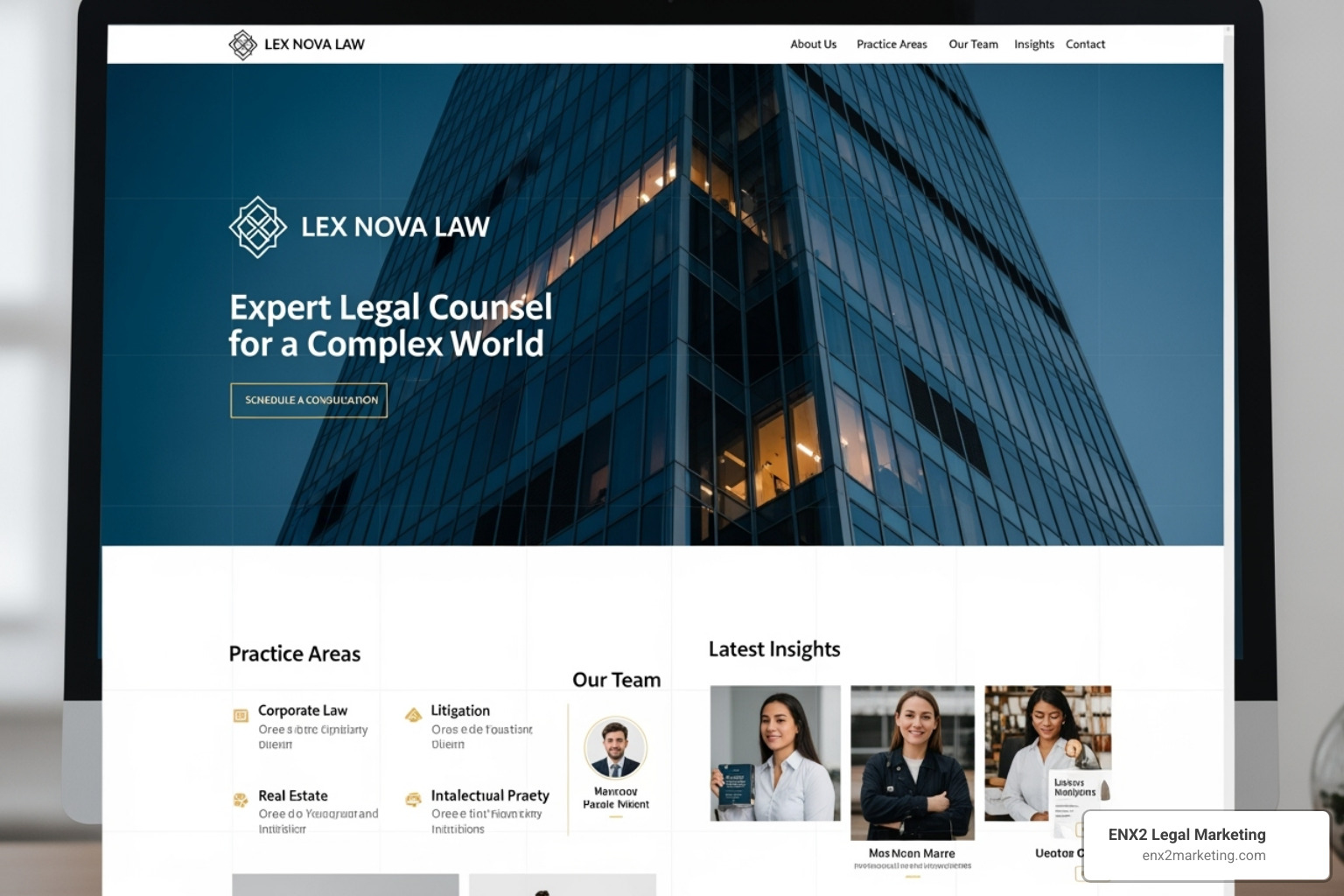
Mobile-first design isn’t optional anymore—it’s the foundation. With more than half of legal searches happening on smartphones, your site must be flawless on mobile. If it doesn’t load quickly—under two seconds, as Google recommends—you’re losing clients. Forms must be easy to complete on small screens, and phone numbers should be instantly clickable.
Accessibility features matter more than most firms realize. Beyond being the right thing to do, accessibility expands your potential client base and demonstrates your firm’s values. Features like adjustable font sizes, high-contrast modes, and screen reader compatibility ensure everyone can access your services. The Web Content Accessibility Guidelines (WCAG) provide detailed standards for creating accessible websites.
Different practice areas naturally influence design choices. A personal injury firm might emphasize compassion and aggressive representation through vivid imagery and emotional testimonials. Family law firms often choose calming colors and approachable photos that convey empathy during difficult times. Criminal defense websites might project strength and no-nonsense confidence. Corporate law firms typically lean toward sleek, minimalist designs that communicate professional sophistication. These aren’t arbitrary choices—they’re strategic decisions based on understanding your specific audience’s needs and emotional state when they’re searching for help.
The Closing Argument: Driving Conversions with CTAs and Content
A beautiful, trustworthy website that doesn’t convert visitors into clients is like a brilliant closing argument delivered to an empty courtroom. Calls to action and strategic content are what transform interest into inquiries and inquiries into retained clients.
Effective CTAs eliminate ambiguity. They tell visitors exactly what to do next in clear, compelling language. “Free Consultation,” “Call Now,” “Schedule Your Case Review”—these phrases work because they’re specific and action-oriented. We strategically place these throughout our clients’ sites, often using sticky buttons that remain visible as users scroll. The goal is removing every possible barrier between a potential client’s interest and their ability to reach you. When we implemented this approach for Jacob D. Fuchsberg Law Firm, conversions increased 298%.

Content marketing is where many firms miss enormous opportunities. Your practice area pages shouldn’t just list services—they should address the specific concerns and questions your potential clients are searching for answers to. What’s the process? What should they expect? What are their rights? Detailed, client-focused content positions you as the expert while also dramatically improving your SEO performance.
Blog posts serve a dual purpose: they provide genuine value to readers while feeding the search engines that determine whether potential clients even find your site. When we helped Stracci Law Group develop content that explained complex legal terms and processes in plain language, their qualified leads increased 1,354%. That’s the power of content that actually helps people.
The relationship between strategic web design and lead generation is direct and measurable. Omar Ochoa Law saw a 261% increase in qualified leads and a 1,018% boost in conversions after their redesign. Barr & Douds Attorneys experienced a 651% increase in client inquiries. These aren’t flukes—they’re the predictable result of treating your website as the strategic business asset it is.
Consider bilingual content if you serve diverse communities. Omar Ochoa Law and Marecki Law Firm both offer English and Spanish content, dramatically expanding their reach and accessibility. This isn’t just good marketing—it’s good citizenship and smart business.
Live chat, click-to-call buttons, and optimized contact forms remove friction from the conversion process. Every extra step you require is an opportunity for a potential client to get distracted or discouraged. The best lawyer website examples make reaching out feel effortless, meeting clients where they are with the communication methods they prefer.
These elements work together as a cohesive system. Trust-building features get visitors to stay. Compelling design and UX keep them engaged. Strategic CTAs and valuable content convert them into clients. That’s how a website becomes more than just your digital business card—it becomes your most effective marketing tool and your hardest-working team member.
Conclusion: Build a Website That Wins Cases
As we’ve explored through these top lawyer website examples, one thing becomes crystal clear: your website isn’t just another marketing expense—it’s the hardest-working member of your team. While you’re in court, meeting clients, or enjoying a rare evening off, your website is there, building trust, answering questions, and converting visitors into clients.
The firms we’ve examined throughout this guide didn’t achieve their remarkable results by accident. They understood that every element matters—from the authentic photos that make them relatable to the mobile-responsive design that meets clients where they are. They invested in trust-building features, compelling visuals, strategic CTAs, and content that actually answers the questions keeping potential clients up at night.
The numbers don’t lie. We’ve seen firms achieve over 1,000% ROI, triple their qualified leads, and transform their entire business trajectory through strategic website redesigns. In the competitive legal landscape of 2025, these aren’t outliers—they’re what happens when you treat your website as the sophisticated client acquisition tool it truly is.
At ENX2 Legal Marketing, we’ve spent the past decade helping elite law firms across the country—from our headquarters in Pennsylvania to our Los Angeles office and everywhere in between—transform their digital presence into their most powerful business development asset. We don’t just build pretty websites. We create data-driven, conversion-focused platforms that reflect the excellence of your practice and connect you with the clients who need your expertise most.
Whether you’re a solo practitioner looking to compete with larger firms or an established practice ready to dominate your market, the right website makes all the difference. It’s the difference between being found or being overlooked. Between appearing credible or outdated. Between a visitor clicking away or picking up the phone to call.
Your website should work as hard as you do. If it’s not generating leads, building trust, and showcasing your expertise 24/7, it’s time for a change.
Ready to build a website that actually wins cases? Contact us today and let’s create something remarkable together. After all, we’ve been doing this for a decade—and we’re just getting started.