Why Your Firm Can’t Afford to Ignore Call Data
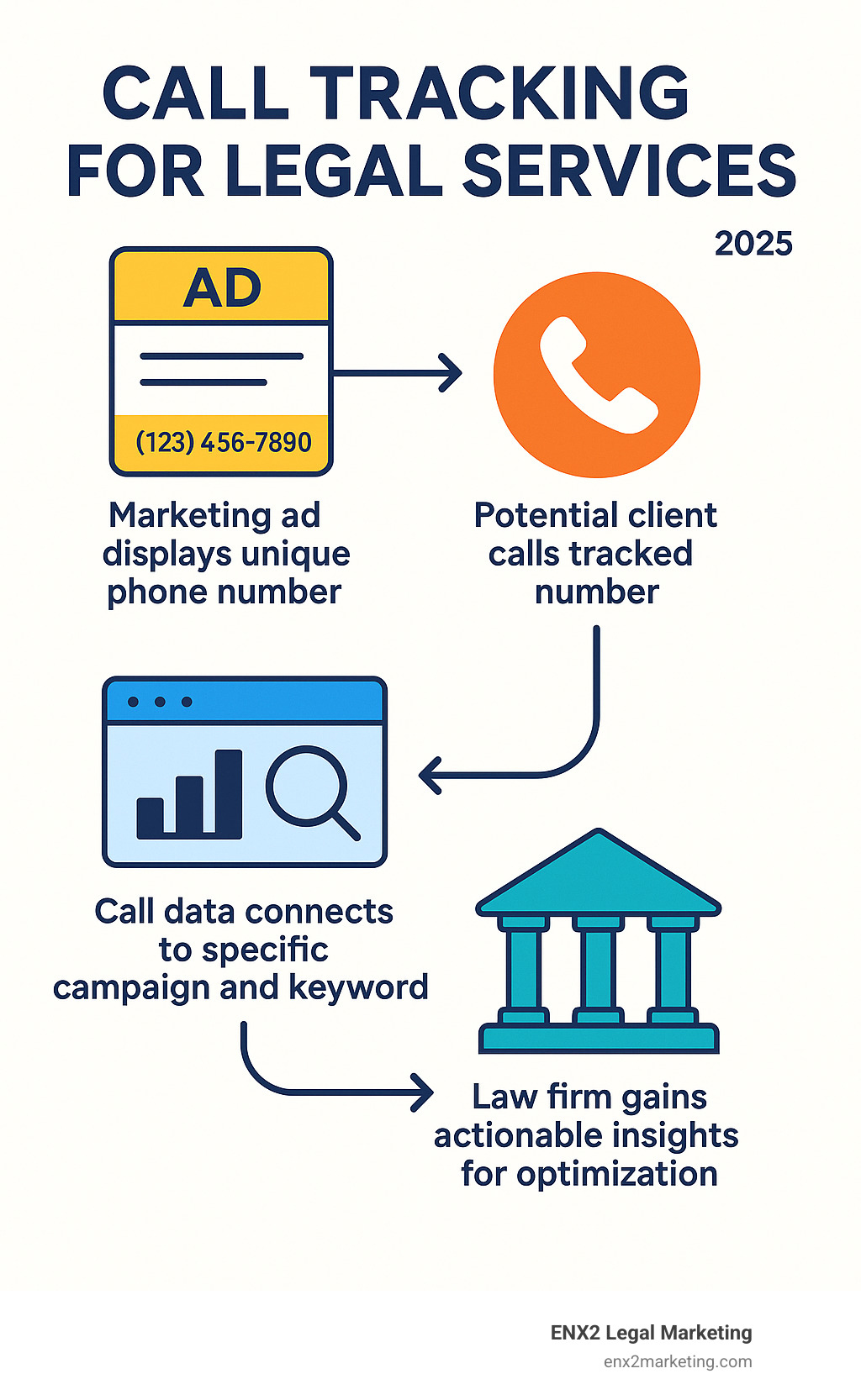
Call tracking for legal services is a technology that assigns unique phone numbers to different marketing campaigns, allowing law firms to identify exactly which ads, keywords, or channels generate phone calls from potential clients.
Quick Answer for Law Firms:
- What it is: Software that tracks which marketing efforts drive phone calls
- How it works: Uses unique phone numbers for each campaign or keyword
- Key benefit: Shows your exact marketing ROI and which ads bring paying clients
- Bottom line: Converts your marketing from guesswork into data-driven decisions
The legal industry faces a unique challenge. Keywords are notoriously expensive – often costing $100+ per click in competitive markets. Yet 74% of prospects who start their search online end up calling the law firm directly rather than filling out contact forms.
This creates a massive blind spot. Without call tracking, you’re essentially flying blind with thousands of dollars in monthly ad spend.
Here’s the problem: You run Google Ads, SEO campaigns, and maybe some radio spots. A potential client sees your ad, clicks through to your website, then picks up the phone and calls. Your current phone system shows you got a call, but you have no idea which campaign generated it.
Was it the expensive personal injury keyword that costs $200 per click? The local SEO effort? That billboard on Highway 101? You’re left guessing which marketing efforts actually work.
This isn’t just about tracking – it’s about survival in an increasingly competitive market. Law firms using call tracking typically see conversion increases of 25-30% simply because they can double down on what works and eliminate what doesn’t.
I’m Nicole Farber, and over my 12 years building ENX2 Legal Marketing, I’ve seen how call tracking for legal services transforms law firms from spending money on hope to investing in proven results. Let me show you exactly how this technology can become your firm’s secret weapon.

The ‘Why’ and ‘How’: A Deep Dive into Call Tracking for Legal Services
This section explains the core mechanics and huge upside of knowing exactly which marketing efforts make your phone ring. When you can tie revenue back to a specific ad, billboard, or blog post, marketing stops being a mystery and starts behaving like a predictable investment.
How call tracking for legal services technology works

Dynamic Number Insertion (DNI) swaps the phone number a visitor sees based on how that visitor reached your site. Someone who clicks a Google Ad may see (555) 123-4567, while an organic-search visitor sees (555) 123-4568. Both numbers forward to your office, yet each call is still tagged with the originating channel.
Because the forwarding happens in milliseconds, prospects experience a normal telephone call—no menu trees, no robotic voice. The “magic” is invisible to them but priceless to you.
The same concept works offline. Put a unique tracking number on your bus shelter ad, a different one on your LinkedIn profile, and another on your radio spot. Within a single dashboard you will know, with certainty, which placements justify their spend.
While you practice law, the platform quietly captures:
- caller ID and location
- time and length of the call
- source campaign, ad group, and even keyword (for PPC)
- the pages the caller viewed before dialing
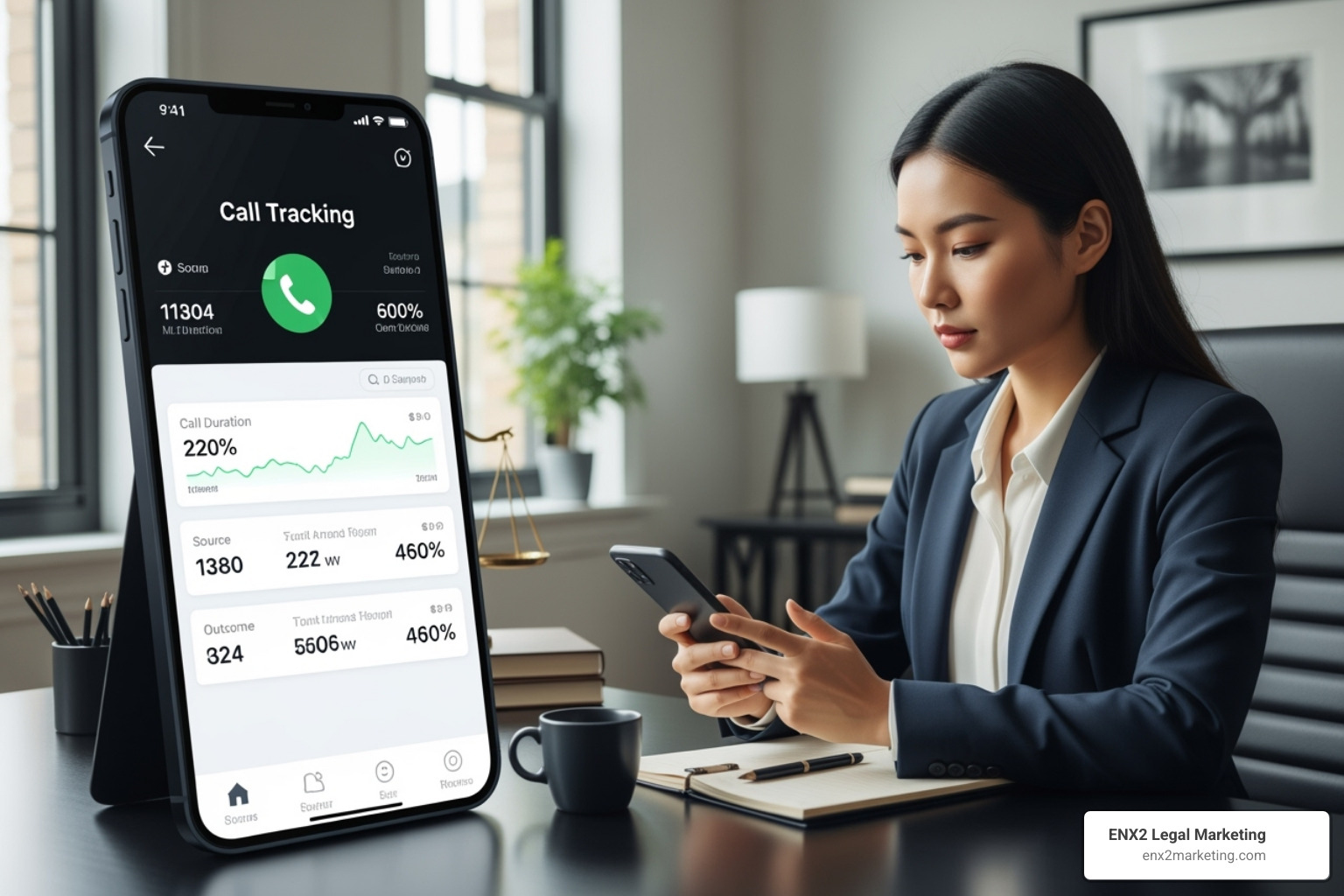
That information flows automatically into your CRM or practice-management platform, freeing you to focus on lawyering—not data entry. For firms serious about tracking their paid ads, DNI is no longer optional; it is table stakes.
From Data to Decisions: Optimizing Marketing ROI
The power of tracking shows up the first time you move budget from a poor performer to a winner. One ENX2 client spent $8,000 a month across Google Ads, Facebook, and a modest local directory. Traffic reports suggested Google Ads were dominant, yet call tracking revealed 60 % of qualified phone leads came from the $200 directory listing. Redirecting spend produced a 25 % jump in signed cases within 90 days—without increasing total budget.
Call tracking also exposes your real Cost Per Acquisition (CPA) by practice area. You may find that personal-injury intakes cost $400 through paid search but only $150 via local SEO, while commercial-litigation leads flow steadily from LinkedIn. Those numbers let you allocate dollars with surgical precision and stop guessing.
Research from the National Law Review echoes our findings: data-driven firms dramatically outperform peers that rely on intuition alone.
Gaining Actionable Insights Beyond the Call Count
Raw volume is only the first layer. Modern platforms surface insights such as:
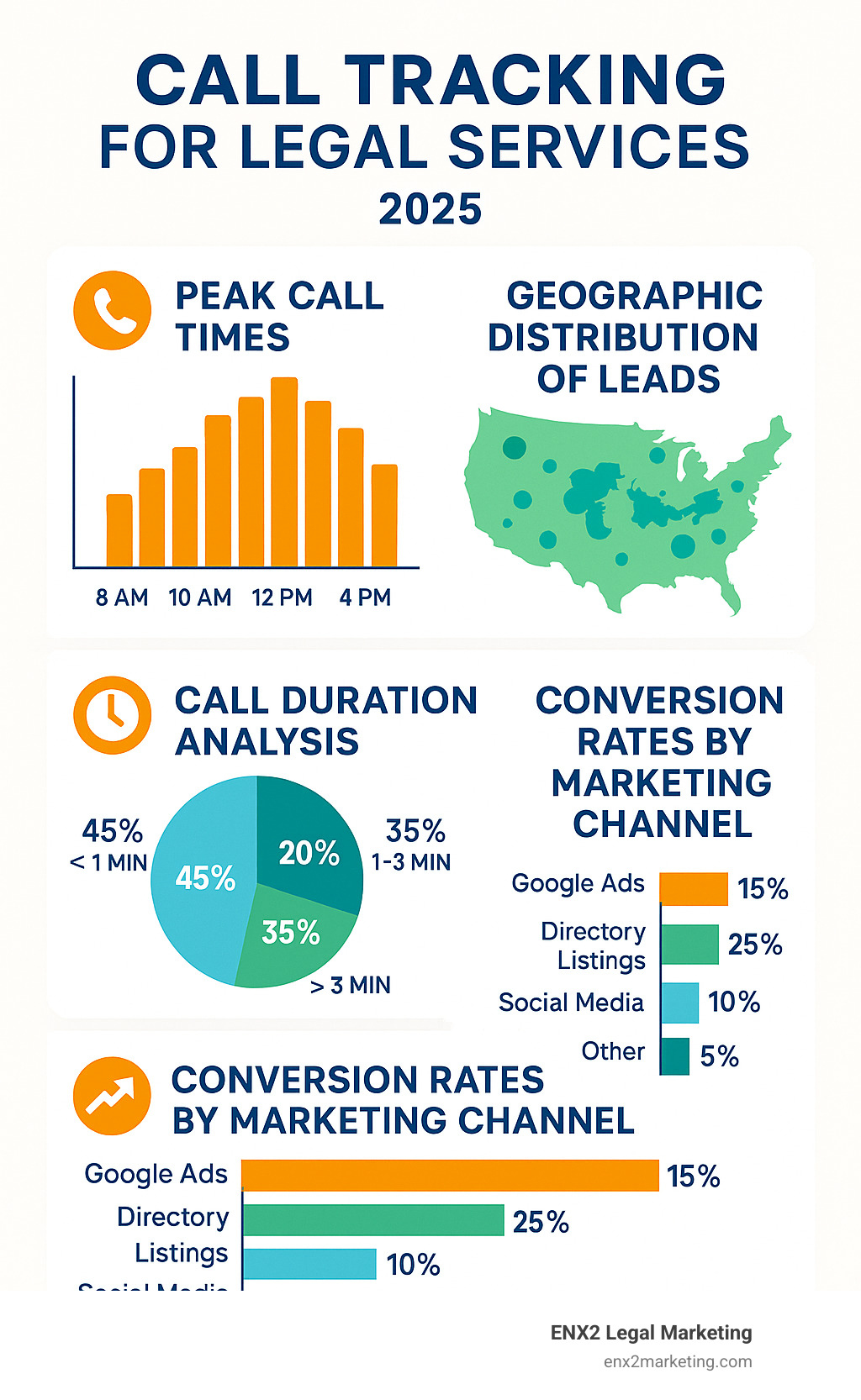
- Peak call windows—schedule your best intake staff when high-value calls normally arrive.
- High-value ZIP codes—double down on areas that produce larger cases and pause spend elsewhere.
- Duration patterns—calls under 30 seconds are usually tire-kickers; calls over three minutes signal purchase intent.
- Keyword quality—“experienced DUI lawyer” may produce longer, richer conversations than “cheap DUI attorney.”
- Missed-call audits—see exactly how many potential clients hung up after hours and decide if an answering service is worthwhile.
Because you can map the entire journey—from first click to retainer—you can finally track KPIs such as “qualified leads per $1,000” or “average case value by channel,” turning dashboards into decisions.
From Intake to Insight: Advanced Applications and Choosing a Solution
Beyond attribution, call tracking refines your intake process, sharpens training, and helps you pick technology that scales.
Enhancing Lead Quality and Improving the Intake Process


When a prospect dials in, the system can pop a screen showing marketing source and search term before your receptionist even says hello. If the caller came from an ad for “workplace harassment lawyer,” the staffer can greet them with empathy and relevant questions instead of a generic script.
Recording and transcribing every conversation lets you coach with real data. One employment-law firm found that mentioning “free case evaluation” within the first 30 seconds boosted consultation bookings by 40 %. Continuous review also uncovers missed opportunities—maybe staff forget to ask how injuries affect daily life, a detail critical to damages.
Because quality control is systematic, new hires ramp faster: they hear winning calls from senior team members instead of practicing hypothetical role-plays. For firms investing in Attorney Lead Generation Services, this feedback loop is invaluable.
Key Features to Look for in a Call Tracking for Legal Services Platform
- Dynamic Number Insertion (DNI) for airtight attribution
- High-fidelity call recording & searchable transcription
- Native CRM/practice-management integration—no more copy-and-paste
- Real-time dashboards to guide live campaigns
- Intelligent routing so personal-injury calls reach PI intake, corporate calls reach the business team
- Keyword-level PPC tracking—critical when a single click can cost $200+
- Robust security & compliance; look for SOC 2 and HIPAA-ready encryption
Authoritative resources like the American Bar Association stress the importance of safeguarding client information; your vendor should meet or exceed those standards.
Choosing the Right Solution: Pricing and Final Considerations
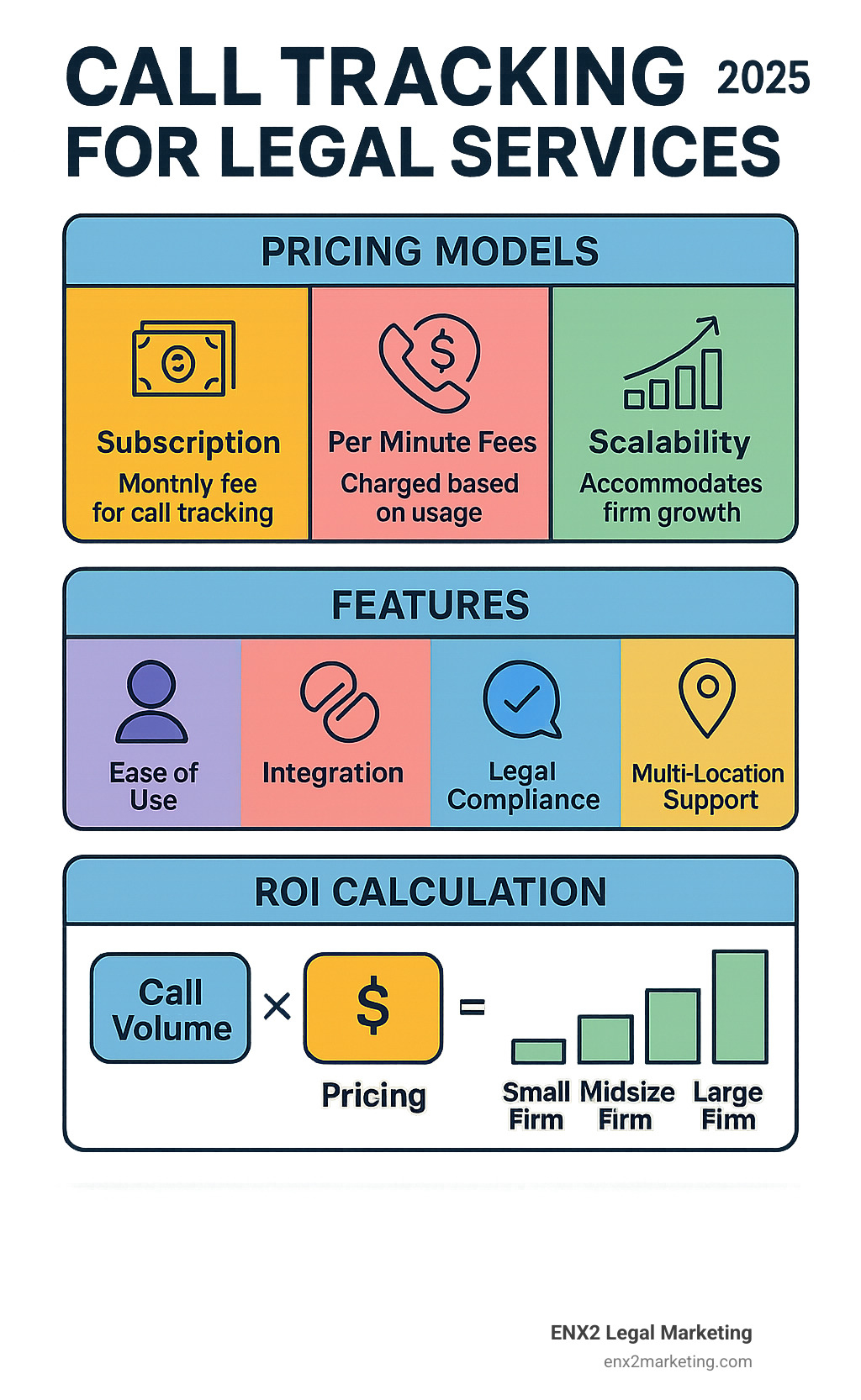
Most vendors use either a subscription (bundle of numbers + minutes) or pay-as-you-go model. Estimate future growth—success should not punish your budget with runaway per-minute fees.
Other questions to ask:
- Can the system scale to new practice areas without a costly migration?
- Is the interface simple enough that intake staff will actually use it?
- Does it integrate with your website forms, Google Ads account, and existing phone system?
- How are recordings stored, for how long, and who controls deletion?
At ENX2 Legal Marketing we have implemented call-tracking stacks for firms from Pennsylvania to California. Done correctly, the platform disappears into day-to-day operations while the insights keep compounding—usually paying for itself within the first month of smarter ad spend.
Investing in call tracking for legal services is ultimately investing in clarity. In a market where a single signed case can justify an entire year of software fees, the real question is no longer “Can we afford this?” but “How much longer can we afford not to?”